Search This Blog

Thursday, November 16, 2006

A talk about the facinating life of Dragonflies


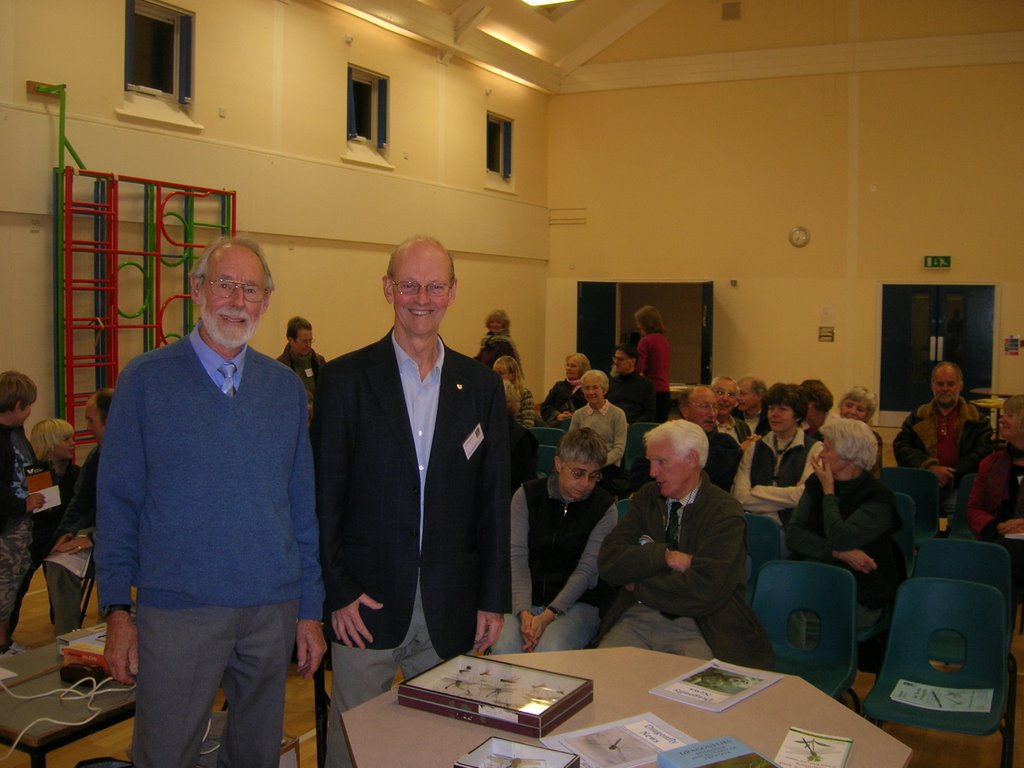
Dr Mike Parr a local member of the Trust talked about his experiences in the UK and Africa whilst studying dragonflies. His often amusing accounts of the habits of these remakable creatures left us wanting to know more. Above is a photograph showing Dr Parr and our blog editor before the meeting started. Below is our press note sent to our local paper and we look forward to its publication.

"Members of a new wildlife group for the Langport, Somerton and Curry Rivel area became so engrossed in the topic of dragonflies at their latest meeting, they decided to go on a field trip to study the creatures in the summer.

Expert Dr Mike Parr told the Heart of the Levels group that the biggest threat to dragonflies and damselflies is habitat loss, followed by pollution, drainage, and road vehicles which kill “a lot”. But the Somerset Levels are a hotbed for certain types of these insects, he said.

So many people asked questions about the water-loving creatures – which predate the dinosaurs by “a long way” – that Dr Parr, who has spent much of his career studying the insects, offered to organise a field trip for members next July, a suggestion readily taken up by the meeting, in Curry Rivel."

Saturday, November 04, 2006

Green Power!!! "Stop the Climate Chaos" rally


As people travel to London today for the environmental rally in Trafalger Square I felt the least I could do was to offer my support and encouragement.
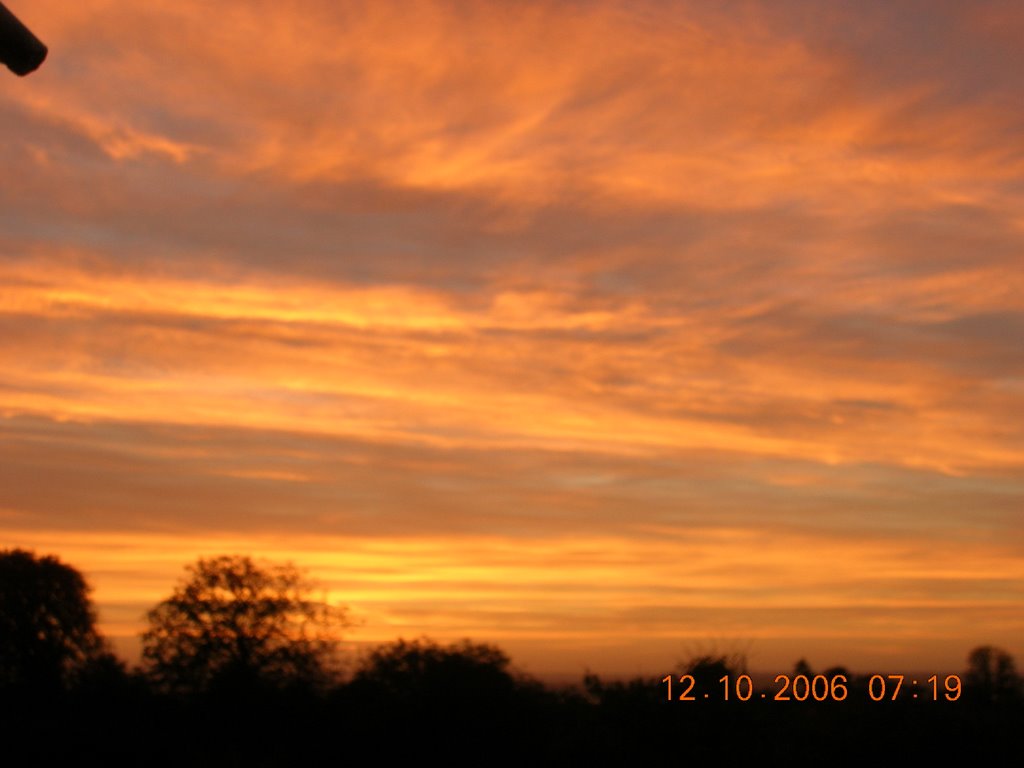
The daily papers are covering the event and I was impressed that the Daily Mail should publish good news photographs of the countryside looking at its best including views of the Somerset Levels ( my home ground and two of my local photos included above). The Independent gives details of the lead up gatherings and interviews with a 72 year old lady from the Bury St Edmonds WI alongside a comment from Johnny Borrell (no age given), the lead singer from Razorlight. That is covering the generations and social standpoints in a big way. They even mention our own local Wildlife Trust member Bill Butcher who has cycled all the way from Somerset to be there( I hope he has made it).
If anyone reading this has attended the rally or any other such event please share the experience with us.

Monday, October 30, 2006

Blog features


While I'm posting I'll add a photo showing the start of the Fungi Foray in Beer Wood. It wasn't raining at the start but did get a bit wet by the end but mild.

Searching this blog can make it more user friendly and easier to find items of interest to you.

Since starting in Jan 2006 there have been 61 posts. To see earlier posts you can either work your way through the archives or you can use the "search this blog" button on the top of the page. Select a post reference and click on it which will bring up the actual post.

If you use the search button this is part of what you will see:


Sorted by relevance - Sort by date. 61 posts matching blogurl:heartofthelevels.blogspot.com - showing 1 through 10

GM crops and DEFRA consultation
28 Oct 2006 by David

My post dated 27th Sept 2006 (which can be seen in the Archives section below) drew attention to the consultation by DEFRA on the proposed introduction of GM crops. Somerset County Council has just published its own submission to the ...

Heart of the Levels Wildlife Group - http://heartofthelevels.blogspot.com
test post
28 Oct 2006 by David

in case you are interested. I have found that after writing a post I wasn't able to publish it and got an error message to do with a java problem which I don't understand. I'm writing this from another computer to see if it publishes ok. ...

heart of the levels wildlife group - http://heartofthelevels.blogspot.com
Difficulties posting to the blog
28 Oct 2006 by David

Apologies for some disruption in the posts. I hope to clear it soon.

Heart of the Levels Wildlife Group - http://heartofthelevels.blogspot.com
GM crops consultation
28 Oct 2006 by David

I read in the local paper that the County Council had had its own consultation. A large number of individuals and organizations attended a meeting of the Councils Executive Board on 11th October at which the Council’s policy position ...

Heart of the Levels Wildlife Group - http://heartofthelevels.blogspot.com
RHS Rosemoor. Lichens
27 Oct 2006 by David

Having mentioned lichens, see my last post, I should add a few notes to go with these photographs. I had of course seen many lichens during our recent fungus foray but they were ignored whilst we concentrated on the fungi. ...

Heart of the Levels Wildlife Group - http://heartofthelevels.blogspot.com
more fungi, some lichen and a short story
26 Oct 2006 by David

its often surprising how we meet unexpected coincidences. This short story starts on the Sunday after the foray into the woods. During the clearing up in the village hall, after the expert identification display I saved some of the ...

heart of the levels wildlife group - http://heartofthelevels.blogspot.com
Fungi Foray II
26 Oct 2006 by David

Here are a few photos taken during our Fungi Foray, first out in the woods and later in the local village hall where the collected fungi were laid out for identification.I hope to get the correct names soon.

Heart of the Levels Wildlife Group - http://heartofthelevels.blogspot.com
Beer Wood Fungi Foray
22 Oct 2006 by David

If you have never been on an autumn trek into the woods in search of fungi then I can assure you, you have missed a treat. Today I was in Beer Woods, one of the best reserves in Somerset with about 60 other enthusiasts. ...

Saturday, October 28, 2006

GM crops and DEFRA consultation

My post dated 27th Sept 2006 (which can be seen in the Archives section below) drew attention to the consultation by DEFRA on the proposed introduction of GM crops.
Somerset County Council has just published its own submission to the DEFRA on the subject.
Here is a link to the SCC web site.

SCC is opposed to GM crops.

Below is a condensed version.

*********************************************************************************

Somerset County Council response to the DEFRA consultation document on proposals for managing the co-existence of conventional and organic crops October 2006


There is great concern in Somerset over the governments intention to allow GM crops to be grown in the UK. The term GM is used rather ambiguously in the consultation document and Government Policy statements, the Councils concerns relate to plants in which the genetic material has been altered in a way that does not occur naturally.


A large number of individuals and organizations attended a meeting of the Councils Executive Board on 11th October at which the Councils policy position on GM crops was discussed in addition to the response to the DEFRA consultation. The public speakers included representatives from:


* Yeo Valley Organics
* Friends of the Earth
* The Castle Hotel, Taunton
* A farmer and worker with the Bath and Wells Diocese


Written representations were received from:


* Friends of the Earth
* Bowerings Animal Feeds, Bridgwater
* Somerset Wildlife Trust
* Somerset Organic Link and Somerset Organic Link Producers
* Somerset County Federation of Womens Institutes
* Keinton Mandeville Parish Council


All public speakers and all of the written submissions expressed the strong and unanimous view that there should not be any GM crops grown in the UK. In considering the Councils position on the commercial growing of GM crops in Somerset the special characteristics of the Somerset countryside and economy are important:


* Somerset is a rural County with a national park, 3 areas of outstanding national beauty, 3 environmentally sensitive areas, 126 site of special scientific interest, 11 national nature reserves and 19 local nature reserves

* The total area of Somerset is 345,233 hectares, 269,371 hectares (78%) of which is under agricultural management employing a total of 14,000 people.

* 38% of the total organic land area in England production is in the South West.

* 3000 hectares of organic land in Somerset is used for organic crops

* Somerset is home to 23% of all farmed bee colonies in the South West


Councillors on the Executive Board were unanimous in their view that GM crops must not be grown in the UK. They also want the government to press for a change in current EU law to give legal recognition and protection to local areas that wish to remain GM free.


The Board agreed the following resolution:


(a) That the Council does not believe that GM crops should be grown.

(b) To require all new tenancy agreements for County Farms to contain a clause prohibiting the growth of GM crops.

(c) To request that existing County Farm tenants be requested not to grow GM crops.

(d) To ensure that all County Farm tenants be kept informed of the Councils policies on genetically modified organisms (GMOs).

(e) To recommend that the Government adopts a zero tolerance to labelling genetically modified foods.


The Councils stance on the development of GM crops in the UK is one of zero tolerance on co-existence. There are no circumstances under which GM, non-GM and organic crops can be grown together.


* GM contamination of conventional crops, organic crops and the food chain is unacceptable
* GM crops present a major threat to organic farming which is an important and growing industry in Somerset and one which DEFRA itself promotes
* Honey production is threatened by GM crops as there is no way that any coexistence measures will prevent the contamination of honey with GM pollen
* The rights of gardeners and allotment holders to grow their own GM free produce have been completely ignored in the consultation and dismissed as unimportant


The Council is also very disappointed that in launching this consultation on coexistence the government has chosen to ignore the results of its own national debate on GM which found that

“There is little support for the early commercialisation of GM crops.........."

We look forward to the governments response to these comments and trust that the overwhelming wish of the UK public, that GM crops have no place in British agriculture, is acted upon by the government.

Test post

In case you are interested. I have found that after writing a post I wasnt able to publish it and got an error message to do with a Java problem which I dont understand. I writing this from another computer to see if it publishes OK. Here goes.

That went through OK. I'm now trying the edit mode which also refused to work.

Difficulties posting to the blog

Apologies for some disruption in the posts.

I hope to clear it soon.

Friday, October 27, 2006

RHS Rosemoor. Lichens


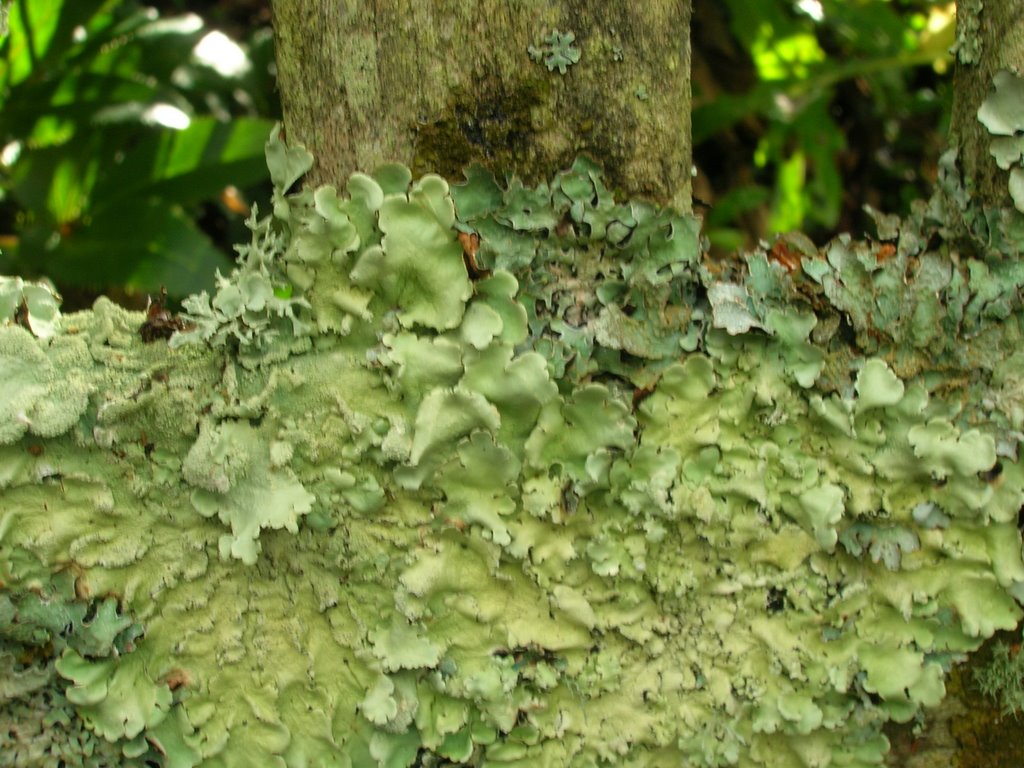
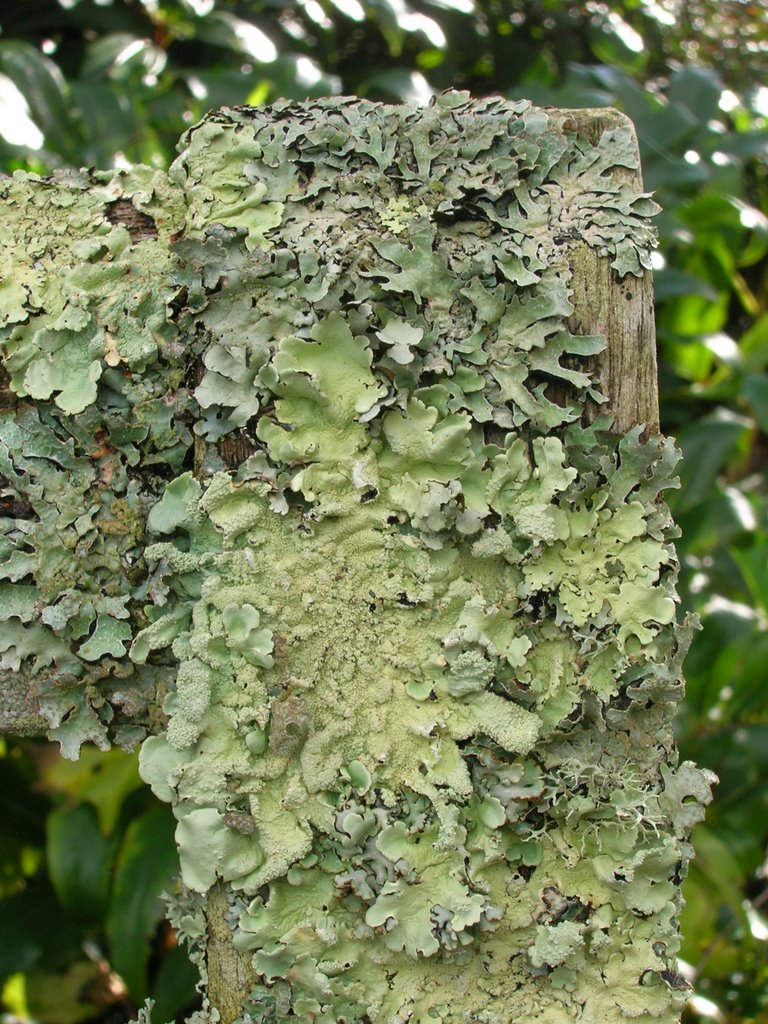
Having mentioned lichens, see my last post, I should add a few notes to go with these photographs.
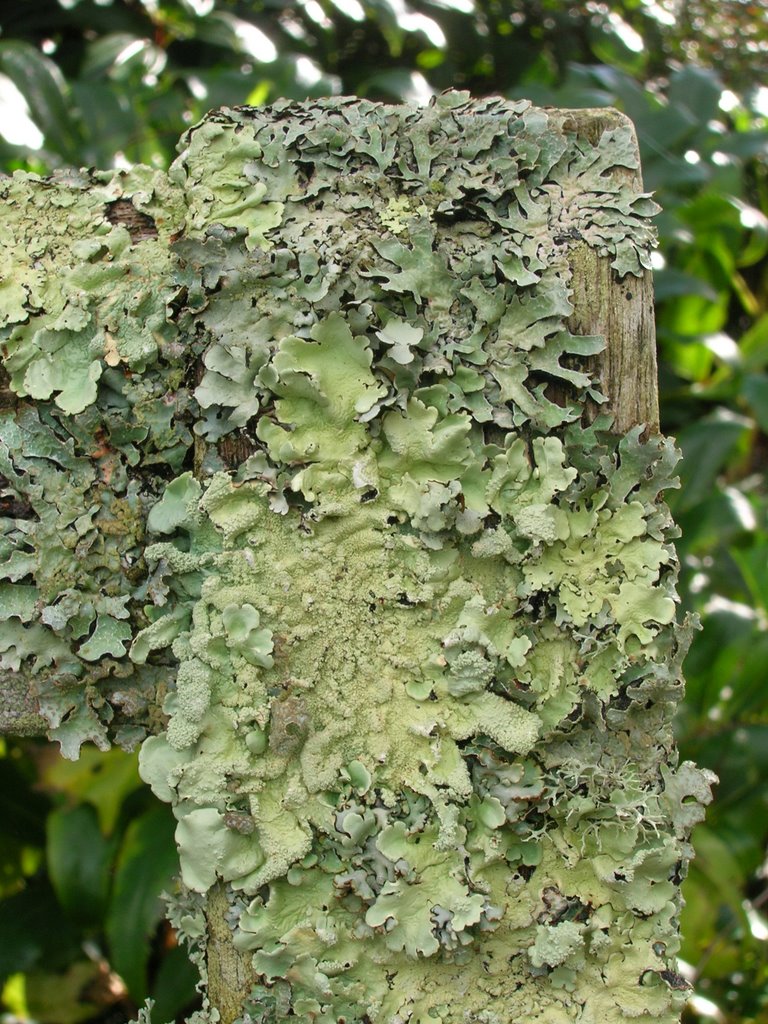
I had of course seen many lichens during our recent fungus foray but they were ignored whilst we concentrated on the fungi. At Rosemoor the RHS has gone to the trouble of producing a leaflet with the help of The British Lichen Society, which describes in some detail some of the 150 or so species which they claim have been found on the site. It has been a feature of this venture to start up our group, nearly a year old now, that as we slowly get more involved in the reality of the wildlife around us, so we discover worlds within worlds. We move from watching birds in our garden to watching flocks of Starlings at Westhay Nature Reserve, similarly with butterflies and learning about Green Down Reserve where the Large Blue is being rescued from extinction. An interest in trees in general led to a walk in the spring in the Beer Wood Reserve to see wild flowers, orchids and the Green-Veined White Pieris napi butterfly and this followed this autumn by the visit to discover fungi.
It was the coincidence mentioned in my last post which took me to Rosemoor and the remakable introduction to lichens.
The most obvious evidence of these plants and related algae was seen on some wooden benches left out in the gardens. In their leaflet they say;
" The four benches.....illustrate how some lichens prefer damper situations on ledges at the backs of the benches and other drier, sunnier positions where birds perch and their droppings provide nutrient enrichment. The small leafy bright orange lichen Xanthoria polycarpa on the shoulders of the bench backs, is an indicator of nutrient-enrichment. ......Note , especially, the distribution of crustose( crust forming), leafy and shrubby forms on the beautifully lichen-covered old bench just round the corner...."
To conclude, we were in a garden famed for its rose bushes and had seen how all around were equally bueatiful and fascinating fungi and lichens and even forms of alga.

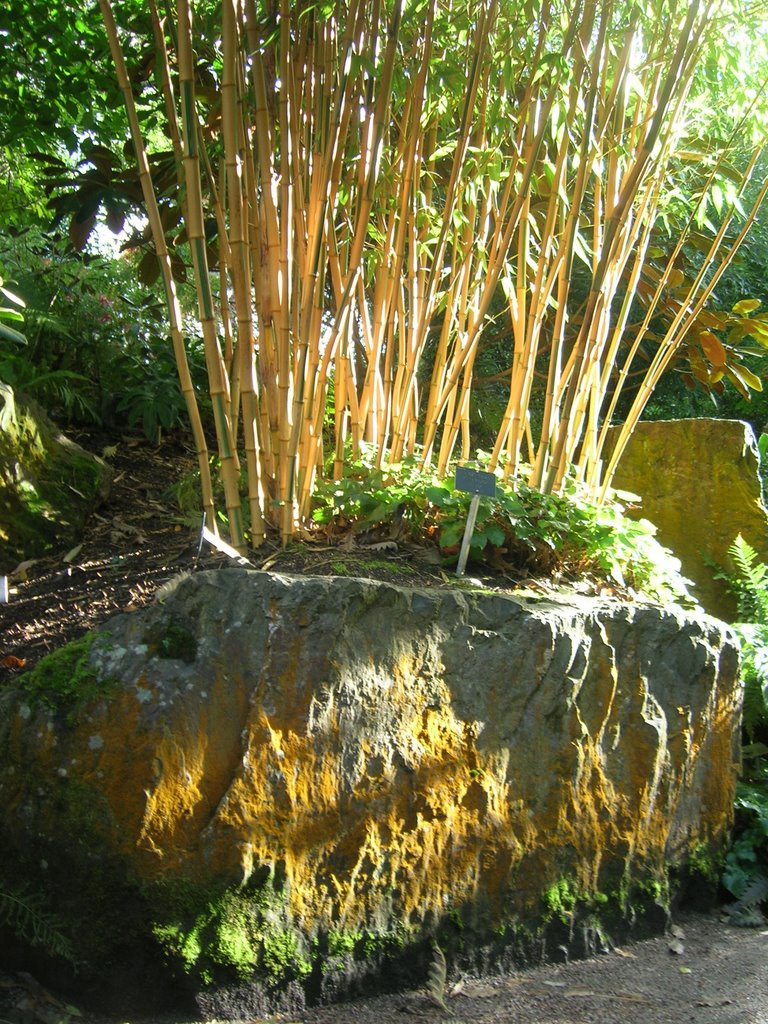
Two of the photographs in this post show the benches and the other two show yellow stemmed banboo growing clos to a rock sporting the dramatic bright orange coloring of Trentepohlia

Thursday, October 26, 2006

More fungi, some lichen and a short story


Its often surprising how we meet unexpected coincidences.
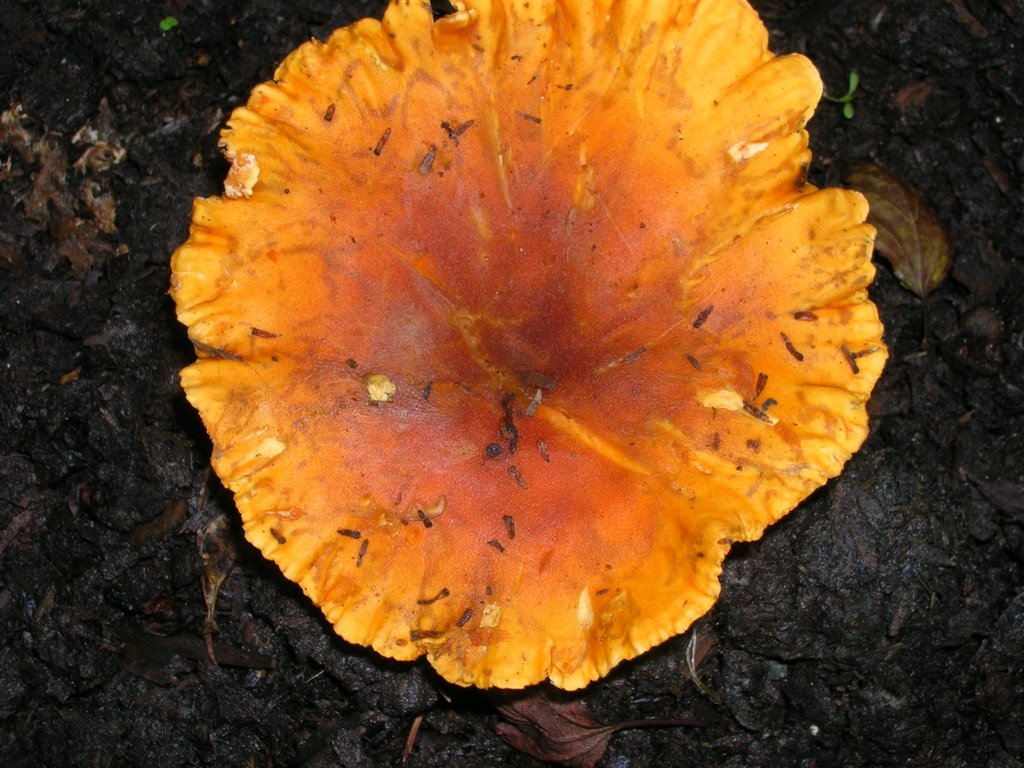
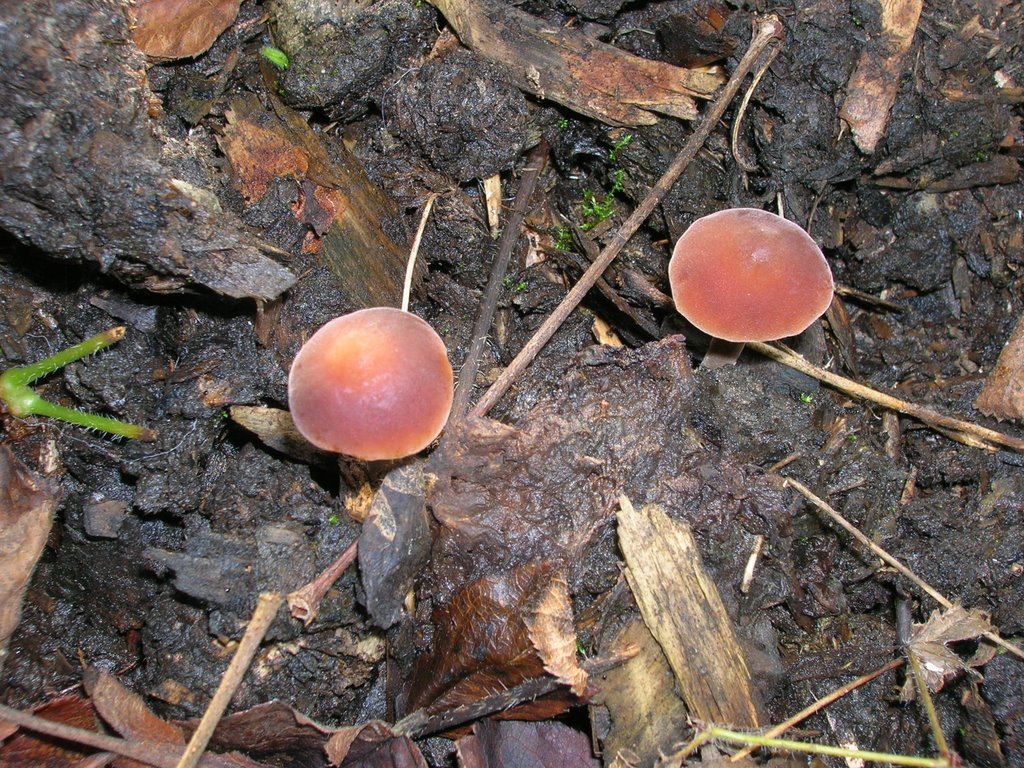
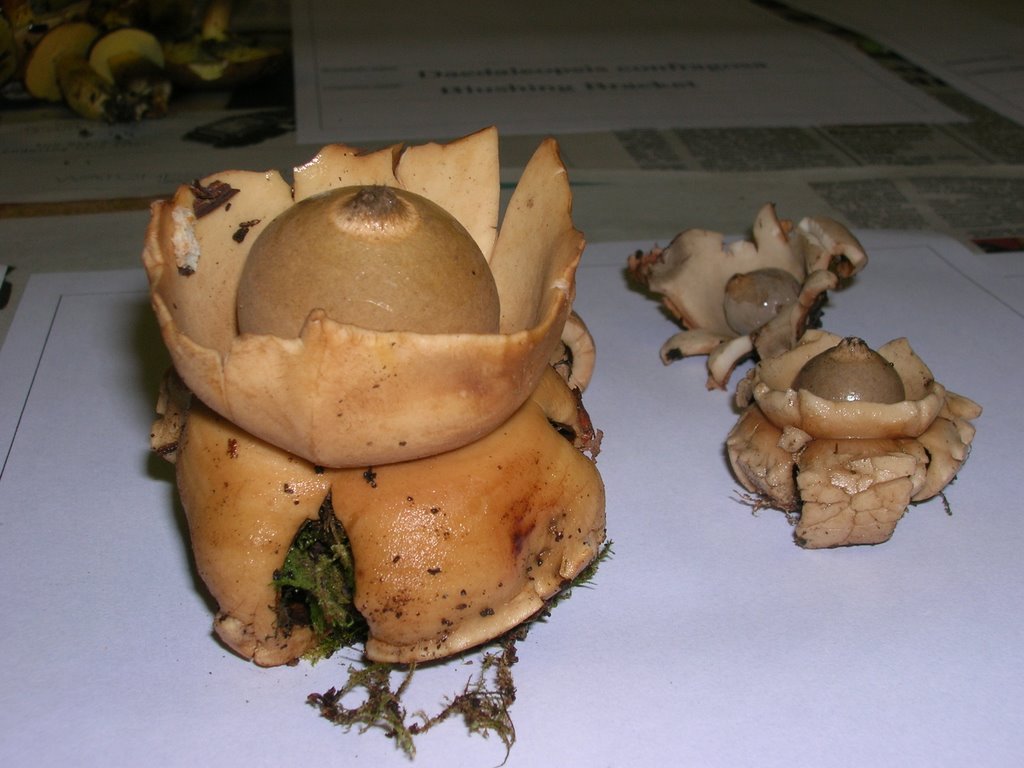
This short story starts on the Sunday after the Foray into the woods. During the clearing up in the Village Hall, after the expert identification display, I saved some of the specimens from the rubbish bin and filled a bag to take home. I could tell that my wife and a friend who was visiting us were both very impressed when I emptied my bag of damp, quite smelly and suspiciously poisonous looking fungi to show them what I had found. Unfortunately I couldn't identify more than one or two. However the next day we had arranged to visit the RHS Rosemoor Garden and we felt sure they would have a guide to fungi in their bookshop. Which they did and so putting my new field guide in my pocket we set off to tour the rose gardens and woodlands. To my surprise I found that there was also a significant number of fungi growing amongst the formal display. I have never before noticed such a display in a formal garden. I was quite happy to spend the next hour or two peering under and round the roses taking photographs some of which are shown in this post. Returning home I was able to start trying to put a name to the rest of my haul from the previous day.

Fungi Foray II

Here are a few photos taken during our Fungi Foray, first out in the woods and later in the local village hall where the collected fungi were laid out for identification.I hope to get the correct names soon.


Sunday, October 22, 2006

Beer Wood Fungi Foray

If you have never been on an autumn trek into the woods in search of fungi then I can assure you, you have missed a treat.
Today I was in Beer Woods, one of the best reserves in Somerset with about 60 other enthusiasts. Peter Baker, Reserve Manager, gave us a short introduction to what we might find and then it was up to us to spend the next hour and a half rooting around on the steep escarpment.
We certainly found plenty of specimens and headed back to the village hall for lunch and to let the experts examine our haul. Perhaps you can imagine the sight when all the fungi had been displayed with what looked to me like a hundred or so different species with many different shapes and sizes. It was remarkable. I was busy throughout taking photos and hope to show you some of them soon. I was also able to set up a small table display with information about our new local group which generated interest.
Even some rain towards the end of the collection did little to spoil the day.
More later!