Search This Blog

Sunday, June 16, 2013

Local Orchids. Identification request.

I'm trying to pin down the idetification of these orchids all growing in a small area of a local field. One shows a general view of part of the area covered. The soil in the adjacent fields was a clay and it was damp but not marshy. They look like a form of Marsh or Common Spotted (Dacyllorhiza fuchsii or masculata) . They are definitely not Anacamptis pyramidalis.
I may be able to go back and take some better photos with a tripod and remote operation.

Any suggestions welcome


Thursday, June 06, 2013


Our friendly wildlife group has two important events lined up for July and August.
************************************************************

 Thursday July 7th at 7.30 pm in the United Reformed Church in Somerton.


Wildlife on the Shores of Somerset ( yes we do have an extensive coastline!)
 An illustrated talk by Nigel Phillips.  


By way of introduction Nigel has written a book on the subject.  This is a stunning book which describes the huge diversity of landscapes and wildlife found along this wonderful coast. It is packed with photographs of coastal habitats and the wildlife that can be found. It has maps and appendices helping to point out what might be seen, and where and when things occur. It includes lists of all the plants, seaweeds, birds, marine creatures, butterflies, grasshoppers and crickets and dragonflies you might find along the shore and on the cliffs and cliff tops.

This is a 120 - page softback flexibound book in full colour.
Move your mouse over the text "Look inside this book!" on the book image (left) to view the contents. For a more detailed look, one extract has been included here - click here to view!


The price is £19.50 plus £3.50 post and packing (within the UK). Books can be picked up from Nether Stowey, Somerset by arrangement. Natural Time Out publications 37 Castle Street Nether Stowey, Somerset Somerset TA5 1LN.
************************************************************

Saturday August 17 th at 8 pm,
 at Playses Orchard Farm , Hambridge, TA10 0AP


A Bat Walk and Talk led by the SWT Bat Group.


Somerset Bat Group was formed in 1985 to help protect bats in Somerset
We are affiliated to the Bat Conservation Trust (the national organisation for bat protection) and Somerset Wildlife Trust
Somerset has 15 of the 16 species of British Bats and we still haven’t given up on the 16th. Some species are more common than others and some are endangered. The Bat Group is actively engaged in varied activities to help preserve these fascinating creatures.
Several of our members run Bat Walks in the Summer. We give talks to local groups, install and check bat boxes and during the Winter hold workshops and courses in Bat Care, Analysing Bat Sound, and Bat Identification.
If you are interested in joining us the please contact secretary , 
phone 01749 840240, or send £5 subs to Adel at The Cottage, Nettlebridge, Oakhill, Bath BA3 5AA.

Tuesday, May 28, 2013

Wildlife Gardening

The Wildlife Trust and the Royal Horticultural Society  produce a wildlife gardening newsletter to help us all make our gardens wildlife friendly. You can read the latest copy issued today at this link:


http://apps.rhs.org.uk/emails//WAG/2013/htmlmailer_may13.html

Here is an extract:


Things to spot


Butterfly


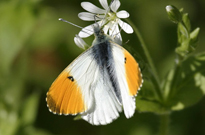
  • Keep an eye out for butterflies in your garden. Some will have come out early on – those that overwinter as adults, such as Peacock, Red Admiral and Comma butterflies. Now you can also see species such as Holly Blue, and Speckled Wood.
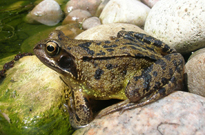
  • Keep an eye out for the fascinating stages as tadpoles turn intofrogs. Froglets are vulnerable when they switch from water breathers to air breathers. Make sure your pond has sloping sides so they can get out easily, and vegetation nearby so they can shelter.
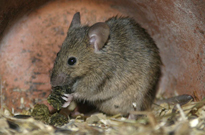
  • With breeding season in full swing, small mammals such aswood mice and shrews will have young now. Although difficult to spot, one way to detect them is by leaving out a sand tray at a likely location and checking footprints next morning. Alternatively, try looking for burrow entrances, about the size of a 50p coin.
More about what to look out for this month

Thursday, May 23, 2013

May apple blossom in Somerset!!


Event Details

Watch Event: Orchard Trail

Saturday 25 May 13:00

Orchard Family Social Event at Playses Orchard Farm. Fun activities with prizes to take part in, including an ORCHARD TRAIL
Bring along your own picnic, sit amongst the apple trees and enjoy the delights of an orchard in full blossom.
This is a joint fundraising event with the Heart of the Levels and the Chard and Ilminster Area Groups. Free entry for regular Heart of the Levels Watch Club members. BRING YOUR FRIENDS AND HAVE SOME FUN! Open 1pm

If you are interested in joining our group please contact Rosemary on 07724 892079 or email wildwatch28@gmail.com.

Friday, May 17, 2013

Field of Dreams, Barcroft Hall


Statement on the home page of their web site. 
Link shown below


Flowers Status: Field of Dreams 2013 is now closed   Grass Car Park Status: Closed
Due to adverse horticultural conditions the Field of Dreams will not be open for 2013 but please register for 2014 when we will have an even larger display and more facilities.
But still come and visit the village, enjoy the lovely shops, a great pub and a short walk! 


(Download Map Here)http://www.barcrofthall.co.uk/Pages/default.aspx

Thursday, May 02, 2013

The Providential Principle

Here is a link to the latest George Monbiot article discussing the way our present Government deals with important matters impacting on the natural environment. Its all about the Precautionary Principle which I have considered to be a starting point for almost any serious action we take in life. But thats just being cautious  of course and many people dont  think that way!


The Providential Principle

Here is an excerpt from the article:

Posted: 01 May 2013 03:33 AM PDT
Amazingly, the UK government has not defined the precautionary principle and appears to have no idea what it is.

By George Monbiot, published on the Guardian’s website, 1st May 2013

Here’s something remarkable I stumbled across while researching my column on Monday, but did not have room to include. I hope you’ll agree that it is worth sharing.
I was trying to understand the context for the new chief scientist’s cavalier treatment of scientific evidence, in an article he wrote opposing a European ban on neonicotinoid pesticides. These are the toxins which, several studies suggest, could be partly responsible for the rapid decline in bees and other pollinators.
Just one month into the job, Sir Mark Walport has, I believe, disgraced himself: by misrepresenting the science, misinforming the public about risk and uncertainty and indulging in scaremongering and wild exaggeration in support of the government’s position. I believe he has seriously damaged his standing and that of the office he holds.
Among the many problems with the article he wrote was the way he defined the precautionary principle. Interpreting and upholding this principle is fundamental to the chief scientist’s role. Yet he doesn’t seem to understand what it means. Here’s what he said about it:
“This simple idea just means working out and balancing in advance all the risks and benefits of action or inaction, and to make a proportionate response.”
Oh yes? Here’s how the Rio Declaration, which the UK, with 171 other states, signed in 1992, defines it:
“Where there are threats of serious or irreversible damage, lack of full scientific certainty shall not be used as a reason for postponing cost-effective measures to prevent environmental degradation.”
The difference is critical to an understanding of the government’s environmental responsibilities. As if to underline the fact that he hasn’t grasped it, Sir Mark used his article to do the opposite: he used a lack of full scientific certainty as a reason for postponing cost-effective measures to prevent environmental degradation.
The precautionary principle, as defined by the Rio Declaration, has, in the words of the European Commission, “become a full-fledged and general principle of international law.”
In other words, it’s not something you would expect a chief scientist to make up as he goes along.
So the question that occurred to me was this. If the government’s chief scientist doesn’t know what the precautionary principle is, does the government know?

www.monbiot.com

Saturday, April 06, 2013

Back a ban for bees’ and our benefit | The Wildlife Trusts

Back a ban for bees’ and our benefit | The Wildlife Trusts


Paul Wilkinson, The Wildlife Trusts’ Head of Living Landscape, said: 
“The Government should follow the advice of the Environmental Audit Committee and place an immediate moratorium on the use of these chemicals. Although further research is always beneficial, there is sufficient and compelling evidence to apply the precautionary principle. We must do the right thing for our bees, our countryside, and our food supply that relies on natural pollination.” 
Over a six month period, the Committee has gathered written and oral evidence from leading scientists, Defra, the pesticide industry and others.  The Committee report recommends that Defra should prepare to introduce a moratorium on the use of imidacloprid, clothianidin and thiamethoxam on crops that are attractive to bees by 1 January 2014.  The committee also recommend Defra supports such a proposal in the EU - which it has failed to do up until now. 

Friday, April 05, 2013

Bees, Pesticides, UK Government and me!

Dear Secretary of State and Minister,

Today's Environmental Audit Committee (EAC) report calls on the Government to address a series of important flaws in its pesticides policies and risk assessment processes.

I would like to join Friends of the Earth in voicing my support for all the EAC's recommendations. I urge you to do the same. In particular, the Committee unanimously backed European proposals for a temporary ban on the use of three neonicotinoid pesticides on crops attractive to honey bees.

Our bees are in trouble and urgently need the Government to put in place a British Bee Action Plan to tackle all causes of their decline.

This must ensure bees have adequate feeding and nesting space. But it must also include action to reduce the use of pesticides across the board, starting with the European Commission's proposed neonicotinoid ban.

In last month's European vote on this issue, the UK abstained. I support Friends of the Earth's call for you to change this position and support the ban.

You can contact me by email (preferably - to save resources) or at the following address:

Yours sincerely,
David German

Bees


Here is a letter I support.


Friends of the Earth - See things differently
The Bee Cause
05 April 2013
Join usSign our Director's letter  

Hello
In the last few hours the Environmental Audit Committee (EAC) has told the Government they got it wrong when they chose not to support a ban of the worst bee-harming pesticides.
Please sign our Director's letter if you think the Government should support the ban
The EAC has spent months hearing evidence on both sides of the argument. And they've concluded that 3 neonicotinoid pesticides should be banned and that Government policy on pesticides should be overhauled.
If enough of us add our names we can persuade the Government to accept the EAC's recommendations - and follow the lead of the DIY stores and garden centres that have already taken some of the most dangerous pesticides off their shelves.
Add your name to our Director's letter asking Ministers to ban the worst bee-harming pesticides
Pesticides aren't the only cause of bee decline, but evidence of their importance is mounting. Winning a ban could be a massive step to secure their survival.
Add your name today
With best wishes,
Lucy and the Bee Cause team
#BeeCause