Search This Blog

Showing posts with label Butterflies. Show all posts

Tuesday, June 06, 2017

Walk round a special meadow.

Babcary Meadows WildWalk

Thursday 22 June 18:3

Join us for the launch of our new WildWalk around Babcary Meadows Nature Reserve! With an introduction to the meadows by Reserve Manager, Mark Green, and apple juice kindly provided by Orchard Pig.
Please note:  there is limited parking available at the Red Lion Inn. Please wear sensible clothing and footwear. Children must be accompanied by an adult. Dogs welcome but must be kept on a lead.
This event is Kindly supported by Orchard Pig, The Heart of the Levels Area Group of volunteers and The Red Lion Inn
Where
The Red Lion Inn, Babcary, Somerton TA11 7ED
Contact/Booking Information, for more information please contact stephanie.wheeler@somersetwildlife.org
Cost
Free event but donations welcome

Information about the meadows.

50 years of local conservation:
Supported by its members Somerset Wildlife Trust has been protecting vulnerable wildlife and preserving wild places for 50 years. Throughout 2014, the Trust  celebrated its golden anniversary year by encouraging local people to ‘Love Somerset, Love nature’. Babcary is just one of 72 nature reserves under the Trust’s stewardship, which helps ensure Somerset remains one of the most wildlife-rich places in the UK.
Please donate to Somerset Wildlife Trust’s meadow appeal:
Make a donation and help the Trust keep meadows like Babcary Meadows special for people and wildlife.
As you cross the River Cary, which flows gently along the southern edge of the reserve, Babcary’s secrets begin to be revealed.
It’s like stepping into history, back to a time before the Second World War when meadows like this were a common sight in our countryside.
The fields are botanically-rich; June brings bee orchids, yellow rattle and common spotted orchids, whilst water voles inhabit the riverbank and the songs of skylarks and other birds add to the atmosphere of this rural idyll.
Somerset Wildlife Trust Reserves Manager Mark Green said: ‘I love Babcary Meadows – it’s such a tranquil place and there’s always something different to see, every time I visit.‘From late May, the salad burnet gives a lovely red hue to the landscape then, in June and July, there are hundreds of butterfies, such as meadow browns and marbled whites fluttering around.’

Saturday, June 20, 2015

Batty Piece

Our 4 acre wildlife meadow is at its best in June. Bee Orchids and Pyramidal Orchids are now well into the flowering season. I found around 30 or 40 Bee Orchids this week and the Pyramidal are too numerous to count. Grass Vetchling is spread around the field as is Yellow Rattle. Patches of Ladies Bedstraw are nearly in flower and I found a few Broomrape. Knapweed is coming into flower and Field Scabious. Butterflies are common including Marbled White.
I'll add a few photographs soon.


Wednesday, November 13, 2013

South Somerset Climate Action Group

Before getting to something more serious I've just selected this photo I took in our garden some time ago to remind me why I keep making these posts on anything which effects the countryside around me.
Not the best wildlife photo but good enough to illustrate my point! A butterfly described as scarce in England so I was lucky to see it and have a camera nearby!

Brown Hairstreak,    Thecla betulae


I've just been reading an email from Joe Burlington who runs the South Somerset Climate Action  Group. Its been running for several years now and does really effective work to spread the word about Climate Change and Global Heating.

You may find his blog interesting and the groups current programme of event,talks and discussions.

Here is a link:http://  www.southsomersetclimateaction.org.uk/about/

I'll Post some more information soon.

Here is an extract from the email:

"Tuesday 26 November - Will your solar pv keep your lights on in a power cut? Yes, but ...5.30 for 6pm. End at 7.30 discussion may continue until 8pm.  Suggested donation £3 (includes refreshments)
Jon Lewes, Coordinator, LocalGen Home Energy Centre, 8 Ditton Street, Ilminster, Somerset TA19 0BQ. Parking available round the corner. t.   01460 250986  m. 0751 8039458, www.localgen.org.uk 

Later on Tuesday 26 November: CLIMATE UPDATE: Dr Stephan Harrison of University of Exeter “MAKING SENSE OF: Floods in Summer - Floods of Information - Floods of Uninformed Debate” The Williams Hall, Stoke St Gregory TA3 6EU .  8.15 Doors open for refreshments at 7.50pm .. after Transtion Athelney’s AGM which starts at 7.30.
Stephan will be looking at: certainty, uncertainty and probability; the difference between climate and weather (Was flooding on the Somerset Levels last Summer ‘caused by’ climate change?); recent developments; how complex science is communicated; land surface warming compared with increased energy in the climate system, which intensifies extremes.

Views:  Monbiot in the Guardian – Ken Clarke’s response – Quakers - Joe Burlington
……………."


And Joe ends with this comment:  

"My anger? The government and energy companies refer to ‘green subsidies’ - as though they were deplorable - rather than a feeble but necessary step in the right direction. At the same time, the fossil fuel industry is receiving tax breaks and other financial benefits that are extensive and are being increased. I have asked our MP for details. I await his response!"

Joe has been campaigning for a long time to increase awareness about all these related issues and is clearly very frustrated!


Friday, September 23, 2011

Simon Barnes and the SPNVS


Two weeks on holiday and back home to try and catch up on the world of wildlife conservation and my Blog. Along with numerous emails and post I received my National Trust magazine today. The opinion feature sounded interesting and it was written by Simon Barnes. He wrote “How to be a bad birdwatcher” which I found an easy book to read and useful for a non bird watcher! He wants to start a new campaign to promote, “the Society for the Preservation of Nothing Very Special” or SPNVS for short. I agree with him that it is important to seek to protect living places and living things before they get special. Special usually means rare or endangered. Our four acre meadow could easily be classified by planners or developers as ordinary. Yet unimproved grasslands are already rare in the countryside and so I aim to become a member of the SPNVS.

If you too would like to join go to www.nationaltrust.org.uk, search for the digital NT magazine Autumn 2011 and Simon Barnes article is on page 15. Or of course you could join the NT as a member.

I was pleased to see how our new pond was getting on and of course it is getting on alright in my absence. The dragon fly nymphs  are still lurking in the murky water which really needs more oxygenating plants. Waterboatman are more numerous than before and a dead reddish dragonfly lies in the water. Water snails seem to be steadily demolishing it.
Walking across the lawn to the pond I noticed a small butterfly ( shown above) which I thought initially was  probably a female Common Blue. Eventually I managed to get close to it and with the help of my trusted book on UK butterflies I am convinced it is a Small Heath. That is the first time I've ever recognised one. The books says they are one of the most common butterflies in the country so I must have been very negligent in not seeing it before.  I am adding a photo of my butterfly and the unfortunate dragon fly and the dragonfly nymph

Monday, September 05, 2011

garden butterflies

We've had around a dozen species in our garden this summer and these two were enjoying a spell of sunshine last week.
Just ordinary garden butterflies in an ordinary garden  and the photographer is quite ordinary too!
The camera is very good though.


Comma


Speckled Wood

Thursday, June 16, 2011

Common Blue butterfly

To say this butterfly is common is often only one step away from ignoring it. So this Blog is simply paying a tribute to the evolutionary process which has resulted in a most amazing small insect. The patterning on the under side of its wing is fabulous. This particular specimen happened to come to rest in the late afternoon today on a lavender bush. It wasn't feeding and it just sat there in the late sun whilst I got my camera together . A tripod to minimise hand shake and a 90 mm Macro lens and also a remote button for extra measure. I even had time to experiment with auto, AV and auto macro. The best results with the sharpest and clearest image was definitely using the tripod and macro lens. Click on the picture to see a larger image. Can you tell which one used a 50mm standard lens and which used a macro  90 mm lens and tripod and remote control? Both images are shown with a reduced file size for faster uploading.


Image A

Image B

Saturday, June 04, 2011

Reports from the UK National Ecosystem Assessment


Before getting onto the serious stuff. Can anyone identify this butterfly. Taken on the Island of Guernsey about 2 weeks ago?


Been following up on this new report which promises to generate a great deal of comment. As you can see below there is so much interest in it that the full report is not yet available and their web site is so busy you might have difficulty seeing even the Synthesis. This report should be a very useful tool for anyone campaigning for more action to support wildlife and to deal with our headlong rush towards climate change
This will take some time to assess.


Reports from the UK National Ecosystem Assessment


Synthesis of Key Findings (6 MB)

**The UK NEA website is currently experiencing high traffic levels which is causing problems for some users wishing to download the Synthesis report and Technical Report chapters. We are aware of the problem and hoping to rectify it as soon as possible. Alternatively, a copy of the report has been made available temporarily on the Defra website: www.defra.gov.uk/environment/natural/uknea/** 

Here is a video clip  about the new report:

Sunday, December 19, 2010

British Butterflies

If you missed the one hour programme on British butterflies on BBC 2 on Thursday, " Butterflies: A Very British Obsession"  your really should have a look at BBC  I Player using this link, click here:
You've got 6 days left to view it.
Amazing photography and information about many of our favourite butterflies plus interesting stuff about people involved in butterfly conservation.
Controversial reporting about reintroduction of rare species by breeding off site for instance.  But also an account of how important it is to manage habitats to ensure their survival. Somerset Wildlife Trust is very proud of its reintroduction work for the Large Blue.
My only slightly negative comment on the  programme was  however that  I did find the background music a bit intrusive at times.
As a humble offering I'm including a photo of my own showing a pair of Small Coppers enjoying the sunshine in the grass, and a Large Blue  from the Somerset Wildlife Trust library.


Here's a brief extract from the programme notes.

"Wildlife documentary featuring the fascinating lives of Britain's beautiful butterflies filmed in exquisite detail and also a celebration of their enduring appeal to the British people. Butterfly-costumed carnival-goers dance at Notting Hill, street artist Nick Walker uses their image to brighten bare city walls, burlesque dancer Vicky Butterfly recreates butterfly dances and at Britain's biggest tattoo convention women reveal their butterfly tattoos.
Britain's butterflies have never been so threatened, three quarters are in decline. A search for butterflies leads to some of the most beautiful parts of Britain. It opens up the intriguing possibility that a passion for butterflies could help us preserve the landscapes that we love.

Two more links on the subject of moths and butterflies in Somerset.
http://www.somerset-butterflies.org.uk/

http://www.somersetmothgroup.org.uk/portal

Friday, May 21, 2010

Crete wildlife, flora and fauna

Just back from a weeks strenuous walking in Crete. The flora was suffering due to a lower than usual rainfall this year. So flowers needed a bit of searching for. Difficult to identify plants photographed even with a book to help.
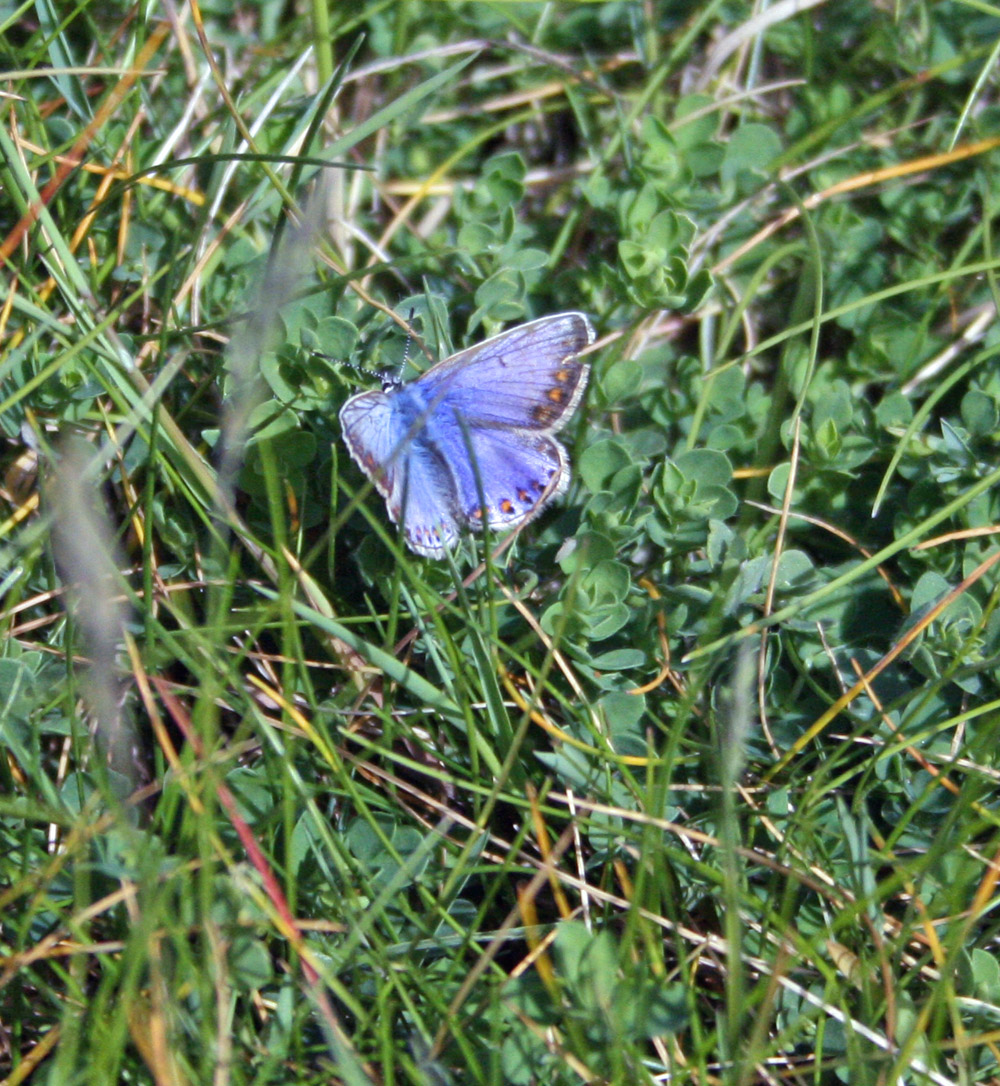
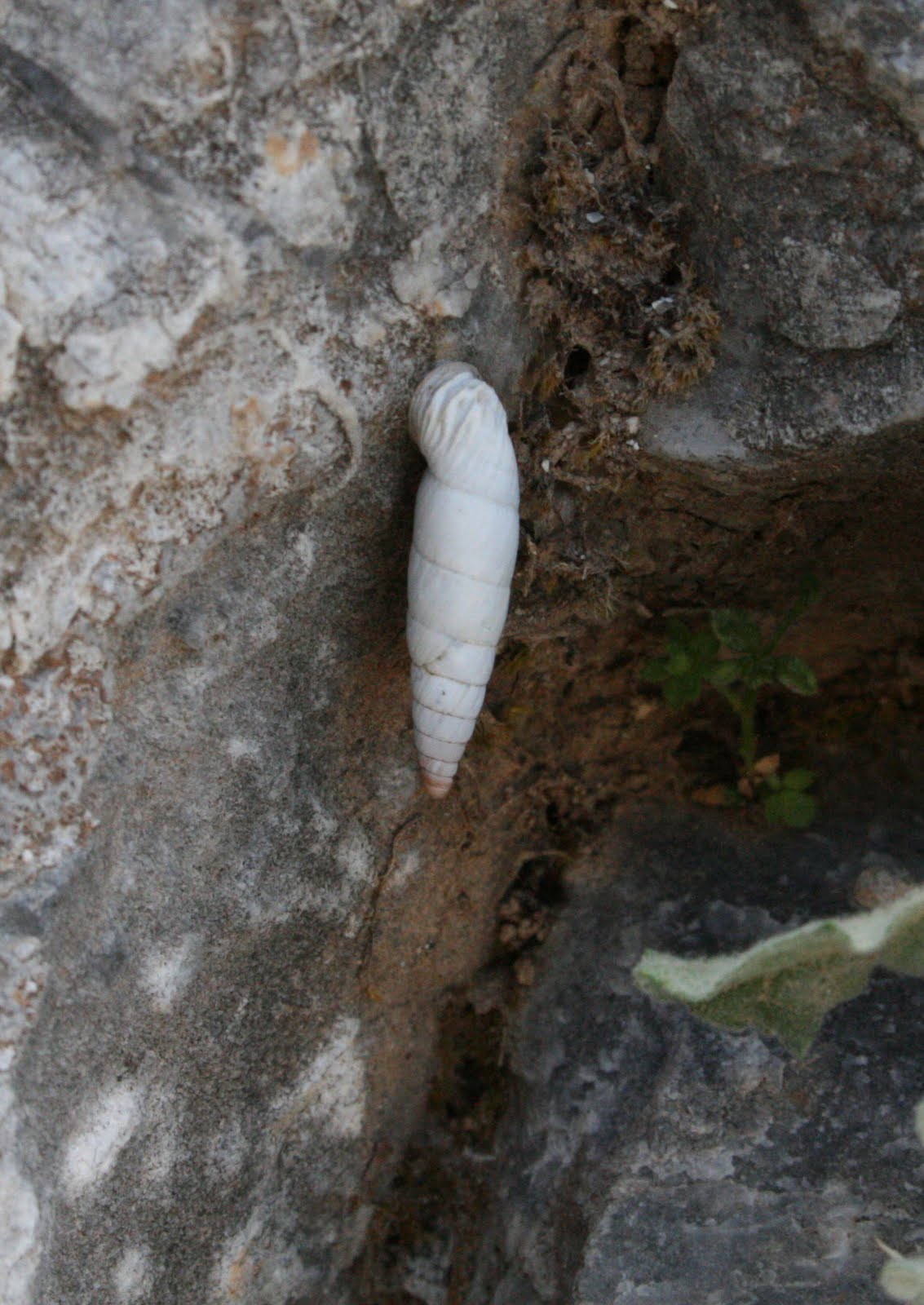
Here are a few images of  bugs and a butterfly. I hope to add idents soon. Next post I'll add some flowers.
If anyone knows what these are please let me know.


Wednesday, March 17, 2010

Butterfly and Bumblebee sightings17th March 2010

First sightings today in our garden  of a Small Tortoiseshell and a Bombus terrestris. ( my identification?)

Friday, January 29, 2010

Moths and Butterflies

Possibly the hardest working specialist groups in Somerset are the "Somerset Moth Group" and the associated "Somerset and Bristol Butterfly Conservation Group". I would like to challenge any conservation group to show me a more extensive series of outdoor activities than those shown on the respective web sites, linked below, for 2010.
Please check out this web link and please let me know if anyone can do more for conservation than this!
Here is the Moth Group  link  


To complete the picture here is a link to the Butterfly Conservation web site showing their list of events.  click here

Friday, November 06, 2009

Butterfly Conservation, Large Blue

An enthusiastic visitor to Green Down to see the real thing! My photograph.


Photograph by "Somerset and Bristol Butterfly Conservation"


I shall be going along to the Annual General Meeting of the Somerset and Bristol Butterfly Conservation Group on Saturday.
Looking at their web site I found details of working parties for Jan and Feb at local reserves, generally clearing scrub. Here are some of the details.

Here is a link to the Groups web site to find out more about the Large Blue


Poldens Large Blue Action Group – Work parties January – February


Sunday 10th January, Walton Hill, volunteer work party to improve Large
Blue habitat, 10am – 3.30pm

Come and help clear scrub at Walton Hill to improve the site for the Large
Blue butterfly. There will be hot jacket potatoes and cakes. Please bring your
own drinks and any additional lunch and snacks required. Please wear strong
footwear and old clothes and bring work gloves if possible. Walton Hill is
south west of Street. Meet in the car park at 10am (Map reference:
ST46633505). Please contact Bernadette Noake (Butterfly Conservation:
01929 406004, 07960616320) or Shane Potts (07912 085603) for more
information and to let us know if you wish to attend.


Saturday 30th January, Collard Hill, volunteer work party to improve
Large Blue habitat, 10am – 3.30pm

Come and help improve the habitat at Collard Hill for the Large Blue butterfly.
There will be hot jacket potatoes and cakes. Please bring your own drinks and
any additional lunch and snacks required. Please wear strong footwear and
old clothes and bring work gloves if possible. Collard Hill is south of Street, on
the B3151. Meet in the car park opposite the Youth Hostel (Map reference:
ST48013451) at 10am. Please contact Bernadette Noake (Butterfly
Conservation: 01929 406004, 07960616320) or Rob Holden (National Trust:
07919392181) for more information and to let us know if you wish to attend.

Sunday 21st February – Lollover Hill, volunteer work party to improve
Large Blue habitat, 10am – 3.30pm

Come and help improve the habitat at Lollover Hill for the Large Blue butterfly.
There will be hot jacket potatoes and cakes. Please bring your own drinks and
any additional lunch and snacks required. Please wear strong footwear and
old clothes and bring work gloves if possible. Lollover Hill is near Dundon,
south of Street. There is limited parking on the road in Dundon. Follow the
public footpath and meet at Lollover Hill at 10am (Map reference: ST474325).
If you would like a map of the site please contact Bernadette Noake. For more
information and to let us know if you wish to attend please contact Bernadette
Noake (Butterfly Conservation: 01929 406004, 07960616320) or Shane Potts
(07912 085603).

Saturday, August 22, 2009

Our local wildflower meadow


Common Blue


Photographs and notes about our local meadow


Meadow Brown feeding on Scabious


Ladies Bedstraw

Great Green Bushcricket


6 Metre grass strip left close to new hedge


Our wildflower meadow has been full of interest this year. Plenty of butterflies, the great green bush cricket showing up but fewer Marbled Whites than in previous years and very few Bee Orchids, which I hear is the same elsewhere this year.

The hay has now been cut on 15th August. It was baled and the bales removed by the 21st and the gate locked.

As this cut was earlier than expected a 6 metre strip has been left nearest the new hedge, to provide a continuing habitat for the many butterflies present.Shown in the picture above.

This will also help the several species of grasshoppers and no doubt many other species.

An inspection of this strip on the 17th August showed the value of this action. There were numerous Common Blue and Meadow Brown butterflies, probably hundreds, still present whereas on the adjoining field and the rest of our field there are few of either. Large White butterflies are also present. It is likely that there are others I didn’t spot in the 30 minutes or so spent there. A good indicator of a healthy meadow is said to be the presence of small (or micro) moths which are disturbed when you walk through the grass and they are numerous.

The large area of Ladies Bedstraw is still intact and will have more time to seed as will a few Scabious and orchids.

Included here are a few photos from July and August this year.

Thursday, August 06, 2009

Abraxas grossulariata and a large white!

These photos were taken whilst working in the garden. The moth is the common Magpie which is quite remarkable none the less. To view more clearly click on the picture to enlarge.


The large white was enjoying a rather prickly looking garden flower

Wednesday, January 21, 2009

Butterflies and Moths. Public meeting. The use of colour in butterflies and moths


On Thursday 22nd January we have our first public meeting of 2009.
John Bebbington, Secretary of the Somerset Moth Group will be presenting a talk on how butterflies and moths use colour to give themselves protection from predators.John will be illustrating his talk with some of his wonderful photographs.
Despite the flooding in December we will be meeting in the Curry Rivel Primary School hall at 7 pm.
The school is in School Lane in the centre of Curry Rivel with car parking near by.

As a result of this very successful event with wonderful photos ( as you would expect from a Member of the Royal Photographic Society) and an appreciative audience, I can give two links to sites you can see even more of Johns photographic work in wildlife.
Nature Photographers Portfolio. Link here.
Somerset Moth Group. Link here.

The display of these photos on a large screen together with a very informative talk was even more impressive than just viewing the pictures you will see at the links given.