Search This Blog

Showing posts with label Wildlife photographs. Show all posts

Wednesday, August 08, 2012

Economic Growth, Wildlife and the New Economic Forum.

Before getting on my soap box about Economic Growth and Wildlife I'd like to show you a few more photos from our own small wildlife garden area which has an equally small pond!


An insect on Wild Carrot


Bumble Bee on a Spear Thistle flower head.


I was really pleased to find this Dragonfly apparently laying eggs on an old log at the side of our small pond. I thought they laid their eggs in or on aquatic plants.


But here is the subject of this post.

Statements in the news bulletins today and speeches by the Governor of the Bank of England managed to relate the UK economy with the sporting performances in the Olympic Games. If only we could all work together with a common goal of reestablishing economic growth we will all be OK.
Surely everyone who has been around for a few years must know that continuous economic growth year in and year out can only end in disaster for our beautiful Somerset and our planet.
That's why I have become interested in the work of the New Economic Forum. 
Below is an extract from their web site:
*******************************************************

"Anyone who believes exponential growth can go on forever in a finite world is either a madman or an economist" - Kenneth Boulding
There is nothing ‘natural’ about our current economic arrangements. They have been consciously designed to achieve a simple objective: growth. But growth is not making us happier, it is creating dysfunctional and unequal societies, and if it continues will make large parts of the planet unfit for human habitation.

We need to do things differently, and soon.

This means starting from first principles and building a new model for how the economy functions. Right now every one of us is dependent on growth. The way our economy is structured means that unless there is growth people lose their jobs, the tax base shrinks and politicians struggle to fund the public services we all rely on every day.

At nef, we want to break that vicious cycle by building a new macro-economic model that is geared not towards growth, but towards achieving the outcomes that are important to society and that can be sustained by the planet's finite carrying capacity. 

Thursday, May 17, 2012

Damselfly number two. Azure damselfly. Coenagrion puella


Having got excited about the discovery of a Damselflies in our new pond (12 months old now)  described in my last post then we had another new arrival. This time it appeared clinging to a stem of a pond plant  and looked very new having just  emerged from its nymphal cast which was also close by. It appeared in the sunlight to be  translucent and almost colourless. I've been advised that the colour takes time to develop and that it is likely to be an Azure damselfly. Here is the photo I manged to get leaning over the side of the pond to get close enough.

Monday, January 02, 2012

A Moment In Time Photography Alaska

A Moment In Time Photography Alaska

Its a little chilly here in Somerset and I am trying to get one or two photos in our garden each day in 2012. After the second warmest year ever its not surprising that we have no snow. Whilst I sort out my photos the link shown above should take you to Alaska and some snow covered trees. Happy new year!

Wednesday, November 23, 2011

Living Landscapes

Its always good to start with a great photograph and I think this qualiflies. Photo by John Bebbington showing a Large Elephant Hawke moth on honeysuckle. I include it because its a special image but also as a demonstration of the wildlife that the subject of this post is all about.

Its probably three years since I heard Diana Pound run a session at a Wildlife Trust  AGM. I liked the subject and format and kept in touch with her consultancy by email. Details of a big event next Feb have just been announced and the subject is very topical and very relevant to the world we find ourselves in. I hope that people will  enquire  about this event and I hope someone from Somerset will be able to attend. Living Landscapes are an important part of SWT strategy.

Click here for more details.

and if you want to see what the Somerset Wildlife Trust means by the term Living Landscape, click here

 Here is a brief extract from the flier for the event:

This event champions smarter thinking, co-operation and collaboration to help you achieve more with less across urban and rural landscapes and benefit people, places and wildlife.

Keys to success are effective partnerships, pooled resources, effective communication, good practice stakeholder participation, novel collaborations and social enterprise.


Friday, November 04, 2011

Starlings

Starlings at Dawn!
Here is a good reason to join the Twitter family. Somerset Wildlife Trust provides a lot of news items this way and I recommend you sign up to Twitter and follow Somerset Wildlife Trust. I've copied the Tweet information which may give you a link to this particular photo. If you are already on Twitter then it should be straight forward.

I'm pleased to see this photo taken at dawn as the overnight roosting birds leave to to go back to their "day job" I fully intend to make the early visit myself soon.

Som Wildlife Trust

Cracking photo of the starlings leaving Ham Wall - early morning magic ^JA

or try this:


Starlings | Flickr - Photo Sharing!

Wednesday, October 19, 2011

The Bolas spider

A friend has sent me a link. to a video clip showing the hunting habits of the Bolas Spider.
Its a good job my wife didn't open it ! Being curious about the origin of the clip I did a bit of web searching.
The clip seems to be a copy of an extract from a BBC programme in which Sir David Attenborough describes how the spider catches its prey , in this case moths.The same clip seems to be used by others but with out credit to the BBC so I prefer to use this way of showing it.
Viewing the clips posted by others means that you are shown lots of adverts.
To view the BBC clip go to this link here.
This way you don't get all the distractions. 


Wednesday, September 07, 2011

Garden visitor


A few weeks ago I spotted this bird sitting quite quietly and looking around. I took these photos from a window until it flew away.
It looks like a juvenile but can you tell me the species.
Probably a Sparrowhawk!


Tuesday, July 19, 2011

Apologies for absence

Here are a few photographs from John Bebbington which show why I find wildlife so fascinating. We have to take three days off this week for family reasons and its never convenient because of the never ending work to help the fight for wildlife conservation.
I have had to miss a regular meeting of our "Private and Community Nature Reserve Network" committee which was set up some years ago to help individuals and community groups with advice and information about the management of small areas of land. These sites are defined as not intensively farmed land and not a garden. They vary from less than an acre to tens of acres of woodland. In case your wondering , an acre is 4046.86 square metres.
On Wednesday there is a " Living Seas " conference organised by the Wildlife Trust. All the counties in the South West of England have a coast line and are involved in the campaigning to protect our coastal waters. This session should give some direction to work by all the involved groups in the south west. I will read reports of the proceedings with interest.
Our local Area Group of the Somerset Wildlife Trust had its last organised walk in a woodland local reserve last Sunday in slightly gloomy weather. The variety of flowering plants was the highlight in the circumstances.
Last week we had the last of our 2010-2011 Botany Group study meetings and so putting it all together we might get a welcome break from the endless round of meetings and project work.


Saturday, June 11, 2011

John Bebbington FRPS

I try to take photos of wildlife subjects with very mixed results but if you want to see something special try this link here.http://www.rpsnaturegroup.com/page45.htm

John is Chair of the RPS Nature Group and recently gave his time to run a wildlife photographic workshop for us.

For nature watchers I can report seeing the first Marbled White on our reserve yesterday. Also saw a Hummingbird Hawk Moth  about 11 am in a local lane.

Saturday, June 04, 2011

Reports from the UK National Ecosystem Assessment


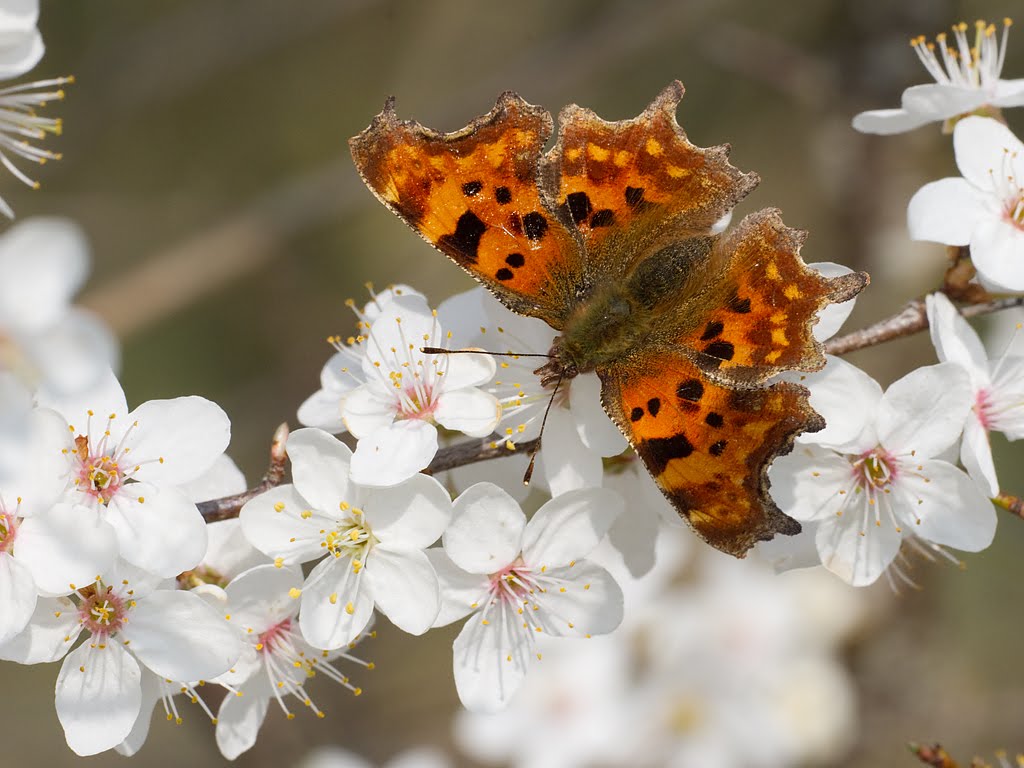
Before getting onto the serious stuff. Can anyone identify this butterfly. Taken on the Island of Guernsey about 2 weeks ago?


Been following up on this new report which promises to generate a great deal of comment. As you can see below there is so much interest in it that the full report is not yet available and their web site is so busy you might have difficulty seeing even the Synthesis. This report should be a very useful tool for anyone campaigning for more action to support wildlife and to deal with our headlong rush towards climate change
This will take some time to assess.


Reports from the UK National Ecosystem Assessment


Synthesis of Key Findings (6 MB)

**The UK NEA website is currently experiencing high traffic levels which is causing problems for some users wishing to download the Synthesis report and Technical Report chapters. We are aware of the problem and hoping to rectify it as soon as possible. Alternatively, a copy of the report has been made available temporarily on the Defra website: www.defra.gov.uk/environment/natural/uknea/** 

Here is a video clip  about the new report:

Monday, May 02, 2011

Photography for wild flowers and plants ( and bugs)

Yesterday's photographic workshop was a great success. The 18 participants where all SWT members I believe, (although that wasn't a condition for attending), and all agreed that it was well organised and a good format for learning something new about taking better photograph's, especially of flowers . I'm hoping to collect a few of the best pictures so we can share them around.
Meanwhile I am showing here some of my efforts. What I learnt above everything else was that I need to learn a great deal more about my Cannon's capabilities so that I can make much more use of them. Thinking hard about the subject and how to position the camera , the depth of focus, the need for a better tripod than my present rather elementary one, and much else. So if you bear that in mind when you view my examples I would be grateful.( I'll add some identification details later and dont forget you can enlarge the photos by clicking on them once or twice)


I

Wednesday, April 13, 2011

Photography of wild flowers

Last Sunday we held a very successful and enjoyable walk in Beer Wood to check out the spring flowers.

To follow that we have organised a one day workshop on May 1st to help people improve their photography of plants.
The details are all on our Heart of the Levels Diary Blog.  Link here

We have a limit of 20 people for the workshop and now have 15 paid up attendees. So hurry if you're interested. Below is a John Bebbington photograph of the Yellow Archangel flower. ( Lamiastrum galeobdolen )


.

Saturday, March 12, 2011

wild flowers

Yesterday on March 11th I noticed first flowering of our 3 year old hedge. Blackthorn is flowering on one of the 1000 hedge plants we planted nearly 3 years ago and at the edge of the field in just one small area were the first cowslips flowering. The photos are not brilliant partly because the sky was overcast and the light poor.

Sunday, February 27, 2011

Dandelions

Very soon we will treated to fields and verges glowing golden with millions of dandelions.
If like me you tend to ignore them because they are so common then it is a surprise to find out that there are some many species.One of my guide books, Wild Flowers of Britain and Ireland lists them as part of the Daisy Family, Asteraceae,  It tells me that the  Daisy family is the largest family of flowering plants and usually called composites because their flowers are packed into a compound head.
The Dandelion is a group of about 240-250 diverse short perennials, some very common, some rare, the great majority difficult for the non expert to distinguish! I feel better reading that because even looking at the yellow flowers in our lawn it is clear there are several varieties.
But the reason for this post is to include a You Tube video of a dandelion flowering in slow motion. Not something most people would sit and watch. Its impressive to see the way it moves through the stages of growth to finally disperse its seeds. Its dispersal technique is another story. I found this on the Wildlife Trusts national web site as part of its Watch Club page. Here is the video.


Wednesday, February 16, 2011

Ancient woodland protection- the Woodland Trust

I've just received an email from the Woodland Trust who are very concerned about proposed changes to planning laws and the effect it will almost certainly have on Ancient Woodland. It would follow that all woodland will be more vulnerable to over development with little or no protection. I will be sending an email in support of their campaign.

I've also added some photos taken in a local wood being managed for conservation. Probably a very old wood.

The heading below should give a link to their web site.

Ancient woodland protection- the Woodland Trust

National Planning Policy Framework Consultation

25+ policy statements into one

Changes to the planning system are threatening what little protection from development is in place for ancient woodland.
Ancient woodland is land continuously woods since 1600 and is our richest habitat for biodiversity, yet covers a mere 2% of England's landscape. Once lost it cannot be recreated - it is irreplaceable. Protecting what we have left is vital and this will in turn deliver the ‘ecosystem services’ that trees and woodland provide such as flood alleviation, aiding climate change mitigation and adaptation, tackling wildlife loss and improving
Paragraph 10, in Planning Policy Statement 9 Biodiversity and Geological Conservation, explicitly recognises ‘ancient woodland is a valuable biodiversity resource both for its diversity of species and for its longevity as woodland. Once lost it cannot be recreated. Aged or ‘veteran’ trees found outside ancient woodland are also particularly valuable for biodiversity and their loss should be avoided’.

In stressing that Local Planning Authorities ‘should not grant planning permission for any development that would result in its loss or deterioration' it has been instrumental in protecting ancient woods and trees since its publication in 2005.

The existing caveat however – ‘unless the need for, and benefits of, the development in that location outweigh the loss of the woodland habitat’ - has left, and continues to leave, ancient woodland open to development threats.

Without the proposed NPPF retaining and strengthening the essence of this policy and removing this specific caveat, outright protection for this precious asset will never be achieved and what little remains of our heritage lost forever.


Sunday, February 13, 2011

Old Mans Beard. Clematis vitalba

A local walk took us past a patch of Old Mans Beard rambling over a hedge. The afternoon winter sunshine created a memorable display in January.


As part of efforts to prepare a local guide to nearby Wildlife Trust nature reserves we drove to near Stoke St Mary to find the Thurlbeer Wood reserve. Approaching along narrow country lanes we found extensive displays of Old Mans Beard in the hedge rows.

 These two photos were taken at the entrance to the Trusts Thurlbeer Wood reserve.


 At the northern entrance to the wood is the display board.

It seems to have been an exceptional year for this clematis with views like these in many locations at least in South Somerset.
As you walk into the wood you find clearings such as the one in the photo below where the Hazel and other small trees have been cleared to make an open space

 This reserve is an important and well managed entry in our reserves leaflet.

Wednesday, February 02, 2011

Starlings spectacular

 Many people visit this Blog searching for information on Starlings.  I cant provide any of my own photos this time but  Lyn Newton does a great job of regularly photographing the display at Westhay, Ham Wall  and other local reserves and I recommend your visit her web site using this link.   Click here:

Monday, January 31, 2011

Pyrchroa coccinea. Wildlife Trust photo competition

While DEFRA carries on consulting about the future of wildlife there are people who get on with managing their woodland  patch part of our lovely county  and taking photos of what they see around them.

This is what John and Valerie do and the photo below is  their  particularly interesting photo of a Cardinal Beetle (Pyrochroa coccinea). They're usually about 14 to 18 mm long and live in woodland edges. They normally fly between May to July and can be seen on flowers and old tree trunks. This photo won this years competition.organised by the Trust. My entries were unplaced! My excuses are several. They must use a better camera. They are very lucky. They have lots of spare time to sit waiting for such opportunities, Etc.
Photo by Valerie Godsmark. All rights reserved.
Here is the photograph:
( its even better if you  click a couple of times on the picture to magnify.)

Saturday, January 22, 2011

Somerset Wildlife Trust, Area Group public meeting

Somerset Wildlife Trust  works closely with the Area Groups of volunteers who organise amongst other things, local  public meetings on natural history and conservation  subjects as well as carrying out  fund raising. The Groups provide an important feedback from all parts of the County. Hundreds of hours of volunteer labour in many forms is quite priceless. However, I'm sure I've said before that organising public meetings is always a fairly stressful activity. Mainly because we never know if anyone is going to turn up! So when the event is a new venture like last Thursday's quiz evening it was even more uncertain. But as it turned out it can be claimed a success but a number of aspects need reviewing and our organisation needs sharpening up.
What went well was that a sufficient number of members and some non members did come along, the questions went done well, we did meet up with around 20 people who don't usually come to talks and we collected enough money to cover costs. And of course most importantly everyone said they had enjoyed the evening including the committee.
With 10 sections of questions only two were natural history  ( because we didn't want to put people off) and they were challenging enough. We did intend taking a photo to prove it happened but forgot all about that in the rush and after a few glasses of wine.Should we do it again , well the committee will need to talk it over and we will see how everyone judged the event. I would say yes but with a number of important details which need to be more carefully organised.

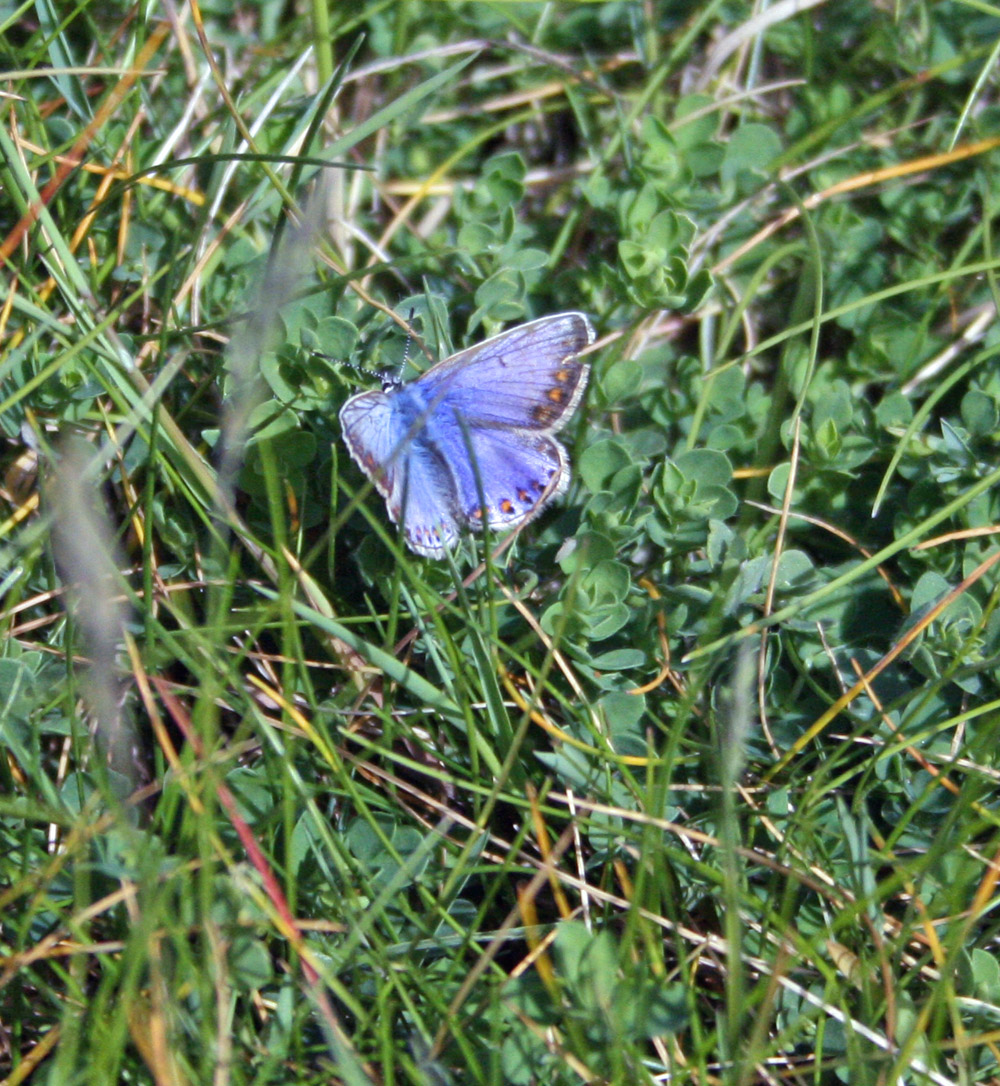
 Identifying this butterfly was one of the questions , not too difficult but do you know its latin name?

 Photographed in our local meadow.

Some of the committee in action last year.

Sunday, January 02, 2011

Hoodia gordonii

Happy new year everyone!

To start the new year off, try this link to a  photograph of something not ever seen in Somerset. I'm pretty sure of that!