Search This Blog

Showing posts with label Climate change. Show all posts

Monday, December 15, 2014

Lima report!

No apologies for following this drama.!! Anything we do now for wildlife conservation will be affected be climate change in the long run.

I tend to check up through the Guardian Newspaper web site and they have this report from Nicholas Stern on this link:

http://www.theguardian.com/environment/2014/dec/14/united-nations--way-forward-on-climate-change

Here is the start of it:


Governments took a step back from chaos in the climate change discussions in Lima and found a way forward on Sunday, albeit with some fudges and compromises, giving themselves just 12 months to finalise a crucial international agreement to avoid dangerous levels of global warming.
Manuel Pulgar-Vidal, Peru’s environment minister, who had skilfully presided over more than two weeks of fraught negotiations, announced that a deal had been struck by more than 190 countries.
The five pages of text, dubbed the Lima Call for Climate Action, outline a way forward on hotly contested issues, including the process for countries to set out their pledges to cut annual emissions of greenhouse gases after 2020.
The overall aim remains the creation of an international agreement on climate change which is due to be settled at the next UN summit, COP21, to be held in Paris in December 2015.

Thursday, November 20, 2014

Big week for global climate change! Article by Graham Readfern in the Guardian

From the web, 19th


http://gu.com/p/43dxd/sbl

Extract

Next stop Lima
The next major deal to limit greenhouse gas emissions is scheduled to be signed at the United Nations Framework Convention on Climate Change 21st Conference of the Parties (COP21) meeting in Paris in December 2015. 
But to avoid the crashing failures of past negotiations (remember Copenhagen), negotiators and the UN will want to see major progress on that deal’s framework at COP20 in Lima, Peru, starting in two weeks time (I’ll be there for most of the second week).
During the last major meeting in Warsaw, Australia emerged with a new reputation for slowing the process down and lacking ambition, which Australian negotiators rejected.
The G20 Communiqué pointed to COP21 and said the G20 would “encourage” nations to confirm their targets for cutting emissions before March next year. 
The European Union has already said it will cut emissions by at least 40 per cent by 2030 but the deal is not considered to be watertight.
The US now has its target to cut emissions from where they were in 2005 by between 26 per cent and 28 per cent by 2025.
Pressure is now mounting on Australia to commit its targets to paper by March, although it could conceivably delay. 
This is a major stumbling block for Australia.
Most analysts say the government’s $2.5 billion Direct Action Policy will fall well short of the unconditional target of cutting emissions from their 2000 levels by five cent by the year 2020. 
Environment Minister Greg Hunt insists the scheme will deliver. Tony Abbott has said if it doesn’t he will not make any more money available.
But if Australia is to stand by its UN pledge to keep global warming below 2C then it will need to commit to targets soon. 
But currently there is a large blank space where a credible climate policy should be.

Tuesday, December 10, 2013

Greenpeace Gazprom banner at Real Madrid press conference

Greenpeace in Denmark did this neat trick shown below in the video clip.


Extracts from The Guardian.


Arctic oil spill is certain if drilling goes ahead, says top scientist

Russia's push for exploration will devastate pristine Arctic, warns expert analyst of BP's Deepwater Horizon oil spill
Greenpeace pointed out that the Arctic is the habitat for "a diverse range of unique wildlife", including 17 species of whale – such as the endangered narwhal, 90% of the remaining population of which lives in Baffin Bay – as well as polar bears, Arctic foxes, seals, hundreds of species of seabirds and millions of migrating birds. There are also 4m people who live in the Arctic, descendants of indigenous communities who have lived there for thousands of years. "The impact of a spill on these communities and already vulnerable animal species would be devastating and long-lasting," the group said.


Wednesday, November 13, 2013

South Somerset Climate Action Group

Before getting to something more serious I've just selected this photo I took in our garden some time ago to remind me why I keep making these posts on anything which effects the countryside around me.
Not the best wildlife photo but good enough to illustrate my point! A butterfly described as scarce in England so I was lucky to see it and have a camera nearby!

Brown Hairstreak,    Thecla betulae


I've just been reading an email from Joe Burlington who runs the South Somerset Climate Action  Group. Its been running for several years now and does really effective work to spread the word about Climate Change and Global Heating.

You may find his blog interesting and the groups current programme of event,talks and discussions.

Here is a link:http://  www.southsomersetclimateaction.org.uk/about/

I'll Post some more information soon.

Here is an extract from the email:

"Tuesday 26 November - Will your solar pv keep your lights on in a power cut? Yes, but ...5.30 for 6pm. End at 7.30 discussion may continue until 8pm.  Suggested donation £3 (includes refreshments)
Jon Lewes, Coordinator, LocalGen Home Energy Centre, 8 Ditton Street, Ilminster, Somerset TA19 0BQ. Parking available round the corner. t.   01460 250986  m. 0751 8039458, www.localgen.org.uk 

Later on Tuesday 26 November: CLIMATE UPDATE: Dr Stephan Harrison of University of Exeter “MAKING SENSE OF: Floods in Summer - Floods of Information - Floods of Uninformed Debate” The Williams Hall, Stoke St Gregory TA3 6EU .  8.15 Doors open for refreshments at 7.50pm .. after Transtion Athelney’s AGM which starts at 7.30.
Stephan will be looking at: certainty, uncertainty and probability; the difference between climate and weather (Was flooding on the Somerset Levels last Summer ‘caused by’ climate change?); recent developments; how complex science is communicated; land surface warming compared with increased energy in the climate system, which intensifies extremes.

Views:  Monbiot in the Guardian – Ken Clarke’s response – Quakers - Joe Burlington
……………."


And Joe ends with this comment:  

"My anger? The government and energy companies refer to ‘green subsidies’ - as though they were deplorable - rather than a feeble but necessary step in the right direction. At the same time, the fossil fuel industry is receiving tax breaks and other financial benefits that are extensive and are being increased. I have asked our MP for details. I await his response!"

Joe has been campaigning for a long time to increase awareness about all these related issues and is clearly very frustrated!


Thursday, October 10, 2013

Oil exploration in the Arctic.

Here in the UK many people will remember the comedy series Dad's Army, Whenever things went wrong the cry went up "we are all doomed". Well that was funny but drilling for oil in the arctic is not.
Despite a massive science  based report on man made climate change from the UN the world is still pushing on with extracting as much fossil fuel as it can find.  Then burning it.

So support for organisations like Green Peace is one of the  few ways for ordinary people to express their dismay at the damage being caused to the only planet we have.

Here is a recent email from Greenpeace for your consideration.

Hi David,
“I have been shaking for most of the last 48 hours. I oscillate between fear, disbelief and panic.”
This is what Kieron Bryan wrote in a letter to his family last week. Kieron is one of the 30 people currently being held in Russian prison facing piracy charges.
It has been exactly three weeks since Russian agents boarded the Arctic Sunrise and arrested all 30 people on board. Now, they are all being held in Russian prisons. Many of them are being kept in freezing cold cells for 23 hours a day, with just one hour out for exercise.
The support team in Murmansk is working around the clock to ensure they receive care packages with food and books to make life a little bit more comfortable for them. But what they need more than anything is continued pressure from millions so we can get them released.
Over 1.2 million of us have already written to Russian embassies around the world demanding the release of the Arctic 30. Let's double that. Please forward this email to at least three friends and ask them to write to the Russian embassy.
This week, our international director, Kumi Naidoo, wrote to President Putin offering himself up as a guarantor for the Arctic 30. He pledged to move his life to Russia for the duration of this affair if the Arctic 30 were released on bail.
Countless human rights and legal experts have come forward to say the piracy charges against the Arctic 30 are unfounded and ludicrous. High profile people from Stephen Fry to Bianca Jagger and Jude Law have publicly voiced their support for the Arctic 30.
Let’s get them out! Please forward this to your friends and ask them to send an email to demand the release of the Arctic 30.
www.greenpeace.org/freethearctic30
Thank you for all your support in the past three weeks.
Fran

Tuesday, July 02, 2013

Climate Change and UK Government action plan


In case you find UK government plans boring here is a photo of a Broomrape which is growing on our garden lawn ( because I haven't cut it for a couple of weeks!)
and also is present in quite large numbers in our local meadow.


Climate change is a big business opportunity for the UK as it and countries around the world are increasingly hit by extreme weather, according to a government report published on Monday. The UK's firstnational adaptation plan sets out the risks to the UK, from floods to water shortages to higher food prices, as well as the economic opportunities.
"The UK is already one of the global leaders in this industry of the future and this market [for climate adaptation] is expected to grow by 5% or more year on year," said environment secretary Owen Paterson. "As the world's climate changes, Britain's expertise in areas such as weather forecasting, flood modelling, infrastructure and insurance are already coming to the fore to prepare us for the kinds of events we might see more often." The adaptation sector is currently valued at about £66bn a year, according to the Department for Environment, Food and Rural Affairs (Defra).

Wednesday, June 26, 2013

Obama , his speech ,some comment

The Guardian puts together some initial comment on the Presidents speech in an article today.
Here is a link for you to read it for yourself;  http://www.guardian.co.uk/environment/blog/2013/jun/25/obama-climate-speech-expert-verdict

The contributors are :

Nicholas Stern, Grantham Institute.
"I am glad that the president chose to close his speech with an appeal to young people to make the case and to press politicians for action. Our generation will be judged by the inheritance we leave."

Christiana Figueres,  UN.

"President Obama's climate action plan is a necessary next step to meet an immediate, worrying shortfall in action to deal with climate change and can be a critical move forward on the path towards a new, global climate agreement. It remains vital that the United States as the world's largest developed economy is seen to be leading serious action to deal with climate change, both at home and abroad. These new steps will help to meet those goals, if they are implemented to the fullest extent to which they are intended.

It is significant that the new plan aims to start up rapidly and covers the full menu of solutions to climate change: clean energy, renewable energy, energy efficiency and the many actions that all countries need to take to adapt to accelerating climate change. This climate action plan should be positive for the US economy and the economies of other countries, as the US shifts faster towards a sustainable, low carbon model, including addressing directly the heaviest sources of emissions from unmodified coal and gas plants."

Bob Ward, Grantham Institute.
"President Obama's excellent speech laid out very clearly the choice that the American people face. A high-carbon economy and unmanaged global warming will create increasing risks from rising sea levels and changes in extreme weather, fundamentally undermining the prospects for future prosperity. But investing in a transition to a low-carbon economy offers a more secure and sustainable source of growth."

Jessy Tolkan, 350.org
"I've waited four years and 158 days to hear the president give this kind of speech on climate change. This is the kind of leadership my generation expected when we first elected, and then re-elected President Obama to office. This speech has been a long- and hard-time coming, but the president's plan outlines meaningful action that begins to meet our global and moral responsibility to address climate change. It's refreshing to see this second-term president finally step into his administrative powers and take the reigns in this fight."

Van Jones, former White House adviser.
"I think the tables are turning against Keystone. I don't think the president wants to lose his youth base by being a president who is spying on them while cooking the planet with a dumb pipeline that everybody hates. I just don't think he wants to do that."


Sunday, February 10, 2013

Global Warming and David Attenborough africa series

You may have seen comments about this weeks TV programme presented by David Attenborough on the Wildlife of Africa. In it he said that in parts of Africa temperatures had risen by as much as 3.5 degrees C.  His comments were criticised in the press for being not entirely substantiated.
I have used the Guardian climate change feature to find more evidence on the subject.

Here is a link to the web page I found which gives a broader and more balanced analysis of Global Warming;

http://www.guardian.co.uk/environment/2010/dec/27/world-warming

Sunday, January 13, 2013

Climate Change and Global Warming


Tweeting a link to this report following the Observer editorial today. Here is the intro paragraph.

Federal Advisory Committee Draft Climate Assessment Report Released for Public Review

A 60-person Federal Advisory Committee (The "National Climate Assessment and Development Advisory Committee" or NCADAC) has overseen the development of this draft climate report.
The NCADAC, whose members are available here (and in the report), was established under the Department of Commerce in December 2010 and is supported through the National Oceanic and Atmospheric Administration (NOAA). It is a federal advisory committee established as per the Federal Advisory Committee Act of 1972. The Committee serves to oversee the activities of the National Climate Assessment. Its members are diverse in background, expertise, geography and sector of employment. A formal record of the committee can be found at the NOAA NCADAC website.
The NCADAC has engaged more than 240 authors in the creation of the report. The authors are acknowledged at the beginning of the chapters they co-authored.

This a link to the report:


http://ncadac.globalchange.gov

Saturday, December 08, 2012

Doha Climate Talks


There is plenty to read about these talks. I haven't heard much if anything on the BBC News about the importance of Global agreement on climate change. The Guardian as usual is a good place to see what is going on or not!!

Apparently Lord Monkton was escorted  / thrown out of the talks for impersonating a Burmese delegate.

Climate change talks deadlocked on final day of UN summit


Talks on a new climate deal ground on through Friday night in Qatar, as countries failed to agree on key issues including: rescuing the Kyoto protocol, finance and compensation for poor countries suffering the effects of climate change, and how to structure a proposed new global climate change agreement.
The negotiations, which have gone on for more than a fortnight, looked set to last for most of Saturday. But the marathon session left many delegates hopeful of rescuing a deal amid the frustration and confusion of the night.
"We have worked without a break and people realise we need to go home with something," said one delegate.
The EU is understood to have proposed a deadline of 3pm Saturday (12pm GMT) for adopting final amendments, but every deadline that has been set so far in the last days of talks has been breached.
Ed Davey, the UK energy and climate secretary, worked through the night, meeting with ministers from developed and developing countries in an attempt to secure a deal.

Thursday, November 22, 2012

World Bank Report on the effects of Climate Change


Here are some extracts from Transition Langport Newsletter.
These two items caught my attention and are worth posting here for anyone interested in the future of wildlife in our beautiful Somerset.


South Somerset Climate Action campaigns for sustainable - and better - communities which will involve: reliable food supplies; protection and careful use of our biological heritage, forests, fresh water & oceans, fuels and minerals; renewable energy generation; waste limitation and pollution control.

-------------------------------------------------
Hello All,

I only came across the World Bank's recent report 'Turn down the Heat' by accident when I was reading through the Guardian's 'Climate Change' articles. Since the World Bank is hardly one of those left-wing organisations that the UK media love to deride, you might have thought that we would have heard about the report before now. However, I could not, for example, find any reference to it in the BBC's news and current affairs coverage - but then I guess that avoiding 4 degrees C of global warming is too trivial a matter to be placed before the British public. Anyway here is the link to the World Bank's report:

http://climatechange.worldbank.org/sites/default/files/Turn_Down_the_heat_Why_a_4_degree_centrigrade_warmer_world_must_be_avoided.pdf


Even if it is not considered sufficiently important by the BBC, Sky News and newspapers other than the Guardian, perhaps you know of ways to get the report in front of more people than it would otherwise reach?

Best wishes,

Peter R


The report Turn Down the Heat: Why a 4°C Warmer World Must be Avoided is a result of contributions from a wide range of experts from across the globe. We thank everyone who contributed to its richness and multidisciplinary outlook.


Foreword
It is my hope that this report shocks us into action. Even for those of us already committed to fighting climate change, I hope it causes us to work with much more urgency.
This report spells out what the world would be like if it warmed by 4 degrees Celsius, which is what scientists are nearly unanimously predicting by the end of the century, without serious policy changes.
The 4°C scenarios are devastating: the inundation of coastal cities; increasing risks for food production potentially leading to higher malnutrition rates; many dry regions becoming dryer, wet regions wetter; unprecedented heat waves in many regions, especially in the tropics; substantially exacerbated water scarcity in many regions; increased frequency of high-intensity tropical cyclones; and irreversible loss of biodiversity, including coral reef systems.
And most importantly, a 4°C world is so different from the current one that it comes with high uncertainty and new risks that threaten our ability to anticipate and plan for future adaptation needs.
The lack of action on climate change not only risks putting prosperity out of reach of millions of people in the developing world, it threatens to roll back decades of sustainable development.
It is clear that we already know a great deal about the threat before us. The science is unequivocal that humans are the cause of global warming, and major changes are already being observed: global mean warming is 0.8°C above pre industrial levels; oceans have warmed by 0.09°C since the 1950s and are acidifying; sea levels rose by about 20 cm since pre-industrial times and are now rising at 3.2 cm per decade; an exceptional number of extreme heat waves occurred in the last decade; major food crop growing areas are increasingly affected by drought.
Despite the global community’s best intentions to keep global warming below a 2°C increase above pre-industrial climate, higher levels of warming are increasingly likely. Scientists agree that countries’ cur- rent United Nations Framework Convention on Climate Change emission pledges and commitments would most likely result in 3.5 to 4°C warming. And the longer those pledges remain unmet, the more likely a 4°C world becomes.
Data and evidence drive the work of the World Bank Group. Science reports, including those produced by the Intergovernmental Panel on Climate Change, informed our decision to ramp up work on these issues, leading to, a World Development Report on climate change designed to improve our understanding of the implications of a warming planet; a Strategic Framework on Development and Climate Change, and a report on Inclusive Green Growth. The World Bank is a leading advocate for ambitious action on climate change, not only because it is a moral imperative, but because it makes good economic sense.
But what if we fail to ramp up efforts on mitigation? What are the implications of a 4°C world? We commissioned this report from the Potsdam Institute for Climate Impact Research and Climate Analytics to help us understand the state of the science and the potential impact on development in such a world. 

Monday, December 05, 2011

Durban COP 17 News.

Click here for more info.


Durban - Nothing short of a new energy industrial revolution is going to hold global warming below 2°C, economist Lord Nicholas Stern said on Monday.

He told reporters at COP 17 in Durban that radical cuts would have to be made in global greenhouse gas emissions.

"The numbers on climate change - if we’re going to have a reasonable chance, at least 50-50, of holding to 2°C - are very clear," Stern said.

"And it’s also clear that they imply that if we’re to achieve the reductions that we have to achieve to get to 2°... those reductions have to be radical, and to achieve it means a new energy industrial revolution."

Stern, author of the landmark Stern Review on the Economics of Climate Change, was speaking a day ahead of the start of high-level political negotiations at the climate change conference.


Friday, December 02, 2011

Climate change, the demand for action

If you know how the United Nations is organising the battle to limit climate change then just skip the next bit.

Because I was getting confused about what is going on I did a bit of surfing.

IPCC  is the UN Intergovernmental Panel on Climate Change. They have just had a meeting in Kampala. It was identified as the 34th Session from 14th to 19th November.  They are working to produce their Fifth Assessment Report, AR5. Due for completion in 2014. Their previous report called AR4 was released in 2007.  The IPCC produces assessment reports for the FCCC.

The FCCC is the UN Framework Convention on Climate Change. Set up in 1992 at the so called Earth Summit in Rio De Janeiro. That led to the Kyoto Protocol.

 The FCCC works in parallel with the IPCC.  It progresses through COP's (short for  Conference of the Parties). Their COP17 is currently in progress in Durban , South Africa.  26th Nov to 7th Dec.

Reports from Durban talk about AEOSIS which is the Alliance of Small Island States with 39 members and LDC's which are the 48 Least Developed Countries. This combined grouping of countries is about 50% of the total UN membership and they want action to start on Jan 1st 2012.

They are now confronted by the rest, some of whom also qualify as LDC's including India, Brazil and China who don't want action before 2020.

To find our what the situation is in the Conference you can find reports on the BBC Environment pages and no doubt else where.

If I've missed anything important don't hesitate to tell me!  Click here for a link to the BBC. Wiki is very good also.

Friday, November 04, 2011

National Planning Policy Framework ( NPPF )

The Kingfisher Project introduces primary school children to wild life out on the fields of a local farm.

Here they were examining owl pellets to identify their food and then being shown a beehive.

There is a great deal of work going on in many ways to educate our children in environmental matters.


But I've just written to my MP! I am commenting on the consultation process which has been held recently about proposed changes to planning law. This is a personal view not necessarily the views of our local group.


David Heath CBE MP, House of Commons, London SW1A 0AA
04.11.11

Dear David Heath MP,

Thank you for your letter dated 13th October on the subject of the NPPF.
I did also send my comments via the web site for comments.

I made the point that I have had some contact with planning laws over many years, first in my work in the construction industry and more recently as a member of a local village society in Buckinghamshire and very recently as a volunteer with the Somerset Wildlife Trust.

The words “presumption in favour of development” jumped off the page in the draft document and I can’t believe they are meaningless or should be read to mean nothing has changed. The whole exercise is designed to change what had gone before.
To say that nothing has changed since the 1940’s is, I’m afraid, a sad reflection on our failure to respond to the huge advance in Climate Change science which will be no doubt reviewed again in South Africa shortly.  Biodiversity loss is yet another related major issue.

The opening words in the document should have said that there is a presumption to ensure environmental sustainability before any development is approved.  The future of our one and only planet is quite important.

I notice that even our military leaders recognise that running an aircraft carrier is unsustainable. That is new!

I notice you refer to protection afforded to national parks, AONB’s and SSSI’s. I am involved in the conservation of a Local Wildlife Site and they are important too.

Your enthusiasm for The Localism Bill is worrying. To remove carefully worked out national directives which have the benefit of scientific guidance will leave local councillors very much in the dark in trying to decide which developments are sustainable. There have been plenty of local examples of pressure being applied to get council approval for suspect schemes, some within your own constituency.
It is a concern that the South Somerset District Council has only one Ecologist employed and then only part time.

I can only hope that you and your colleagues will exercise your own due diligence in making sure you don’t preside over a damaging new law.
Yours sincerely,


Saturday, June 04, 2011

Reports from the UK National Ecosystem Assessment


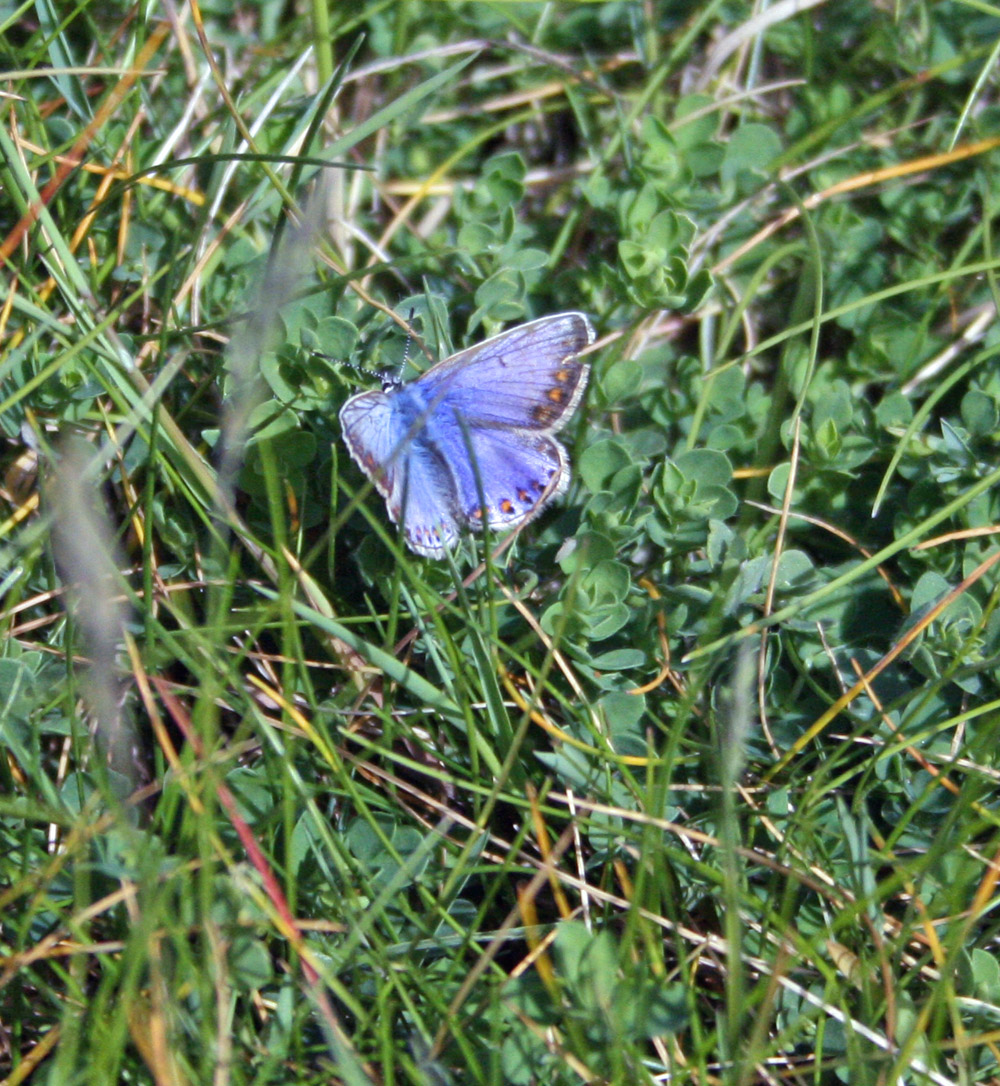
Before getting onto the serious stuff. Can anyone identify this butterfly. Taken on the Island of Guernsey about 2 weeks ago?


Been following up on this new report which promises to generate a great deal of comment. As you can see below there is so much interest in it that the full report is not yet available and their web site is so busy you might have difficulty seeing even the Synthesis. This report should be a very useful tool for anyone campaigning for more action to support wildlife and to deal with our headlong rush towards climate change
This will take some time to assess.


Reports from the UK National Ecosystem Assessment


Synthesis of Key Findings (6 MB)

**The UK NEA website is currently experiencing high traffic levels which is causing problems for some users wishing to download the Synthesis report and Technical Report chapters. We are aware of the problem and hoping to rectify it as soon as possible. Alternatively, a copy of the report has been made available temporarily on the Defra website: www.defra.gov.uk/environment/natural/uknea/** 

Here is a video clip  about the new report:

Friday, January 28, 2011

Climate change.

 Having posted my photos of frost pictures it might seem odd to make this next post.  But this subject is still with us and not going away and if the approach shown in the video is good one we should be doing our best to follow the advice offered.

I've just watched a YouTube video on this subject which is quite innovative in its approach to the arguments we have all seen for years now. Its not new and it has attracted a lot of sceptic comment as has the speaker Greg Craven ( see wikipedia ) but  I would be very interested to hear from anyone who watches it with your reaction to it.


Monday, December 27, 2010

Cold Christmas


Christmas now over and recovery in progress, temperatures rising again over 5 degrees C after what seemed like an eternity of freezing conditions. Snow melting away quite quickly today and the grass showing in the fields. The photos were taken yesterday.
Last week watched a small flock of Redwings in our front garden where the pyracanthus berries are rapidly disappearing. It appears that Redwings  are keeping the Blackbirds away whilst they strip the bushes. Tough on the Blackbirds who have had it all their own way for several weeks now. Interesting to compare the tactics of both birds. Where as the Blackbirds more or less act alone and even chase away other Blackbirds the Redwings work together and strip the bushes in a day or so.
The Blackbirds were sitting around in a tree looking quite fed up and cold.

If you're interested in the question about whether this cold spell is part of global climate change then you might like to read the reports and comment on the Blog:  "Real Climate", ( link here) which I personally find very informative on any aspect of climate change and very topical.

I was surprised to get as a present, a new book by Prince Charles,  called Harmony. I haven't read it yet so I can only note that its chapters cover a very wide range of subjects all of which are relevant to how we should live in harmony with one another if we are to conserve a world fit to live in. I will post comments in due course. He starts with a quotation from Shakespeare. The  lines underlined are quoted in the book  and are part of a longer speech which shows more of the context in the play:


As You Like It
Act II. Scene I.
The Forest of Arden.
Enter DUKE Senior, AMIENS, and other Lords, like Foresters.


Duke S. Now, my co-mates and brothers in exile,
Hath not old custom made this life more sweet
Than that of painted pomp? Are not these woods
More free from peril than the envious court?
Here feel we but the penalty of Adam,
The seasons' difference; as, the icy fang
And churlish chiding of the winter's wind,
Which, when it bites and blows upon my body,
Even till I shrink with cold, I smile and say
'This is no flattery: these are counsellors
That feelingly persuade me what I am.'
Sweet are the uses of adversity,
Which like the toad, ugly and venomous,
Wears yet a precious jewel in his head;
And this our life exempt from public haunt,
Finds tongues in trees, books in the running brooks,
Sermons in stones, and good in every thing.

I would not change it.

Saturday, December 11, 2010

Climate change.

This seems a good step in the right direction. I'm sure all the NGO's involved will take it as a big opportunity to press hard for all governments to start to take action. How will the UK respond now?

Here is part of the official press release from the UN conference.

PRESS RELEASE
UN Climate Change Conference in Cancún delivers balanced package of decisions, restores faith in multilateral process

(Cancún, 11 December 2010) – The UN Climate Change Conference in Cancún, Mexico, ended on Saturday with the adoption of a balanced package of decisions that set all governments more firmly on the path towards a low-emissions future and support enhanced action on climate change in the developing world.
The package, dubbed the “Cancún Agreements” was welcomed to repeated loud and prolonged applause and acclaim by Parties in the final plenary.
“Cancún has done its job. The beacon of hope has been reignited and faith in the multilateral climate change process to deliver results has been restored,” said UNFCCC Executive Secretary Christiana Figueres. “Nations have shown they can work together under a common roof, to reach consensus on a common cause. They have shown that consensus in a transparent and inclusive process can create opportunity for all,” she said.
“Governments have given a clear signal that they are headed towards a low-emissions future together, they have agreed to be accountable to each other for the actions they take to get there, and they have set it out in a way which encourages countries to be more ambitious over time,” she said.
Nations launched a set of initiatives and institutions to protect the poor and the vulnerable from climate change and to deploy the money and technology that developing countries need to plan and build their own sustainable futures. And they agreed to launch concrete action to preserve forests in developing nations, which will increase going forward.
They also agreed that countries need to work to stay below a two degree temperature rise and they set a clear timetable for review, to ensure that global action is adequate to meet the emerging reality of climate change.
“This is not the end, but it is a new beginning. It is not what is ultimately required but it is the essential foundation on which to build greater, collective ambition,” said Ms. Figueres.

Richard Black on his BBC Blog gives his own view. Click here to read Blog.

Cancun: The chihuahua that roared

Richard Black | 11:29 UK time, Saturday, 11 December 2010

If Copenhagen was the Great Dane that whimpered, Cancun has been the chihuahua that roared.
And what a surprise it was.