Search This Blog

Showing posts with label DEFRA. Show all posts

Monday, March 24, 2014

CPRE campaign

Extract from CPRE web site;  http://www.cpre.org.uk

The Government’s planning reforms are unnecessarily damaging the countryside and undermining local democracy while failing to prioritise the regeneration of urban areas, concludes a new report launched by CPRE.
Community Control or Countryside Chaos? analyses the impact of the National Planning Policy Framework (NPPF) on the countryside in the two years since it was adopted.  The research has found that the reforms are forcing local councils to accept major developments against their will in all parts of the country from Devon to Derbyshire and Suffolk to Staffordshire. 
It reveals plans for over 700,000 houses in the countryside - including 200,000 allocated for the Green Belt. As a consequence, the countryside surrounding towns and villages across England is under siege (see page 10 of our report). Sites already earmarked for housing are being left undeveloped while councils are under increasing pressure to allocate more and more land for future development.

Tuesday, July 02, 2013

Climate Change and UK Government action plan


In case you find UK government plans boring here is a photo of a Broomrape which is growing on our garden lawn ( because I haven't cut it for a couple of weeks!)
and also is present in quite large numbers in our local meadow.


Climate change is a big business opportunity for the UK as it and countries around the world are increasingly hit by extreme weather, according to a government report published on Monday. The UK's firstnational adaptation plan sets out the risks to the UK, from floods to water shortages to higher food prices, as well as the economic opportunities.
"The UK is already one of the global leaders in this industry of the future and this market [for climate adaptation] is expected to grow by 5% or more year on year," said environment secretary Owen Paterson. "As the world's climate changes, Britain's expertise in areas such as weather forecasting, flood modelling, infrastructure and insurance are already coming to the fore to prepare us for the kinds of events we might see more often." The adaptation sector is currently valued at about £66bn a year, according to the Department for Environment, Food and Rural Affairs (Defra).

Thursday, May 02, 2013

The Providential Principle

Here is a link to the latest George Monbiot article discussing the way our present Government deals with important matters impacting on the natural environment. Its all about the Precautionary Principle which I have considered to be a starting point for almost any serious action we take in life. But thats just being cautious  of course and many people dont  think that way!


The Providential Principle

Here is an excerpt from the article:

Posted: 01 May 2013 03:33 AM PDT
Amazingly, the UK government has not defined the precautionary principle and appears to have no idea what it is.

By George Monbiot, published on the Guardian’s website, 1st May 2013

Here’s something remarkable I stumbled across while researching my column on Monday, but did not have room to include. I hope you’ll agree that it is worth sharing.
I was trying to understand the context for the new chief scientist’s cavalier treatment of scientific evidence, in an article he wrote opposing a European ban on neonicotinoid pesticides. These are the toxins which, several studies suggest, could be partly responsible for the rapid decline in bees and other pollinators.
Just one month into the job, Sir Mark Walport has, I believe, disgraced himself: by misrepresenting the science, misinforming the public about risk and uncertainty and indulging in scaremongering and wild exaggeration in support of the government’s position. I believe he has seriously damaged his standing and that of the office he holds.
Among the many problems with the article he wrote was the way he defined the precautionary principle. Interpreting and upholding this principle is fundamental to the chief scientist’s role. Yet he doesn’t seem to understand what it means. Here’s what he said about it:
“This simple idea just means working out and balancing in advance all the risks and benefits of action or inaction, and to make a proportionate response.”
Oh yes? Here’s how the Rio Declaration, which the UK, with 171 other states, signed in 1992, defines it:
“Where there are threats of serious or irreversible damage, lack of full scientific certainty shall not be used as a reason for postponing cost-effective measures to prevent environmental degradation.”
The difference is critical to an understanding of the government’s environmental responsibilities. As if to underline the fact that he hasn’t grasped it, Sir Mark used his article to do the opposite: he used a lack of full scientific certainty as a reason for postponing cost-effective measures to prevent environmental degradation.
The precautionary principle, as defined by the Rio Declaration, has, in the words of the European Commission, “become a full-fledged and general principle of international law.”
In other words, it’s not something you would expect a chief scientist to make up as he goes along.
So the question that occurred to me was this. If the government’s chief scientist doesn’t know what the precautionary principle is, does the government know?

www.monbiot.com

Saturday, April 06, 2013

Back a ban for bees’ and our benefit | The Wildlife Trusts

Back a ban for bees’ and our benefit | The Wildlife Trusts


Paul Wilkinson, The Wildlife Trusts’ Head of Living Landscape, said: 
The Government should follow the advice of the Environmental Audit Committee and place an immediate moratorium on the use of these chemicals. Although further research is always beneficial, there is sufficient and compelling evidence to apply the precautionary principle. We must do the right thing for our bees, our countryside, and our food supply that relies on natural pollination.” 
Over a six month period, the Committee has gathered written and oral evidence from leading scientists, Defra, the pesticide industry and others.  The Committee report recommends that Defra should prepare to introduce a moratorium on the use of imidacloprid, clothianidin and thiamethoxam on crops that are attractive to bees by 1 January 2014.  The committee also recommend Defra supports such a proposal in the EU - which it has failed to do up until now. 

Friday, April 05, 2013

Bees, Pesticides, UK Government and me!

Dear Secretary of State and Minister,

Today's Environmental Audit Committee (EAC) report calls on the Government to address a series of important flaws in its pesticides policies and risk assessment processes.

I would like to join Friends of the Earth in voicing my support for all the EAC's recommendations. I urge you to do the same. In particular, the Committee unanimously backed European proposals for a temporary ban on the use of three neonicotinoid pesticides on crops attractive to honey bees.

Our bees are in trouble and urgently need the Government to put in place a British Bee Action Plan to tackle all causes of their decline.

This must ensure bees have adequate feeding and nesting space. But it must also include action to reduce the use of pesticides across the board, starting with the European Commission's proposed neonicotinoid ban.

In last month's European vote on this issue, the UK abstained. I support Friends of the Earth's call for you to change this position and support the ban.

You can contact me by email (preferably - to save resources) or at the following address:

Yours sincerely,
David German

Saturday, December 01, 2012

Bees and the Rachel Carson legacy


Insects and Insecticides

Written evidence submitted by The Wildlife Trusts
The Wildlife Trusts welcome the opportunity to submit evidence to the Environment Audit Committee (EAC) regarding insects and insecticides.
Our evidence focuses on neonicotinoid insecticides, in particular:
· The impacts of neonicotinoids on insect pollinators (honeybees, bumblebees, hoverflies, butterflies and moths)
· Half-life in soil; routes of exposure and contamination of non- target vegetation (such as that found along field margins)
· Impacts on ecosystems in the agricultural landscape
· Inadequacy of risk assessment for these types of insecticides
The Wildlife Trusts’ position
1. There is a growing body of evidence that shows that neonicotinoids have a detrimental effect at sub-lethal doses on insect pollinators. For this reason, The Wildlife Trusts believe that until it can be categorically proven that neonicotinoids are not adversely impacting pollinator populations, and by extension ecosystem health, Government should adopt the precautionary principle and place a moratorium on their use on all outdoor crops.

Sunday, October 16, 2011

Draft National Planning Policy Framework

Against the context of the NPPF  today I came across some interesting background Blogs and Web sites. Starting with a 2010 report on biodiversity:

Making Space for Nature:
A review of England’s Wildlife Sites and Ecological Network
Chaired by Professor Sir John Lawton CBE FRS
See the report here

A brief summary of the report says:

We propose that the overarching aim for England’s ecological network should be to deliver a natural environment where:
Compared to the situation in 2000, biodiversity is enhanced and the diversity, functioning and resilience of ecosystems re-established in a network of spaces for nature that can sustain these levels into the future, even given continuing environmental change and human pressures.

Prof Lawton has also been reported as saying:
Professor Sir John Lawton FRS described the coalition government’s proposed ‘dismantling of the planning system‘ as ‘truly terrifying‘ and the ‘backpedalling‘ on climate change in George Osborne’s conference speech as being ‘deeply worrying‘.

Another interesting blog is here  where Sir Johns speech to the RSPB is reported. and the same blog gives a link to the:

Planning Officers Society Final #NPPF Response

Click here for the link.
All these reports help to clarify the extent of the debate about the proposed changes.

Tomorrow , the 17th Oct is the closing date for the consultation period. I managed to send off some additional comments this afternoon!

Saturday, June 04, 2011

Reports from the UK National Ecosystem Assessment


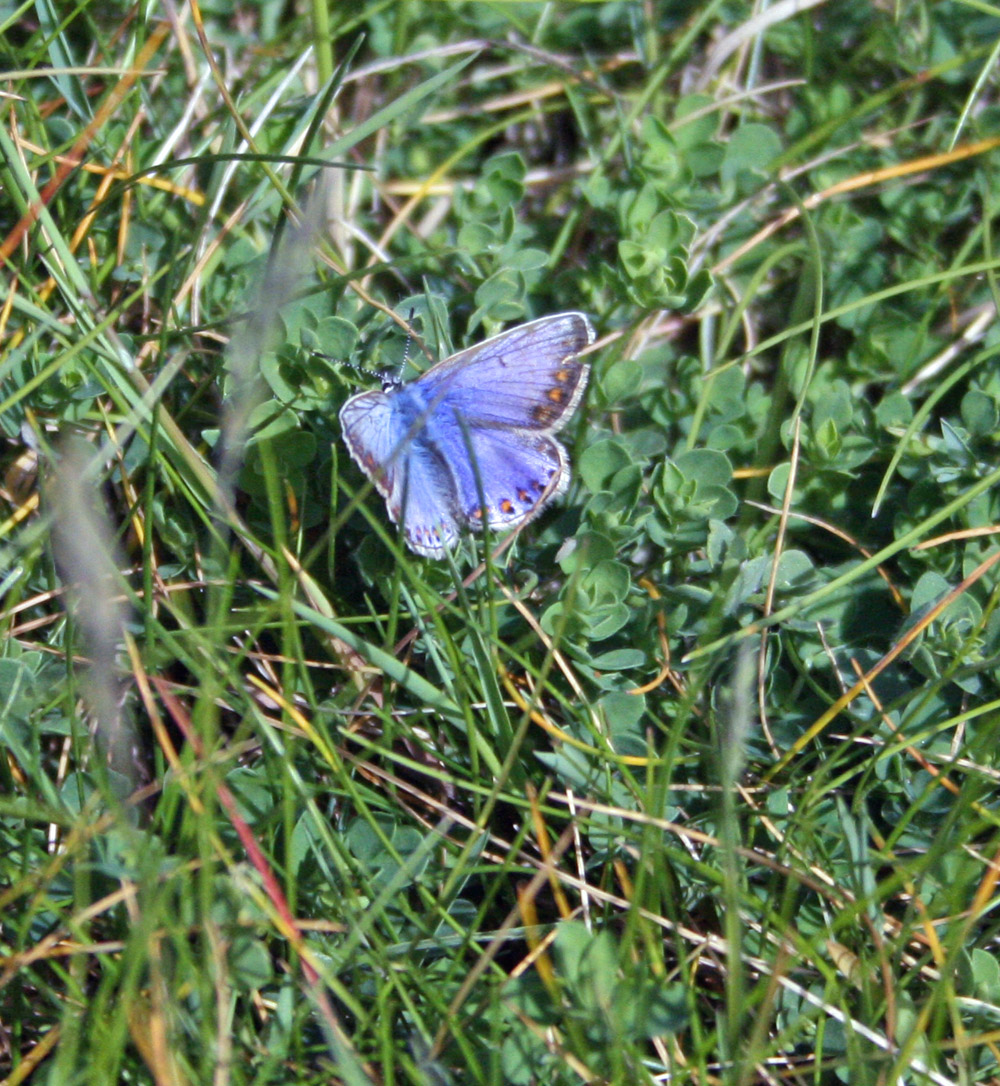
Before getting onto the serious stuff. Can anyone identify this butterfly. Taken on the Island of Guernsey about 2 weeks ago?


Been following up on this new report which promises to generate a great deal of comment. As you can see below there is so much interest in it that the full report is not yet available and their web site is so busy you might have difficulty seeing even the Synthesis. This report should be a very useful tool for anyone campaigning for more action to support wildlife and to deal with our headlong rush towards climate change
This will take some time to assess.


Reports from the UK National Ecosystem Assessment


Synthesis of Key Findings (6 MB)

**The UK NEA website is currently experiencing high traffic levels which is causing problems for some users wishing to download the Synthesis report and Technical Report chapters. We are aware of the problem and hoping to rectify it as soon as possible. Alternatively, a copy of the report has been made available temporarily on the Defra website: www.defra.gov.uk/environment/natural/uknea/** 

Here is a video clip  about the new report:

Wednesday, February 02, 2011

White Paper on the Natural Environment, grassroots feedback. No 9.

These are my feedback comments ( in full, its a bit long!)   for the DEFRA consultation for the proposed White Paper. This was a supplementary request for examples of local conservation projects with suggested headings and questions.


DEFRA consultation on the proposed White Paper on the Natural Environment.

Feedback Form to be submitted by Jan 31st 2011

These comments are based on discussions with other local residents, many, but not all, members of The Somerset Wildlife Trust and other conservation organisations. Comments are related to questions given in the DEFRA consultation documents.

What natural environments or locations did you discuss?

These comments are based on local experience with a four acre meadow.
The field was purchased 5 years ago by a syndicate of 11 local residents who wished to conserve and manage the field as a nature reserve. Its ecological value and biodiversity has been confirmed by professional survey and other Botanical Study Groups visits. The survey carried out by Mr Jon Marshall of Marshal Agroecology Ltd was accepted on 23rd Jan 2007 by the Somerset Environmental Records Centre as showing that the field met the criteria for County Wildlife Status, (now called Local Wildlife Sites).  Each year the field is notable for displays of a rich variety of butterflies, flowering plants and insect life.

What were the Big Ideas that your discussion produced?

Our experience has demonstrated that for most of us taking on the conservation of a four acre meadow is a “Big Idea”. In as much as there is a great deal to learn and regular management tasks to carry out. None of the members of the syndicate had any significant relevant experience. Over the 5 years we have learned by “doing”.
The “Big Idea” was however only the start and raising the funds for purchase and to cover subsequent management was, and still is, problematic. We are not included in any funding scheme and have no income from the field. We even pay to have the grass cut and removed as hay. It can be said that what we have done is of value to the village and all the residents but as we haven’t advertised it at all very few people know about it and we would like to change that. A number of the original syndicate have withdrawn their initial funding and others wish to do so. If this continues the field may have to be put back on the market.

What is the role of local people or other organisations in delivering those big ideas?

There has been great encouragement from local conservationist but in general the syndicate members have been on their own and relying on their own resources including finance.
It started with the group of residents who committed money for the purchase without any guarantee of a return of the money. A local farmer has given free advice and valuable practical help.
The Somerset Wildlife Trust has given advice and visited the field as did Butterfly Conservation to search for and find Brown Hairstreak butterflies.
We employed a professional consultant to carry out a botanical survey.
Heart of the Levels Botany Study Group have also surveyed the field and used it for field trips for plant identification training.
Three years ago Somerset County Council provided a grant for a new 200m hedge planted by volunteers.

What other information would you like to share with us?

Now after 5 years experience we feel able to explore the potential for wider use of the meadow. We have always welcomed visitors and dog walkers and others have frequently come to the field although there is no existing public right of way.
In the summer months flora and fauna are displayed in abundance.
In addition to the local involvement noted above we hope to arrange for the local primary school to make educational visits. Perhaps also the Huish Episcopy Academy six form unit might find it useful.
The local Wildlife Watch Club for parents and children (part of Somerset Wildlife Trust) are planning to use the field for educational visits.

How does the meadow contribute to the local environment?

Virtually all other land around our village is intensively farmed with some notable exceptions where wildlife provisions are made.
Being located close to the boundary of the village, the field is within 10 minutes walk for hundreds of families. Most other fields are monoculture and despite the presence of footpaths they have limited environmental interests.
Our meadow changes with the seasons with flowering plants seen at different times including  celandine, cowslips, buttercups, vetches, pyramidal and bee orchids , bromrape, knapweed, field scabious, agrimony,  ladies bedstraw and many others. We see around a dozen species of butterfly and many more moths, several species of grass hopper and the Great Green Bush Cricket.
The meadow has ancient hedges on two sides containing 15 woody species which gives scope for educational use and provides nesting sites and food for birds and mammals. This will improve as the new hedge develops.

How does the meadow positively impact on our lives?

By getting involved in healthy outdoor activity, land management and farming, learning about the natural environment and local history and sharing our experience with others, young and old.

What is good and what could be better and what more can we all do.

A moth count has been suggested for June 2011.
Visits by residents living in sheltered housing might be welcomed.
We already have paths around and through the field and these could be kept in a more suitable condition for disabled visitors. One of our syndicate members requires the use of a wheel chair. We could be more active in inviting groups of visitors and produce educational notes to encourage an attitude of discovery. We have seen how learning can be promoted by bringing together school parties and local natural history experts. For adults guided walks are always very popular and we could explore ways to set these up.

We could do more to get the interest of the Parish Council and explore ways in which they could support some aspects of the venture.
We can use the recently started community web site and local community news sheet to provide information and encourage visitors.
The Government should set a good example.

Barriers to be identified and solutions explored.

These include;
A basic lack of knowledge amongst the general public which can also produce a lack of interest in conservation.
We have found that there is nevertheless a lot of interest to be tapped.
Our meadow is privately owned but other similar projects are publicly funded probably after donation of land. A partnership between private purchase through donations and public ownership with volunteer management might be a useful formula to be promoted.

Many of the extra things noted above need finance and as it stands if that is not available then improvements will not happen.

“One thing” that would help would be a publicly funded insurance cover. This is a significant annual cost that we had not anticipated.

Whilst there are funding schemes for farmers and large land owners we have found little to fit our situation. Relatively small funding to help pay for a botanical survey and items such as  third party insurance, hedging,  hay cutting and removal  are likely to be needed to encourage others to follow this “Big Idea”.
Finding ways to encourage or enable farmers to support community projects and when they do to publicise their contribution.

Local residents supporting this submission.

BM, , H H, R W, K C, M M

Submitted by:

Signed:


David German


Thursday, January 06, 2011

Natural Environment White Paper comments. No 8 URGENT

Happy new year everyone!  Take your eye off the ball for a moment and new demands appear out of nowhere.

I was updating my contribution to our local community web site and that took me to the SWT website set up to deal with the recent DEFRA consultation. Having sent off my comments I relaxed and was  taken aback to see that we are now being invited to participate in " grassroots" discussion on the new paper.  Deadline 31st Jan.  I hope our local group can contribute some thoughts. If you want to join us let us know.

Here is an extract from the DEFRA web page taken today. Hope the links work.
**************************************************************************

Grass roots engagement

We want all interested parties to have a say in shaping the development of the White Paper.
To do this we encourage organisations who already have a relationship with local groups, societies, consumers or individuals, to engage them. For example, NGOs who have local groups or large memberships, civil society organisations who are in touch with local civic groups, and any businesses who wish to engage their consumers on White Paper issues.
Organisations such as these may wish to disseminate the discussion document electronically to encourage grass-roots responses back to their national organisation or direct to naturalenvironment@defra.gsi.gov.uk with the subject heading “Grass roots engagement”.
We have now published some resources to help your organisation facilitate grassroots engagement.  You will find attached a Guide for Facilitators, a Briefing Note for Participants, and a Feedback Form.  The deadline for returning the feedback forms from any grassroots engagement is 31 January 2011.

Background

The White Paper on the natural environment will be a bold and ambitious statement outlining the government’s vision for the natural environment, backed up with practical action to deliver that ambition. It represents an opportunity to change the way we think about and manage the natural environment, seeing it as a system and valuing the services it gives us.
We have made significant progress in tackling environmental degradation in the past 20 years, significantly reducing levels of environmental pollution in our air and water and providing protection for our most precious wildlife sites.
However, changing and increasing pressures on our environment continue to cause degradation (which in turn has social and economic impacts) and managing these pressures is becoming more challenging.
A more systematic, strategic approach is needed that brings together a wider range of players, provides new options to tackle these challenges efficiently and effectively. This requires, and will encourage, a wider understanding of the value of the natural environment to society and the economy.
In order to achieve this, the process of developing the White Paper will be accompanied by a wide-ranging process of stakeholder engagement. This Big Society approach to policy development will allow individuals and communities to contribute innovative ideas on how their local environment can be protected and enhanced.

Panel of environmental experts
Richard Benyon has established a panel of environmental experts to advise him in the development of the White Paper.
Further information
If you require more information on the Natural Environment White Paper, please contact the Natural Environment White Paper team at: naturalenvironment@defra.gsi.gov.uk

Sunday, November 28, 2010

Badger control consultation

I've spent some time going through notes on this subject from the SWT, that includes a 13 page report by Liz Deane Chair of the SWT Council in which she reviewed a wide range of published papers and reports on the subject.( Its very comprehensive). Also notes from  the Badger Group and the NFU. Finally I've looked at the DEFRA web site and browsed the extensive set of documents which make up their consultation doc.It all confirmed my view that the proposals are based on so many assumptions based on inadequate research and lack of relevant knowledge  that they are not at all certain to achieve their intended objective. The only certainty is that a large number of animals will be killed many of which will be healthy. 
If you want to see the DEFRA docs they are all available at this link here.

I've gone through the 8 questions they invite comment on and here is my response. Qu 1, 7 and 8 are the only ones I have written much about the others are all "No".

Of course we also want to encourage individuals to respond  as they see fit, the more the better regardless of what is said. A bigger post bag means more people are concerned about the subject one way or another.  Here  are my comments with the DEFRA question shown in bold:
*************************************************************************************************************************************************************************************************************************************
Submission to DEFRA.
Qu 1.  Comments are invited on the options, costs and assumptions made in the Impact Statement.  ( that is Annex F )
The Impact Statement includes many assumptions which are unlikely to prove accurately assessed. Consequently it is not possible to predict a successful outcome and this is not an acceptable basis for killing a large number of animals.
We do not agree with a policy of culling badgers.
We consider such a policy to be unnecessary and not adequately supported by scientific evidence.
The Consultative Doc also shows many areas of uncertainty especially in the culling method statements.
Qu 2  Do you agree with the preferred option? 
No
Qu 3  Do you agree that this approach, of issuing licences to farmers/ landowners, is the most appropriate way to operate a badger control policy? 
No
Qu 4  Do you agree with the proposed licensing criteria for culling and vaccination?
No
Qu 5  Do you agree that the proposed methods of culling are effective and humane?
No
Qu 6  Do you agree with the proposed use of vaccination, particularly its focus on mitigating the perturbation effects of culling?
No , not as part of the culling process.
Qu 7  Should anything further be done to encourage the use of vaccination?
Yes. The use of vaccination should be promoted as the long term sustainable solution. Development of oral vaccine should be given greater urgency. Biosecurity should be strengthened.
Qu 8 Do you agree with the proposed monitoring?
No. We have no confidence that monitoring will be comprehensive enough  to ensure that the proposed procedures will be followed.
Signed and dated
************************************************************************************************************************************************************************************************************************************

Support Somerset Wildlife Trust and our local volunteer group. Read our Blog at:http://heartofthelevels.blogspot.com/
and  on://twitter.com/#!/levelswildlife
and our diary of events at:
http://heart-of-the-levels-diary.blogspot.com/

Friday, November 12, 2010

Badgers. Consultation ends Dec 8th

It was a very interesting and stimulating meeting last night. Aidrian Coward gave a detailed account of the life cycle of a badger and illustrated his talk with excellent photographs and some skulls and other exhibits from his collection which were passed round. It was clear from the audience reaction that badgers have many supporters.
Aidrian ended his talk by informing us about the Government plans for controlling Bovine TB which are currently likely to include the killing of badgers in large numbers, many of whom will be healthy animals. There is so much to know about this subject and Aidrian demonstrated a very detailed knowledge.
Rather than try to recall all that was said including answers to  numerous excellent questions I am giving you a link to the Badger Trust. Click here
 
The Badgers Trust and the Somerset Wildlife Trust are both making similar statements based on an understanding of the scientific work carried out in recent years.

You can read SWT's views on the DEFRA proposals here

And for the sake of completeness here is a link to the relevant DEFRA site, here.
Or use this url:   http://www.defra.gov.uk/corporate/consult/tb-control-measures/index.htm

Friday, October 29, 2010

New agreement reached in Nagoya: statement from Environment Secretary Caroline Spelman « Defra News

 This has got to be good news , even if its not perfect!

New agreement reached in Nagoya: statement from Environment Secretary Caroline Spelman « Defra News

To hear an explantation of why Biodiversity is important you can view this Natural History Museum video clip:  ( apologies for the overlap on the video!)


Another interesting web site commenting on this agreement is run by Kew Gardens and you can read their report on this link.

Kew welcomes Nagoya biodiversity agreement

Kew's Director, Professor Stephen Hopper talks about Kew's response to the agreement reached in Nagoya last week to protect the natural environment. A positive outcome for conserving the world's biodiversity.

Forestry in England

DEFRA has plans for selling off forests.

Link here.

Friday, October 22, 2010

Natural Environment White Paper comments. No8

This is probably my last post on this subject before the deadline.Its up to you now! Eight days to go.

I have just submitted my comments on the four questions to DEFRA which I'm pleased to see still exists and has I hope received my views via the Internet.
I thought it a bit odd that it didn't ask me to include my name or address etc but I have identified myself!

I used the on line form which was quite simple and I just copied my comments previously posted on this Blog.
To do the same just click here to go to DEFRA and follow the simple instructions.

You can see the fuller Discussion Doc with its 15 questions on this link, click here.

If you want to respond to the full 15 questions then after reading the document you are invited to submit your comments as follows:
( you may find the web links don't work too well but good luck!)

The deadline for responses to this document is 30 October 2010
Please email your responses to: naturalenvironment@defra.gsi.gov.uk
Or submit comments over the Defra website at www.defra.gov.uk/environment/natural/
Or post them to:
Natural Environment White Paper Team
Area 3D
Nobel House
17 Smith Square
London
SW1P 3JR

Friday, October 15, 2010

Natural Environment White Paper. My comments. No7

I've written up some comments for DEFRA based on the SWT paper  (available on their web site linked here)


DEFRA discussion paper on the Natural Environment White Paper:
Comments  based on suggestions from the Somerset Wildlife Trust and our local experiences.

1)   Which parts of the natural environment matter most to you?
It is very important that the Government takes action to protect, restore, and proactively ensure the recovery of our natural environment, for people and wildlife.
The Government should recognise the uniqueness of Somerset’s rich natural environment, and appreciate that it matters to all of us. A healthy, wildlife-rich natural environment benefits us all, and is irreplaceable.
A large scale network of high quality habitats will allow wildlife to thrive in our county in town and village, along hedgerow and verge and through fields and gardens. We must include our coastal areas and our wonderful hills for all to enjoy. By making space for nature, we will enable our natural world to become more resilient to future climate change.


2)   How do you feel you benefit from the natural environment?
Wildlife-rich landscapes and seas support our society and economy and recreational activities. A healthy, bio diverse environment provides us with a range of natural, life-supporting services, such as crop pollination, food production, flood prevention, clean air and water.
By restoring natural processes we all benefit – such as flood protection, carbon absorption, crop pollination and water filtration, so they can operate to their full potential for people and wildlife. All are fundamental to our health, well-being and a successful local economy.

3)   How do you think we could improve the natural environment?
I support the Wildlife Trusts strategy based on a Living Landscape approach to nature, which should act as guiding principles in the development of the Natural Environment White Paper.
A comprehensive strategic framework for the natural environment is required to secure the health of our natural environment.
We should protect and enlarge ‘core’ wildlife-rich areas – value and conserve existing protected places such as Local Wildlife Sites (LWS) and Sites of Special Scientific Interest (SSSIs) which lie at the heart of this new era for nature conservation. We should create more such areas which must not be allowed to be traded in or eroded.
We should put wildlife back on the map – map out priority areas for restoration on a landscape scale. Plan to create connections between core wildlife areas in the form of corridors and stepping stones, providing connectivity for wildlife across the landscape. Expand and buffer these areas and make the wider landscape more wildlife-friendly.

 4) What would encourage you to get involved in protecting the natural environment?
People need access to nature on their doorstep: high quality natural spaces should be available in town and country to encourage access to, and action for, the natural environment.
Ensure there is wildlife everywhere and support educational initiatives to inspire every community to develop local solutions to the particular challenges for restoring nature in their area.
The Trusts are well placed to generate a new type of partnership to act together with central and local government, agencies, the private sector and voluntary bodies to inspire and enable cross-boundary co-operation in planning and delivering a new vision for nature.

David German.
Chair of the Heart of the Levels Area Group of the Somerset Wildlife Trust
15.10.10

Thursday, October 14, 2010

Natural Environment White Paper SWT views and comments No 6

The Somerset Wildlife Trust has published on its web site its views on the DEFRA consultation on the natural environment. It includes suggestions for members to use in their own comments.
October 30 th is the deadline for the receipt of comments.
Use this link:


or visit the SWT web site.

Tuesday, September 28, 2010

Government Consultation on the natural environment. No 5

In previous posts on this subject I've drawn attention to the full DEFRA  consultation document. But there is a simpler form which introduces the full set of questions and it is probably more likely to appeal to most people, including me, who just wants to quickly show their interest and concern about the natural environment.  It gives the following questions:

What are your views on the natural environment?

If you live in England, tell us which parts of the natural environment matter most to you and how we can best protect and enhance them.
Whether you live in a rural or an urban area, tell us your views by visiting our online survey and answering four short questions:
  1. Which parts of the natural environment matter most to you?
  2. How do you feel you benefit from the natural environment?
  3. How do you think we could improve the natural environment?
  4. What would encourage you to get involved in protecting the natural environment?
The deadline for responses is 30 October 2010.


Thus is much easier to cope with! I'll try to post my answers soon.


Sunday, September 26, 2010

Government Consultation on the natural environment. No 4

I've just looked through all the questions in the Governments consultation document and quite honestly I will find it very hard to come up with sensible answers.
I got to  the the last one which is :

Question 15: If you could choose just one priority action for the Natural Environment White Paper
to drive forward locally, nationally or internationally – what would it be?

 I'm attending a meeting of the Somerset Wildlife Trust on Tuesday and I hope to get some guidance to bring to my Blog and to help me make a sensible submission on behalf of our local Area Group of the SWT.

The deadline for public responses is in 34 days time on Oct 30th!