Conservative party conspiracy to sabotage climate change progress - Greenpeace UK
If your interested in wildlife and nature and the future of Somerset's wonderful countryside and not forgetting bio diversity then you must watch this!
Showing posts with label Sustainability.. Show all posts
Showing posts with label Sustainability.. Show all posts
Thursday, November 15, 2012


Wednesday, August 08, 2012
Economic Growth, Wildlife and the New Economic Forum.
Before getting on my soap box about Economic Growth and Wildlife I'd like to show you a few more photos from our own small wildlife garden area which has an equally small pond!


An insect on Wild Carrot

Bumble Bee on a Spear Thistle flower head.

I was really pleased to find this Dragonfly apparently laying eggs on an old log at the side of our small pond. I thought they laid their eggs in or on aquatic plants.

But here is the subject of this post.
Statements in the news bulletins today and speeches by the Governor of the Bank of England managed to relate the UK economy with the sporting performances in the Olympic Games. If only we could all work together with a common goal of reestablishing economic growth we will all be OK.
Surely everyone who has been around for a few years must know that continuous economic growth year in and year out can only end in disaster for our beautiful Somerset and our planet.
That's why I have become interested in the work of the New Economic Forum.
Below is an extract from their web site:
*******************************************************
"Anyone who believes exponential growth can go on forever in a finite world is either a madman or an economist" - Kenneth Boulding
There is nothing ‘natural’ about our current economic arrangements. They have been consciously designed to achieve a simple objective: growth. But growth is not making us happier, it is creating dysfunctional and unequal societies, and if it continues will make large parts of the planet unfit for human habitation.
We need to do things differently, and soon.
This means starting from first principles and building a new model for how the economy functions. Right now every one of us is dependent on growth. The way our economy is structured means that unless there is growth people lose their jobs, the tax base shrinks and politicians struggle to fund the public services we all rely on every day.
At nef, we want to break that vicious cycle by building a new macro-economic model that is geared not towards growth, but towards achieving the outcomes that are important to society and that can be sustained by the planet's finite carrying capacity.
We need to do things differently, and soon.
This means starting from first principles and building a new model for how the economy functions. Right now every one of us is dependent on growth. The way our economy is structured means that unless there is growth people lose their jobs, the tax base shrinks and politicians struggle to fund the public services we all rely on every day.
At nef, we want to break that vicious cycle by building a new macro-economic model that is geared not towards growth, but towards achieving the outcomes that are important to society and that can be sustained by the planet's finite carrying capacity.
Sunday, November 13, 2011
High speed train plans are off the rails | The Wildlife Trusts
A friend who lives near the proposed route of the new HS train asked me to do what I could to help their campaign to reduce the irreversible damage which will be caused to many environmentally vital areas along the route. I used to be a member of the local Berks,Bucks and Oxon Wildlife Trust (Visit their campaign page, here, for full details of the wildlife which will be damaged or lost). It covers much of the Chilterns so I feel personally the damage which will be done even though I now live over 100 miles away. I'm showing below what the Royal Society of Wildlife Trusts has said about this project.
High speed train plans are off the rails | The Wildlife Trusts
 Stephanie Hilborne OBE, Chief Executive of The Wildlife Trusts"The Prime Minister will be heading ‘off the rails’ if he doesn’t withdraw the current HS2 proposal and fully consider the role of high speed rail in England.
At The Wildlife Trusts’ annual conference, held this week, chief executives of 36 local Wildlife Trusts signed a letter to David Cameron, in which they express shared concern at the “very serious damage to wildlife and the countryside that would result from development of the preferred route for the proposed high speed railway line from London to the West Midlands (HS2 Phase 1).”
The letter continues: “We recognise the need for an efficient and sustainable transport system and support moves to a low carbon economy. But as your government has recognised, nature also has great value both to the economy and to the well being of society. To develop built infrastructure at such cost to wildlife contradicts the principles at the heart of The Natural Choice: Securing the Value of Nature – a white paper we called for and greatly welcome.”
She said: “The last Government initiated these proposals in the absence of this and the current assessment of options is in our view flawed. It has failed to take proper account of alternative approaches to improving the speed and capacity of train routes north from London, or even alternative routes for HS2.
“We believe a fresh look is the only way for this Government to leave a positive legacy and to live up to its ambition, expressed in the white paper, of ensuring that ‘this generation is the first to leave the natural environment of England in a better state than it inherited’.”
The Wildlife Trusts have a total membership of more than 800,000 and is the largest voluntary organisation dedicated to conserving the full range of the UK’s habitats and species."
I feel obliged to write yet again to our "Green " government.
High speed train plans are off the rails | The Wildlife Trusts
High speed train plans are off the rails
Thursday 16th June 2011
Stephanie Hilborne OBE, Chief Executive of The Wildlife TrustsAt The Wildlife Trusts’ annual conference, held this week, chief executives of 36 local Wildlife Trusts signed a letter to David Cameron, in which they express shared concern at the “very serious damage to wildlife and the countryside that would result from development of the preferred route for the proposed high speed railway line from London to the West Midlands (HS2 Phase 1).”
The letter continues: “We recognise the need for an efficient and sustainable transport system and support moves to a low carbon economy. But as your government has recognised, nature also has great value both to the economy and to the well being of society. To develop built infrastructure at such cost to wildlife contradicts the principles at the heart of The Natural Choice: Securing the Value of Nature – a white paper we called for and greatly welcome.”
“We believe a fresh look is the only way for this Government to leave a positive legacy and to live up to its ambition"Stephanie Hilborne OBE, Chief Executive of The Wildlife Trusts, calls on the Prime Minister, on behalf of its membership, to withdraw the proposal for High Speed 2 Phase 1 until there has been fuller strategic consideration of the role of High Speed Rail in this country.
She said: “The last Government initiated these proposals in the absence of this and the current assessment of options is in our view flawed. It has failed to take proper account of alternative approaches to improving the speed and capacity of train routes north from London, or even alternative routes for HS2.
“We believe a fresh look is the only way for this Government to leave a positive legacy and to live up to its ambition, expressed in the white paper, of ensuring that ‘this generation is the first to leave the natural environment of England in a better state than it inherited’.”
The Wildlife Trusts have a total membership of more than 800,000 and is the largest voluntary organisation dedicated to conserving the full range of the UK’s habitats and species."
I feel obliged to write yet again to our "Green " government.
Wednesday, September 07, 2011
"Prosperity Without Growth"
I've read the book that stimulated a friend to write this letter, which he copied to me and I considered it relevent to the nature conservation theme of this Blog so here it is.
"Prosperity Without Growth"
A letter to the "Economist" magazine written by Dr Michael J. Parr.
To: the Editor
In his 2009 book, Prosperity without Growth - Economics for a Finite Planet, Tim Jackson made an extraordinarily compelling case against continued economic growth in developed countries. Jackson, who is Professor of Sustainable Development (University of Surrey) presents the mounting evidence that continued and increasing consumerism in the major economies is destined for disaster because we live in a finite world. Common sense tells us growth cannot continue indefinitely, and indeed, Prof. Jackson describes how our recent problems relate to the collapse of the ecosystems sustaining our western economies due to ever-rising consumerism.
In his analysis, Jackson outlines how human society can not only survive, but flourish, within the clear limits of our finite Earth. Obviously, change is essential for our long-term survival on this planet but politicians, the media and governments still continue to promote, discuss and apparently fully accept economic growth as the only way forward. It seems to me we have this state of affairs because
1) politicians and governments are too afraid to tackle these critical issues for obvious reasons, and
2) the general public is simply not aware of the huge and increasing difficulties caused by consumerism and economic growth.
At the present time some large businesses, for example IBM and Unilever, are making some of the right noises, but for real change to occur there is a vital need for very open, inclusive acceptance of the problem by populations and governments.
Therefore, my call is for Prof. Jackson's thesis to be fully aired and discussed on national TV, radio, the Web and in the press. Until this is done, we have no hope of a new and necessary system of eco-economics to supersede our present failing growth option. Could I start the ball rolling by asking economists why many of them appear to have their heads in the sand? Could they logically explain why Jackson's analysis is flawed, and most importantly, what alternative would they like to propose?
Dr Michael J. Parr
Saturday, June 04, 2011
Reports from the UK National Ecosystem Assessment
Before getting onto the serious stuff. Can anyone identify this butterfly. Taken on the Island of Guernsey about 2 weeks ago?
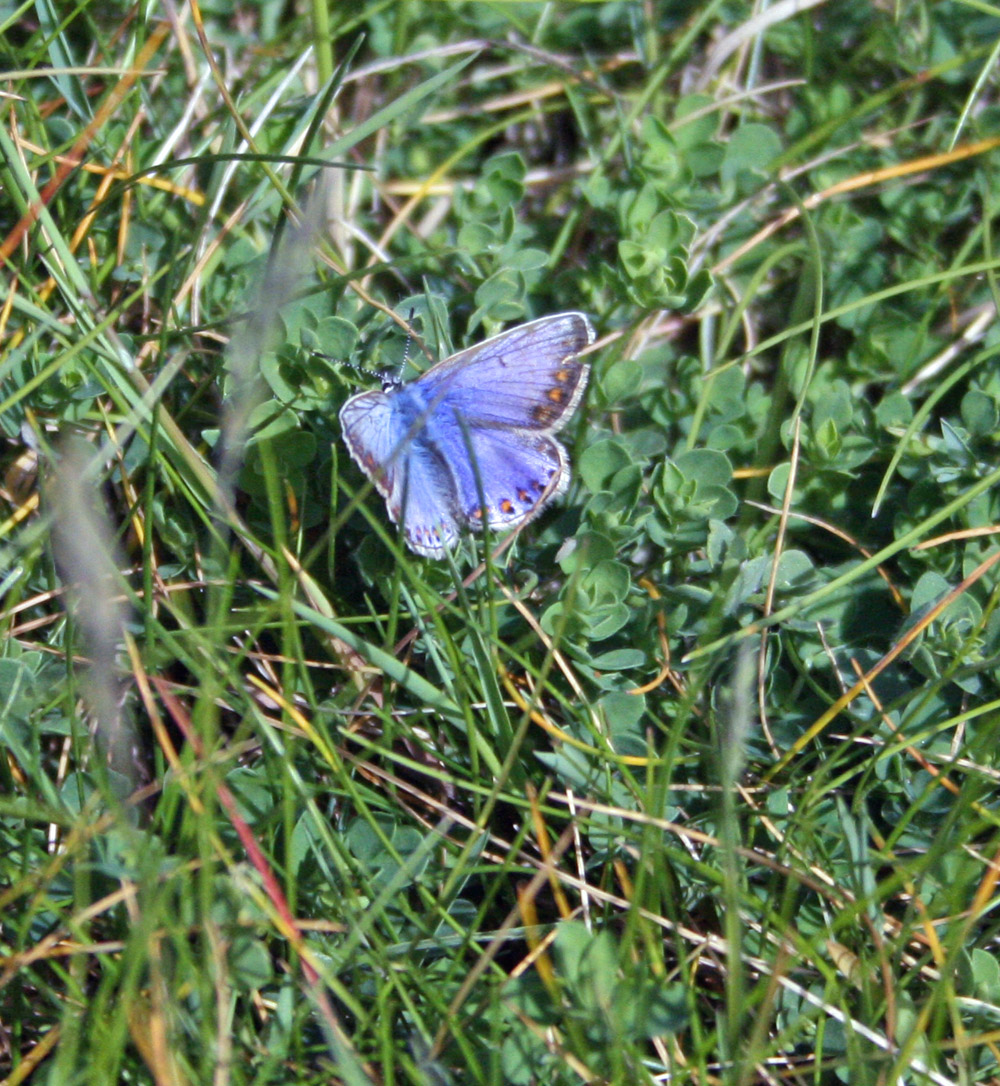
Been following up on this new report which promises to generate a great deal of comment. As you can see below there is so much interest in it that the full report is not yet available and their web site is so busy you might have difficulty seeing even the Synthesis. This report should be a very useful tool for anyone campaigning for more action to support wildlife and to deal with our headlong rush towards climate change
This will take some time to assess.
Reports from the UK National Ecosystem Assessment
► Synthesis of Key Findings (6 MB)
**The UK NEA website is currently experiencing high traffic levels which is causing problems for some users wishing to download the Synthesis report and Technical Report chapters. We are aware of the problem and hoping to rectify it as soon as possible. Alternatively, a copy of the report has been made available temporarily on the Defra website: www.defra.gov.uk/environment/natural/uknea/**
Here is a video clip about the new report:
Thursday, January 06, 2011
Book review for " Harmony" by HRH Prince Charles with Tony Juniper and Ian Skelly
As I noted on Dec 27th I received a copy of this new book which I have started to read in my spare time so it may take me some time. In the meantime I am posting a review of the book which I think is a good introduction to its central theme of sustainability and encourages me to continue. I hope to add my own comments in due course:
Harmony
Harmony is the title of a new book by the Prince of Wales, and also the condition that he believes is missing from much of the modern world.
The book is his attempt to set out his vision of the world as it was, as it is, and as it could be. His argument is that previous generations had a spiritual connection with the natural world around them. The scientific and industrial revolutions that have transformed Western societies over the past 400 years have caused us to lose that connection and replace it with a limited, mechanical view of the world. The result is a broken, fragmented culture that has lost it's way and is inflicting great harm on itself and on nature.
The book was written in conjunction with Tony Juniper and Ian Skelly and the sheer volume of diverse subjects can be almost overwhelming at times. It covers thousands of years and many issues affecting people on every continent, many of which are likely to be familiar from the media controversies that have followed the Prince in recent times. From modern architecture to intensive farming practices, it makes a convincing case that this internal shift in the way we think has led to massive damage in the outside world. There is a look at philosophy from the Ancient Greeks to the Islamic world and to indigenous peoples in many countries. There are also many examples of projects around the world that are seeking to put right some of this damage and these are accompanied by many beautiful, colour photographs.
Often these examples are taken from projects that the Prince has either set up himself or supported in some way. While not wanting to take anything away from this valuable work it does appear that nothing good happens without the Prince being involved in some way. The impression is that the book is at least partly an advertisement for the Prince that seems to be at odds with the spiritual message of freedom from the ego that he wishes to promote.
The book closes by suggesting that the changes required to cope with the damage being done to the natural world require a fundamental shift in the way we think about ourselves in relationship to the world around us. It suggests that only by living in harmony with the natural world can we save ourselves from catastrophe. It is unlikely to convince many of the Prince's critics but it would make a good investment for anyone looking for a whirlwind guide to 2000 years of philosophy and spiritual insights.
Harmony is the title of a new book by the Prince of Wales, and also the condition that he believes is missing from much of the modern world.
The book is his attempt to set out his vision of the world as it was, as it is, and as it could be. His argument is that previous generations had a spiritual connection with the natural world around them. The scientific and industrial revolutions that have transformed Western societies over the past 400 years have caused us to lose that connection and replace it with a limited, mechanical view of the world. The result is a broken, fragmented culture that has lost it's way and is inflicting great harm on itself and on nature.
The book was written in conjunction with Tony Juniper and Ian Skelly and the sheer volume of diverse subjects can be almost overwhelming at times. It covers thousands of years and many issues affecting people on every continent, many of which are likely to be familiar from the media controversies that have followed the Prince in recent times. From modern architecture to intensive farming practices, it makes a convincing case that this internal shift in the way we think has led to massive damage in the outside world. There is a look at philosophy from the Ancient Greeks to the Islamic world and to indigenous peoples in many countries. There are also many examples of projects around the world that are seeking to put right some of this damage and these are accompanied by many beautiful, colour photographs.
Often these examples are taken from projects that the Prince has either set up himself or supported in some way. While not wanting to take anything away from this valuable work it does appear that nothing good happens without the Prince being involved in some way. The impression is that the book is at least partly an advertisement for the Prince that seems to be at odds with the spiritual message of freedom from the ego that he wishes to promote.
The book closes by suggesting that the changes required to cope with the damage being done to the natural world require a fundamental shift in the way we think about ourselves in relationship to the world around us. It suggests that only by living in harmony with the natural world can we save ourselves from catastrophe. It is unlikely to convince many of the Prince's critics but it would make a good investment for anyone looking for a whirlwind guide to 2000 years of philosophy and spiritual insights.
Paul German
Tuesday, September 28, 2010
Government Consultation on the natural environment. No 5
In previous posts on this subject I've drawn attention to the full DEFRA consultation document. But there is a simpler form which introduces the full set of questions and it is probably more likely to appeal to most people, including me, who just wants to quickly show their interest and concern about the natural environment. It gives the following questions:
What are your views on the natural environment?
If you live in England, tell us which parts of the natural environment matter most to you and how we can best protect and enhance them.Whether you live in a rural or an urban area, tell us your views by visiting our online survey and answering four short questions:
- Which parts of the natural environment matter most to you?
- How do you feel you benefit from the natural environment?
- How do you think we could improve the natural environment?
- What would encourage you to get involved in protecting the natural environment?
Thus is much easier to cope with! I'll try to post my answers soon.
Sunday, February 14, 2010
The Severn Estuary and Hinkley Point Power Station
The Severn Estuary and Hinkley Point Power Station.

Our public meeting last Thursday ,on a very cold night, was very well received by around 40 members and the presentations by Officers of the Somerset Wildlife Trust were excellent.
Lisa Schneidau talked first about the Severn Estuary and gave a very clear account of the several options being considered by the UK Government. She explained that Somerset was working with the Royal Society of Wildlife Trusts ( RSWT) as well as with other county trusts and groups such as RSPB.The Trusts position is in essence:
Both speakers were very clear in keeping to the position taken by the Trust. SWT had to be focused on the effect of the proposals on wildlife and could not, for instance, discuss views about the nature of nuclear power, nor was it possible to simply say that no attempt to recover energy from the tidal flows should be made.

Michelle Osbourne, followed by describing her work to influence EDF in their consultation phase. This was not easy and it had proved difficult to deal with a company who had often worked in a very different situation in France and under different planning rules. By using projections of the planned site layout she highlighted areas where allowances for wildlife could be made given a willingness to discuss and agree modifications. The enormous scale of the work proposed and its impact on an area much larger than the basic footprint for the power plant was well made. The likely effect on the estuary due to the much increased cooling water supply required by the power station was shown and described. Despite the fact that this project was being developed under the UK Government's new planning rules it is to be hoped that public opinion will continue to be important and SWT hopes to continue the debate.EDF have a web site with descriptions of the project. Click here.

For both these two projects SWT hopes that all members will give their support in the ongoing discussions and negotiations for the future of wildlife in a large part of North Somerset.
There was a very good discussion after the talks with questions and answers form the speakers.
Without any hesitation I would recommend all Members of the Trust and anyone else concerned about wildlife in Somerset, to give their full support to Somerset Wildlife Trust where Lisa and Michelle are giving a very balanced and professional approach to these complicated challenges.

Our public meeting last Thursday ,on a very cold night, was very well received by around 40 members and the presentations by Officers of the Somerset Wildlife Trust were excellent.
Lisa Schneidau talked first about the Severn Estuary and gave a very clear account of the several options being considered by the UK Government. She explained that Somerset was working with the Royal Society of Wildlife Trusts ( RSWT) as well as with other county trusts and groups such as RSPB.The Trusts position is in essence:
- to oppose 100% the large Cardiff- Weston barrage because it would cause unacceptable damage to the Estuary, and it should be dropped from the list of options.
- The several alternative schemes should be given more support for development work.
- All development work should be carried out in a transparent manner. The EU Habitats and Birds Directive must be observed.
Both speakers were very clear in keeping to the position taken by the Trust. SWT had to be focused on the effect of the proposals on wildlife and could not, for instance, discuss views about the nature of nuclear power, nor was it possible to simply say that no attempt to recover energy from the tidal flows should be made.

Michelle Osbourne, followed by describing her work to influence EDF in their consultation phase. This was not easy and it had proved difficult to deal with a company who had often worked in a very different situation in France and under different planning rules. By using projections of the planned site layout she highlighted areas where allowances for wildlife could be made given a willingness to discuss and agree modifications. The enormous scale of the work proposed and its impact on an area much larger than the basic footprint for the power plant was well made. The likely effect on the estuary due to the much increased cooling water supply required by the power station was shown and described. Despite the fact that this project was being developed under the UK Government's new planning rules it is to be hoped that public opinion will continue to be important and SWT hopes to continue the debate.EDF have a web site with descriptions of the project. Click here.

For both these two projects SWT hopes that all members will give their support in the ongoing discussions and negotiations for the future of wildlife in a large part of North Somerset.
There was a very good discussion after the talks with questions and answers form the speakers.
Without any hesitation I would recommend all Members of the Trust and anyone else concerned about wildlife in Somerset, to give their full support to Somerset Wildlife Trust where Lisa and Michelle are giving a very balanced and professional approach to these complicated challenges.
Sunday, November 30, 2008
Biodiversity
The Somerset Wildlife Trust has announced the publication of a new strategy document for Somerset.
The full document can be viewed and downloaded from the Wildlife Trusts web site, link here, or the County Councils web site. Link here.
Its quite a long 37 page document which seems very relevant to our local groups aims and objectives concerning wildlife particularly strategy Objective 8. Some highlights are shown below.
(From page 19)
Objective 8:
Enable community engagement with the natural environment and
biodiversity conservation
Current Challenges:
The relationship between the people of Somerset and our wildlife needs to be strengthened
if the natural environment and conservation are to become a part of everyday life for far more
people.
( From page 20)
Where we want to be in 2018:
For more people to have connected with wildlife, to have discovered the benefits that it can offer
and the ways in which they can help conserve it.
Key Actions:
8.1 Encourage all landowners to take biodiversity into account when managing their land.
8.2 Encourage landowners to take up access and educational visits option under the Higher Level
Stewardship scheme.
8.3 Declare suitable sites as Local Nature Reserves. Create and implement management plans
that focus on improving biodiversity value and sustainability, wildlife interpretation and
accessibility for all.
8.4 Explore the opportunities for disseminating local wildlife information. For example: Setting up
a dedicated Wildlife Information Service to provide expert responses to biodiversity enquiries;
organising road shows and practical activities in which people can participate and creating a
popular guide to exploring Somerset’s wildlife.
8.5 Facilitate and enable voluntary community biodiversity conservation projects and provide
support for local biodiversity champions. Develop the role of volunteers in the protection and
management of local sites.
8.6 Adopt Natural England’s Accessible Natural Green Space Standards - and ideally also the
Woodland Trust’s Access standards - as the minimum standard of accessible natural green
space to be achieved.
8.7 Include Local Biodiversity Action Plans within Sustainable Community Strategies.
This post is just a first reaction to the issue of this document which is supported by a long list of voluntary and local government organisations. It may provide an excellent basis from which to ask questions of our local councils to find out how they see themselves putting this thinking into practice.
The full document can be viewed and downloaded from the Wildlife Trusts web site, link here, or the County Councils web site. Link here.
Its quite a long 37 page document which seems very relevant to our local groups aims and objectives concerning wildlife particularly strategy Objective 8. Some highlights are shown below.
(From page 19)
Objective 8:
Enable community engagement with the natural environment and
biodiversity conservation
Current Challenges:
The relationship between the people of Somerset and our wildlife needs to be strengthened
if the natural environment and conservation are to become a part of everyday life for far more
people.
( From page 20)
Where we want to be in 2018:
For more people to have connected with wildlife, to have discovered the benefits that it can offer
and the ways in which they can help conserve it.
Key Actions:
8.1 Encourage all landowners to take biodiversity into account when managing their land.
8.2 Encourage landowners to take up access and educational visits option under the Higher Level
Stewardship scheme.
8.3 Declare suitable sites as Local Nature Reserves. Create and implement management plans
that focus on improving biodiversity value and sustainability, wildlife interpretation and
accessibility for all.
8.4 Explore the opportunities for disseminating local wildlife information. For example: Setting up
a dedicated Wildlife Information Service to provide expert responses to biodiversity enquiries;
organising road shows and practical activities in which people can participate and creating a
popular guide to exploring Somerset’s wildlife.
8.5 Facilitate and enable voluntary community biodiversity conservation projects and provide
support for local biodiversity champions. Develop the role of volunteers in the protection and
management of local sites.
8.6 Adopt Natural England’s Accessible Natural Green Space Standards - and ideally also the
Woodland Trust’s Access standards - as the minimum standard of accessible natural green
space to be achieved.
8.7 Include Local Biodiversity Action Plans within Sustainable Community Strategies.
This post is just a first reaction to the issue of this document which is supported by a long list of voluntary and local government organisations. It may provide an excellent basis from which to ask questions of our local councils to find out how they see themselves putting this thinking into practice.
Monday, October 20, 2008
Conservation, Biodiversity , Living Landscapes and the Ecosystem Approach.
Somerset Wildlife Trust and in deed all county wildlife trusts are pushing hard for funding to establish Living Landscape areas as the best and most effective way of protecting wildlife for the long term.
The SWT AGM heard a great deal about such efforts in Somerset and I have attended meetings on the subject to find out more about this significant development in conservation thinking. An important and quite technical aspect which underlies the way conservation is linked to biodiversity and ecosystems management is summarised in the notes included below.
This is my own summary of a presentation given by Diana Pound who runs a consultancy called:
The Ecosystem Approach
What is it all about?
Discussions with others about the Ecosystem Approach usually include whether or not it matters that so many different terms are being used – sometimes to mean the same thing and sometimes the same phrase is used to mean different things. The phrases being used include: Ecosystem Approach, ecosystems approach (lower case sometimes used deliberately to denote something different), ecosystem-based approach, ecosystem function approach, ecosystem services approach, and ecosystem thinking.
If this change in language means we are all starting to think more holistically then that can only be a good thing. If on the other hand, our casual use of these terms is confusing each other, watering down what they mean, resulting in us reinventing wheels, and missing out on realising that (particularly for the Ecosystem Approach) there are well-developed principles and guidance that could, when implemented, deliver good practice in management and genuine sustainability, then there is a problem.
The Ecosystem Approach The Ecosystem Approach has been adopted by the Convention on Biological Diversity (CBD) as the main way of delivering genuine sustainability and the primary framework for action. It is defined as ’a strategy for the integrated management of land, water and living resources that promotes conservation and sustainable use in an equitable way’ (CBD).
To guide implementation the CBD has agreed 12 Ecosystem Approach principles and 5 points of Operational Guidance and provided implementation guides.
The 12 ecosystem approach principles are:
1. The objectives of management of land, water and living resources are a matter of societal choice.
2. Management should be decentralised to the lowest appropriate level.
3. Ecosystem managers should consider the effects (actual or potential) of their activities on adjacent and other ecosystems.
4. Need to understand and manage the ecosystem in an economic context.
5. Conservation of ecosystem structure and function to provide ecosystem services should be a priority.
6. Ecosystem must be managed within the limits of their functioning.
7. The approach should be taken at the appropriate spatial and temporal scales.
8. Process and objectives for ecosystem management should be set for the long term.
9. Management must recognise that change is inevitable.
10. Seek the appropriate balance between integration, conservation and use of biodiversity.
11. Decision-making should consider all forms of relevant information (scientific, indigenous and local).
12. Involve all relevant sectors of society and scientific disciplines.
The 5 points of operational guidance are:
1. Focus on the relationship and processes within the ecosystem.
2. Enhance benefit sharing.
3. Use adaptive management practices.
4. Carry out management actions at the scale appropriate to the issue, with decentralisation to the lowest level appropriate.
5. Ensure intersectoral co-operation.
The 12 principles plus explanation can be seen at:
http://www.cbd.int/ecosystem/principles.shtml;
The 5 points of operational guidance at:
http://www.cbd.int/ecosystem/operational.shtml
Implementation Guides
Beginners: http://www.cbd.int/ecosystem/sourcebook/beginner-guide.shtm;
Advanced: http://www.cbd.int/ecosystem/sourcebook/advanced-guide.shtml .
The ecosystem services approach The ecosystem services approach has a focus on understanding and quantifying the services the natural environment provides for us, and then managing the environment so that the provision of these services is sustained over the long term.
The approach is defined by the Millennium Ecosystem Assessment as a way of “identifying, valuing and enhancing the goods and services that the ecosystem provides for us by conserving ecosystem structure and function in a way that ensures these services can be provided over the long term”.
Services include:
• Supporting services: The services that are necessary for the production of all other ecosystem services including soil formation, photosynthesis, primary production, nutrient cycling and water cycling.
• Provisioning services: The products obtained from ecosystems, including food, fibre, fuel, genetic resources, biochemicals, natural medicines, pharmaceuticals, ornamental resources and fresh water;
• Regulating services: The benefits obtained from the regulation of ecosystem processes, including air quality regulation, climate regulation, water regulation, erosion regulation, water purification, disease regulation, pest regulation, pollination, natural hazard regulation;
• Cultural services: The non-material benefits people obtain from ecosystems through spiritual enrichment, cognitive development, reflection, recreation and aesthetic experiences – thereby taking account of landscape values;
In effect, this is a focus on Principle 5 of the 12 Ecosystem Approach principles.
Millennium Assessment
http://www.millenniumassessment.org/documents/document.300.aspx.pdf
Ecosystem Services
http://www.ecosystemservices.org.uk/ecoserv.htm
The following terms are also used – working definitions are provided
ecosystem function:
Includes the following:
The flows of energy, nutrients, minerals, and water within a system.
The spatial and temporal processes which include connectivity and succession.
The sensitivity and resilience of the system.
The predator prey relationships, age structure of species, and whether or not all trophic levels are present and functional.
The effect of human interventions on ecosystem function arising from extracting and harvesting resources or disposing of waste.
The SWT AGM heard a great deal about such efforts in Somerset and I have attended meetings on the subject to find out more about this significant development in conservation thinking. An important and quite technical aspect which underlies the way conservation is linked to biodiversity and ecosystems management is summarised in the notes included below.
This is my own summary of a presentation given by Diana Pound who runs a consultancy called:
dialogue matters
The Ecosystem Approach
What is it all about?
Discussions with others about the Ecosystem Approach usually include whether or not it matters that so many different terms are being used – sometimes to mean the same thing and sometimes the same phrase is used to mean different things. The phrases being used include: Ecosystem Approach, ecosystems approach (lower case sometimes used deliberately to denote something different), ecosystem-based approach, ecosystem function approach, ecosystem services approach, and ecosystem thinking.
If this change in language means we are all starting to think more holistically then that can only be a good thing. If on the other hand, our casual use of these terms is confusing each other, watering down what they mean, resulting in us reinventing wheels, and missing out on realising that (particularly for the Ecosystem Approach) there are well-developed principles and guidance that could, when implemented, deliver good practice in management and genuine sustainability, then there is a problem.
The Ecosystem Approach The Ecosystem Approach has been adopted by the Convention on Biological Diversity (CBD) as the main way of delivering genuine sustainability and the primary framework for action. It is defined as ’a strategy for the integrated management of land, water and living resources that promotes conservation and sustainable use in an equitable way’ (CBD).
To guide implementation the CBD has agreed 12 Ecosystem Approach principles and 5 points of Operational Guidance and provided implementation guides.
The 12 ecosystem approach principles are:
1. The objectives of management of land, water and living resources are a matter of societal choice.
2. Management should be decentralised to the lowest appropriate level.
3. Ecosystem managers should consider the effects (actual or potential) of their activities on adjacent and other ecosystems.
4. Need to understand and manage the ecosystem in an economic context.
5. Conservation of ecosystem structure and function to provide ecosystem services should be a priority.
6. Ecosystem must be managed within the limits of their functioning.
7. The approach should be taken at the appropriate spatial and temporal scales.
8. Process and objectives for ecosystem management should be set for the long term.
9. Management must recognise that change is inevitable.
10. Seek the appropriate balance between integration, conservation and use of biodiversity.
11. Decision-making should consider all forms of relevant information (scientific, indigenous and local).
12. Involve all relevant sectors of society and scientific disciplines.
The 5 points of operational guidance are:
1. Focus on the relationship and processes within the ecosystem.
2. Enhance benefit sharing.
3. Use adaptive management practices.
4. Carry out management actions at the scale appropriate to the issue, with decentralisation to the lowest level appropriate.
5. Ensure intersectoral co-operation.
The 12 principles plus explanation can be seen at:
http://www.cbd.int/ecosystem/principles.shtml;
The 5 points of operational guidance at:
http://www.cbd.int/ecosystem/operational.shtml
Implementation Guides
Beginners: http://www.cbd.int/ecosystem/sourcebook/beginner-guide.shtm;
Advanced: http://www.cbd.int/ecosystem/sourcebook/advanced-guide.shtml .
The ecosystem services approach The ecosystem services approach has a focus on understanding and quantifying the services the natural environment provides for us, and then managing the environment so that the provision of these services is sustained over the long term.
The approach is defined by the Millennium Ecosystem Assessment as a way of “identifying, valuing and enhancing the goods and services that the ecosystem provides for us by conserving ecosystem structure and function in a way that ensures these services can be provided over the long term”.
Services include:
• Supporting services: The services that are necessary for the production of all other ecosystem services including soil formation, photosynthesis, primary production, nutrient cycling and water cycling.
• Provisioning services: The products obtained from ecosystems, including food, fibre, fuel, genetic resources, biochemicals, natural medicines, pharmaceuticals, ornamental resources and fresh water;
• Regulating services: The benefits obtained from the regulation of ecosystem processes, including air quality regulation, climate regulation, water regulation, erosion regulation, water purification, disease regulation, pest regulation, pollination, natural hazard regulation;
• Cultural services: The non-material benefits people obtain from ecosystems through spiritual enrichment, cognitive development, reflection, recreation and aesthetic experiences – thereby taking account of landscape values;
In effect, this is a focus on Principle 5 of the 12 Ecosystem Approach principles.
Millennium Assessment
http://www.millenniumassessment.org/documents/document.300.aspx.pdf
Ecosystem Services
http://www.ecosystemservices.org.uk/ecoserv.htm
The following terms are also used – working definitions are provided
ecosystem function:
Includes the following:
The flows of energy, nutrients, minerals, and water within a system.
The spatial and temporal processes which include connectivity and succession.
The sensitivity and resilience of the system.
The predator prey relationships, age structure of species, and whether or not all trophic levels are present and functional.
The effect of human interventions on ecosystem function arising from extracting and harvesting resources or disposing of waste.
Subscribe to:
Posts (Atom)