| Little Egret taken at Steart Marshes by Chris Chappell , committee member of the Heart of the Levels local group of the Somerset Wildlife Trust. The wetlands are managed by the Wildfoul and Wetlands Trust ( https://www.wwt.org.uk/wetland-centres/steart-marshes/)  |
Showing posts with label Group organisation and activities.. Show all posts
Showing posts with label Group organisation and activities.. Show all posts
Saturday, February 10, 2018
Wildlife photo from Chris Chappell, Heart of the Levels Group


Sunday, February 19, 2017
National Trust,Lytes Cary, Farming and Wildlife
Our local group of the Somerset Wildlife Trust reminds local members and friends about our next talk. All welcome of course.
Dear Heart of the Levels supporter,
For some time we have wanted to hear George Holmes (Head Ranger) talk on the National Trust property at Lytes Cary. As it is one of the closer properties to the Heart of the Levels area, many of us have visited the house, gardens, or the surrounding farmland and woods. George is going to tell us how he manages to balance the demands of running an on-site farm with the need to provide gardens and outdoor facilities to the general public.
For those planning to visit Lytes Cary this Spring, the talk will help you to familiarise yourselves with the extent of the grounds and the diversity of plant and wildlife that it offers.
The talk starts at 7:30pm on Tuesday 21st February in the Parish Rooms, off the Market Square in Somerton. There will be the opportunity to talk to George after his talk and over a cup of tea or coffee.
Entry as usual is £2.50 for SWT members and £3.00 for non members.
I hope to see you there.
Roger
Roger Dickey | Chairman Heart of the Level Group
Saturday, February 11, 2012
Botany Study Group field work
Somerset Wildlife Trust, Heart of the Levels Botany Group
Feb field trip 2012.
In its third year the Groups programme
of activities for 2012 puts the emphasis on field work.
Our first session was on Feb 7th.
It was a fairly cold but luckily dry day. We met up at 10.30 am and
walked to a small private wooded area , where the owner had planted
a large variety of trees around 30 years ago.The venue was chosen to
give us an opportunity to practice our winter tree identification
skills.
There were 15 members present, all well
wrapped up against the cold, and led by Anne Bebbington. Most of us
have been with the Group since its start up with one or two recent
new members.
For this field session we worked using
an identification system published by CT Prime and RJ Deacock. We
followed their key to identify around 20 different species. They
included for example, English Elm, Crack Willow,Horse Chestnut,
Cherry and Blackthorn.
As a bonus this last species gave us
the chance to search for and find Brown Hairstreak Butterfly eggs.
After about 2 hours field work we had a
pleasant lunch at The Angel cafe and community centre in Langport.
This was followed by another
fascinating presentation by Anne using Johns very special photography
to review much of the greatly magnified detail of the buds, bark and
catkins we had found on our walk.
This first field session was a great
success.
Our next outing in March will take
place on a meadow in Curry Rivel. The aim will be an introduction to
survey methods used by Botanist to identify and record the presence
of flowers and plants in an organised and measured way. Such records
are of fundamental importance in the conservation of the natural
environment.
This is of considerable topical
interest as the Government introduces Neighbourhood Planning schemes.
Surveys of local remaining unspoilt fields and woods will be vital
in the formulation of local planning schemes. Every Parish in
Somerset needs this work to be undertaken.
DG 9.2.12
Saturday, December 17, 2011
Tuesday, November 01, 2011
Fungi Foray
We had another fascinating day in Beer Woods and the weather had been kind to us by raining during the week but giving us a dry day for our search.

I've just received a preliminary listing of the fungi spotted by the 14 members and friends who spent over two hours looking for specimens.
We are lucky that we have records of previous forays starting with 2004. A check on the numbers of different species seen shows a wide variation.
2004: 36; 2005:25, 2006:42, 2007:42, 2008: 48; and now in 2011 a total of 23, maybe with a few more awaiting identification.
Most fungi enthusiast in this area reckon it has been a bad year weather wise for fungi and our count reflects that.
Our group got quite excited by the discovery of a single specimen of Battarrea phalloides also known as Sandy Stiltball. A rare find here apparently and a Red Data Book listing. When you have spent hours looking for the Holy Grail I think its reasonable to get a bit excited.


I've just received a preliminary listing of the fungi spotted by the 14 members and friends who spent over two hours looking for specimens.
We are lucky that we have records of previous forays starting with 2004. A check on the numbers of different species seen shows a wide variation.
2004: 36; 2005:25, 2006:42, 2007:42, 2008: 48; and now in 2011 a total of 23, maybe with a few more awaiting identification.
Most fungi enthusiast in this area reckon it has been a bad year weather wise for fungi and our count reflects that.
Our group got quite excited by the discovery of a single specimen of Battarrea phalloides also known as Sandy Stiltball. A rare find here apparently and a Red Data Book listing. When you have spent hours looking for the Holy Grail I think its reasonable to get a bit excited.


Tuesday, July 19, 2011
Apologies for absence
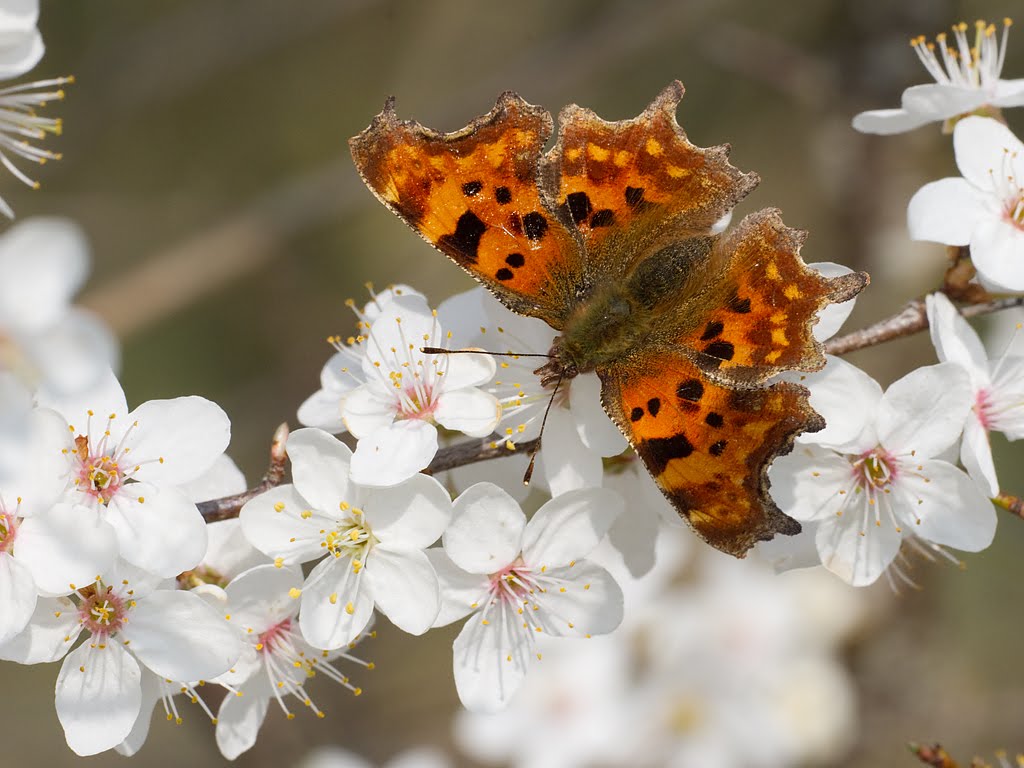
Here are a few photographs from John Bebbington which show why I find wildlife so fascinating. We have to take three days off this week for family reasons and its never convenient because of the never ending work to help the fight for wildlife conservation.
I have had to miss a regular meeting of our "Private and Community Nature Reserve Network" committee which was set up some years ago to help individuals and community groups with advice and information about the management of small areas of land. These sites are defined as not intensively farmed land and not a garden. They vary from less than an acre to tens of acres of woodland. In case your wondering , an acre is 4046.86 square metres.
On Wednesday there is a " Living Seas " conference organised by the Wildlife Trust. All the counties in the South West of England have a coast line and are involved in the campaigning to protect our coastal waters. This session should give some direction to work by all the involved groups in the south west. I will read reports of the proceedings with interest.
Our local Area Group of the Somerset Wildlife Trust had its last organised walk in a woodland local reserve last Sunday in slightly gloomy weather. The variety of flowering plants was the highlight in the circumstances.
Last week we had the last of our 2010-2011 Botany Group study meetings and so putting it all together we might get a welcome break from the endless round of meetings and project work.


I have had to miss a regular meeting of our "Private and Community Nature Reserve Network" committee which was set up some years ago to help individuals and community groups with advice and information about the management of small areas of land. These sites are defined as not intensively farmed land and not a garden. They vary from less than an acre to tens of acres of woodland. In case your wondering , an acre is 4046.86 square metres.
On Wednesday there is a " Living Seas " conference organised by the Wildlife Trust. All the counties in the South West of England have a coast line and are involved in the campaigning to protect our coastal waters. This session should give some direction to work by all the involved groups in the south west. I will read reports of the proceedings with interest.
Our local Area Group of the Somerset Wildlife Trust had its last organised walk in a woodland local reserve last Sunday in slightly gloomy weather. The variety of flowering plants was the highlight in the circumstances.
Last week we had the last of our 2010-2011 Botany Group study meetings and so putting it all together we might get a welcome break from the endless round of meetings and project work.


Friday, November 19, 2010
Traditional Orchards Network
Orchard Network
Welcome to Orchard Network - website of the Habitat Action Plan (HAP) group for Traditional Orchards. We are a partnership of organisations working together for the conservation of Traditional Orchards as a wildlife habitat. We hope you find this site a useful resource for finding out about the wildlife that thrives within our orchards, the issues that surround their conservation, and ways that you can get involved.Click on this link to go to a video about traditional orchards which I think is inspiring and motivating
http://www.orchardnetwork.org.uk/content/be-inspired
Tuesday, October 19, 2010
A few months ago I had a look at using Twitter to help communicate with the world about Wildlife in Somerset.
I found it a bit strange and time consuming and didn't do much with it. Now however with so many other conservation organisations running a Twitter site I am trying to get in on the act!
Question can you identify this plant?
 Its all a bit of an experiment but as Nick Baker said at our AGM last week its vital for wildlife to find ways to spread enthusiasm for exploring the natural world as widely as possible.
Click here to visit my Twitter site.
PS This is post number 300!!!
I found it a bit strange and time consuming and didn't do much with it. Now however with so many other conservation organisations running a Twitter site I am trying to get in on the act!
Question can you identify this plant?

Click here to visit my Twitter site.
PS This is post number 300!!!
Subscribe to:
Posts (Atom)