Whats all this about! It seems that world governments have actually agreed on something ,which is a pleasant change. I assume that includes the USA?
On Friday 11th June at 10:51 local time in the South Korean port city of Busan a new international organisation was set up to monitor biodiversity and to advise governments in the same way as the IPCC has been doing for climate change.
Read more about it here:
BBC News - 'Green light' for global biodiversity science panel
Obviously this is a Yellow Iris! I found a multitude of them in a damp gully on the north Cornwall coast last week. Beautiful. I also saw a Green Hairstreak butterfly. First time I've seen one in the countryside.
Today I received an invitation to attend a Somerset County Council Forum titled, "Post 2010. What next for biodiversity in Somerset" . That should be interesting with looming Gov cutbacks on spending.
My personal views on wildlife conservation and the work of the Heart of the Levels Group of the Somerset Wildlife Trust
Search This Blog
Monday, June 14, 2010
Friday, May 28, 2010
International Year of Biodivesity : Biodiversity is Life. IUCN.
The International Union for Conservation of Nature (IUCN)
Click here to find out more about the IUCN and its world wide work to conserve wildlife.
Or use this address: http://www.iucn.org/about/
And here is a video to show some of the threatened species
Click here to find out more about the IUCN and its world wide work to conserve wildlife.
Or use this address: http://www.iucn.org/about/
And here is a video to show some of the threatened species
Conservation success stories.
Tuesday, May 25, 2010
Wildlife Watch Club
Our new Watch Group could do worse than admiring beautiful wild flowers like the ones I photographed in my garden yesterday. Although they are similar I am fairly sure the first is Rough Hawbit and the second is Goats Beard which I had to catch in the morning before the flower closes up at noon! Hence its old name of Jack-go-to-bed-at-noon.
Now for a happy announcement.

A new Wildlife Watch Club will be launched on May 30th. Described by the Somerset Wildlife Trust as a fantastic club for nature lovers and their families to explore the wonderful world of wildlife.
Our Heart of the Levels Area volunteer Group is proud to be supporting this new venture. We have long wanted to boost our educational involvement in South Somerset and this is our big opportunity. We wish the club's leaders every success.Plese contact me through this Blog if you would like to find out more about this initiative.
Now for a happy announcement.

A new Wildlife Watch Club will be launched on May 30th. Described by the Somerset Wildlife Trust as a fantastic club for nature lovers and their families to explore the wonderful world of wildlife.
Our Heart of the Levels Area volunteer Group is proud to be supporting this new venture. We have long wanted to boost our educational involvement in South Somerset and this is our big opportunity. We wish the club's leaders every success.Plese contact me through this Blog if you would like to find out more about this initiative.
Sunday, May 23, 2010
International Year of Biodivesity : Biodiversity is Life
A photo of wild flowers taken in Crete on our recent walking holiday. Still working on the idents.
And to continue to see what is happening in the world of biodiversity here is a U tube clip from the UN introducing the problems facing wildlife around the world.
Saturday, May 22, 2010
International Year of Biodivesity : Biodiversity is Life. International Day for Biological Diversity.
On this important day what is everyone doing about it?
Here are few web sites found in a quick survey.
The Natural History Museum: http://news.bbc.co.uk/1/hi/science_and_environment/10139906.stmhere
You don't need much else to start finding out about IYB but it might be interesting to see what other organisations are saying about it.
The Guardian has featured it today with quite a full coverage of a new UN report on the economic value of natural services which we all take for granted and for free:
http://www.guardian.co.uk/environment/2010/may/21/un-biodiversity-economic-report
The Guardian also highlights this International Day for Biological Diversity with its Top Ten world events:
http://www.guardian.co.uk/environment/blog/2010/may/21/international-day-biological-diversity-events
The Telegraph by comparison has nothing I can see on the subject.
UK Government in the shape of DEFRA has a number of news items for May 21st which by coincidence put GM crop trials alongside the Ministerial visit to the Natural History Museum.
Here are some items from the DEFRA web site news service for 21st May:
Strangely, I think, the Royal Society for Wildlife Trust has nothing specific to say about this Day for IYB but does feature its Biodiversity Accreditation Scheme:

Will your organisation measure up to the Biodiversity Benchmark?
Find out more about this environmental management system and accreditation process.
I could go on all day and I'm sure it would throw up some curiosities in how IYB is being covered. At least George Monbiot has written about it all and as usual doesn't pull his punches!
Finally I should make the point that our Heart of the Levels Group has been featuring IYB at meetings so far in 2010.
Here are few web sites found in a quick survey.
The Natural History Museum: http://news.bbc.co.uk/1/hi/science_and_environment/10139906.stmhere
You don't need much else to start finding out about IYB but it might be interesting to see what other organisations are saying about it.
The Guardian has featured it today with quite a full coverage of a new UN report on the economic value of natural services which we all take for granted and for free:
http://www.guardian.co.uk/environment/2010/may/21/un-biodiversity-economic-report
The Guardian also highlights this International Day for Biological Diversity with its Top Ten world events:
http://www.guardian.co.uk/environment/blog/2010/may/21/international-day-biological-diversity-events
The Telegraph by comparison has nothing I can see on the subject.
UK Government in the shape of DEFRA has a number of news items for May 21st which by coincidence put GM crop trials alongside the Ministerial visit to the Natural History Museum.
Here are some items from the DEFRA web site news service for 21st May:
http://ww2.defra.gov.uk/
Biodiversity in the spotlight
This week the Secretary of State Caroline Spelman visited the newly opened Angela Marmont Centre for UK Biodiversity at the Natural History Museum. The Centre will be a hub for amateur naturalists, enthusiasts and other societies to study British wildlife. The Secretary of State talked to staff, looked at the exhibits and discussed the range of work the Museum does to support Defra’s objectives. Read more...
Friday 21 May 2010
Defra approves GM potato trial
Following a public consultation, Defra has given approval to the Sainsbury Laboratory to conduct a research trial this year of GM potatoes. The research is on potatoes that have been genetically modified to resist late potato blight. Read more...
Friday 21 May 2010
Rt Hon Caroline Spelman MP speech at the Angela Marmont Centre for Biodiversity, 20 May 2010
I’m delighted to be in a place that celebrates so obviously a natural world so vividly before us. Not just the dead and the extinct but also the huge variety of living species with which we share this planet. In the first ever International Year of Biodiversity I can think of few more fitting places for a new Secretary of State for the Environment to begin my conversation about the need to protect and promote that variety. Read more...
Thursday 20 May 2010
Strangely, I think, the Royal Society for Wildlife Trust has nothing specific to say about this Day for IYB but does feature its Biodiversity Accreditation Scheme:
Find out more about this environmental management system and accreditation process.
I could go on all day and I'm sure it would throw up some curiosities in how IYB is being covered. At least George Monbiot has written about it all and as usual doesn't pull his punches!
Finally I should make the point that our Heart of the Levels Group has been featuring IYB at meetings so far in 2010.
Friday, May 21, 2010
Crete wildlife, flora and fauna
Just back from a weeks strenuous walking in Crete. The flora was suffering due to a lower than usual rainfall this year. So flowers needed a bit of searching for. Difficult to identify plants photographed even with a book to help.
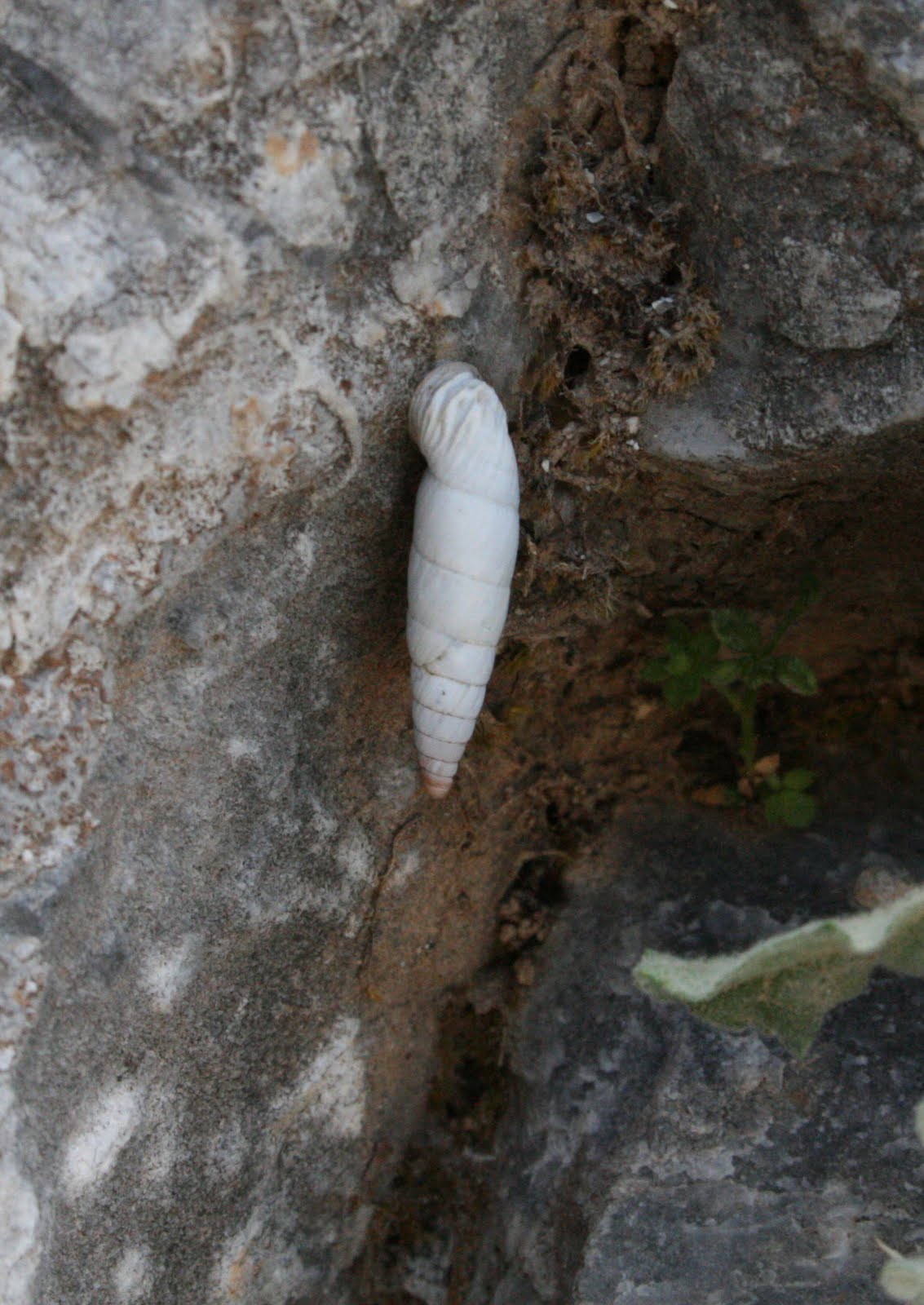
Here are a few images of bugs and a butterfly. I hope to add idents soon. Next post I'll add some flowers.
If anyone knows what these are please let me know.

Here are a few images of bugs and a butterfly. I hope to add idents soon. Next post I'll add some flowers.
If anyone knows what these are please let me know.

Sunday, May 09, 2010
Woodland wonderland
A walk organised by the Private Nature Reserve Network, run by the Somerset Wildlife Trust proved to be a wonderful experience as we walked for some 2 miles through mixed deciduous woodland, surrounded just about everywhere by Bluebells.The only minor blemish on the day was the mostly cloudy sky and the chill in the North East wind. To give a taste of woodland here are a few photographs.They show one of the groups of visitors, a fallen tree surrounded by Bluebells, an orchid (Early Purple I think) and a mystery plant. Can anyone identify it for me please.
Saturday, May 08, 2010
Wild About Gardens
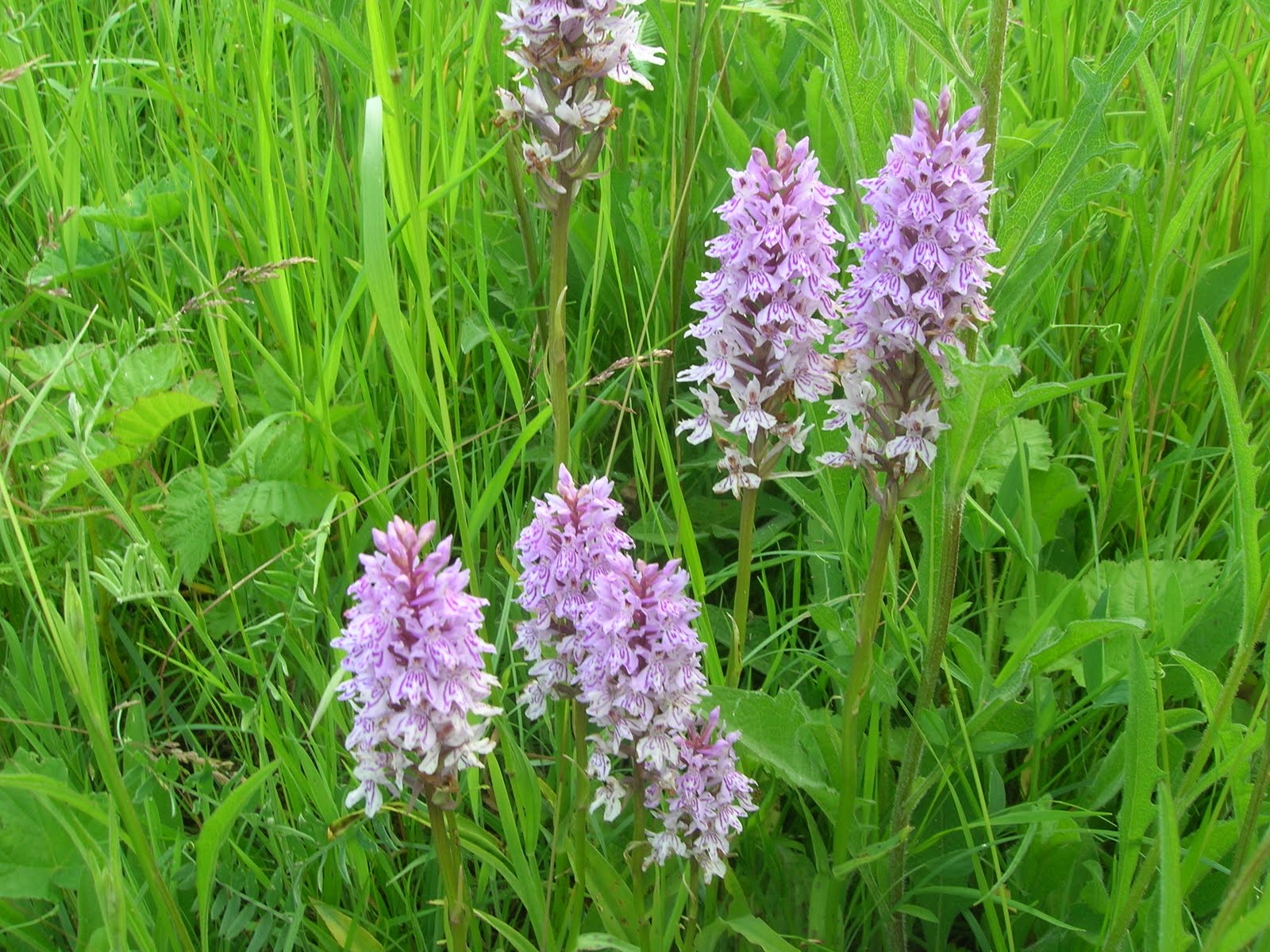
I've cheated a bit here because these orchids were on a track near a garden. The photos were taken in June 2008 during a walk but they would look good in someones wild garden area!
The notes shown below are taken from the latest newsletter from Wild About Gardens published by the RHS and the Wildlife Trusts to encourage people to encourage wildlife in their gardens. Click here to visit their web site. Or use this address:
http://www.wildaboutgardens.org/
The letter is well worth signing up for to keep up to date on what can be found in gardens.
"On a sunny day in May, it is easy to see why gardens are so important for biodiversity, the variety of life on earth. This is the month when plants race away, outgrowing their allotted spaces, and buds burst into bloom. Into this flourishing and colourful spectacle are drawn many creatures that rely on gardens for shelter, food or water.
This year is particularly important to biodiversity everywhere. It is the International Year of Biodiversity and 22 May is International Biodiversity Day. The aim is to highlight the worldwide decline in biodiversity. This is something that affects all of us, and it is something we can all act on in our own gardens.
Everything you do to help wildlife in the garden makes a difference. More than that, there are some garden species that are known to be in such steep decline that they have special conservation status. Examples include sparrows, starling, bumblebees and hedgehogs. These are species which you as a gardener can help. You can also help where countryside habitats – especially ponds – have declined, by providing substitutes.
What to look out for in May
More butterflies are flying by now. You could see any of: common blue, holly blue, orange tip, painted lady, and the whites – small, large and green-veined. Painted ladies are migrants that come, via Europe, from Morocco. Last year was a bumper year for them and it will be interesting to see what numbers visit us this year.
Look out for slow worms in your compost heap, or sheltering in warm damp places, for example under logs or rocks that have been warmed by the sun. They are active during the day, so there is a chance you may see them as they forage for slugs and snails.
* Swifts are migrants that start to arrive in late April or early May. It is hard to miss the aerial acrobatics and the distant shrieks that fill the air as they swoop and turn after airborne insects. They can be distinguished from swallows, also around now, by the lack of a pale breast and shorter tails. They stay just long enough to breed and return to Africa from late July onwards."
Friday, May 07, 2010
Wednesday, April 21, 2010
The Election
Just to start this post I am pleased to be able to show these photographs taken in our local nature reserve meadow in the last week or so. The cowslips are looking great and the fungi has not been seen there before. A Morel fungi I think!
Now for the election!
This is what the Royal Society of Wildlife Trusts is saying about the Election debate.
Public urged to tell politicians:
We care about wildlife
30th March, 2010
Conservationists are urging the public to help stop further wildlife loss by encouraging their local MPs and Prospective Parliamentary Candidates to sign a new ‘wildlife pledge”, to do all they can to stop and reverse wildlife decline.A consortium of 11 wildlife charities, including The Wildlife Trusts, have pulled together the pledge to help reverse the rapid decline in our wildlife - both species and habitats. It was recently reported that around 500 species have become extinct in England in the recent past and conservationists are appealing to the public to help make wildlife a top priority for politicians and stop further species being lost.
The Wildlife Pledge, which can be viewed online at www.wildlifepledges2010.org.uk is supported by wildlife organisations representing more than two million people. It includes the promise to take action in tackling climate change and to help wildlife meet this challenge. It also looks for commitment from politicians to help reverse the decline of farmland wildlife by the effective promotion of nature-friendly farming, as well as to provide children with contact with the natural world as part of their education.
The pledge gives Prospective Parliamentary Candidates the opportunity to express their support and commitment to various aspects of wildlife conservation. The public can view which candidates have given their support for this issue before the election. Conservationists are encouraging people to then contact their Prospective Parliamentary Candidates informing them how important this issue is and that their response to the pledge may affect the way they vote.
Stephanie Hilborne, chief executive of The Wildlife Trusts, said:
“The actions of the next government are absolutely crucial to ensuring a future for our wildlife. One of the many challenges they will face will be to implement the Marine Act to restore our seas and also to restore the natural environment on land. It is vital that we have MPs in the new parliament who understand and appreciate these challenges and keep the next government on its toes.”
To find out if your local candidates have signed the pledge, visit www.wildlifepledges2010.org.uk
Story by RSWT
More Information
The consortium of 11 organisations involved with the Wildlife Pledge is as follows: Amphibian and Reptile Conservation, Bat Conservation Trust, Buglife, Butterfly Conservation, The Grasslands Trust, Mammals Trust, Plantlife, RSPB, Wildfowl & Wetlands Trust, The Wildlife Trusts and the Woodland Trust.
Subscribe to:
Posts (Atom)