Search This Blog

Friday, September 22, 2006

Group news update

After the quiet of the summer holidays the pace of wildlife activities has stepped up a gear.
Here are brief notes on current events and news.

  • I think I'm correct in saying that the film made by Al Gore is now available in the UK or soon will be. Judging by the trailer shown on the web site it should be seen by anyone seriously interested in the effects of global warming. As soon as I can find out more about its showing locally I'll let you know.( Or you can tell me if you find out first) See post 29.08.06

  • The last major reserve on my list of local sites called Thurlbear Wood has been located. (See posts July 21st and 29th.)This afternoon I managed to find my way through some exceptionally narrow lanes on the foot hills of the Blackdown Hills to get to one of the several entrance points to the wood. Its described as ancient woodland which means it has been in existence for many hundreds of years maybe thousands. I must go back and spend some time there next spring. Its particularly interesting because I happen to be reading an excellent book by Richard Maybey called The Common Ground published in 1980. It was written "to widen the public debate on nature conservation". Its surprising to see that at that time the author was using terms such as climate change, loss of species and habitats and recording the way industrialized farming was causing so much damage to wildlife. So not much has changed in the 25 years since then. I recommend the book to anyone interested in understanding why the countryside is the way it is now so that a better way forward can be achieved. More on the book later.

  • The Reserve Manager at Babcary Meadows has contacted me to offer an organised walk to his site next spring when the Green Winged Orchids will be in evidence and much else I'm sure. This has got to be a must for our spring programme. Having made a brief visit last August just after the hay and flowers were cut it will be good to see it at its best. See post 21st and 29th July.

  • All of this ties in well with the news that our private initiative in Curry Rivel to acquire a four acre grass meadow to be maintained and improved if possible for its wild flowers and butterflies has received the blessing of the Somerset Environmental Records Centre and will now be registered as a County Wildlfe Site. This gives formal approval and a much welcomed new status from the point of view of grants and planning control. This was very good news.

  • Having joined the Private Nature Reserve Network because of our four acre field I am making contact with others in a similar situation so as to compare notes on management. It will now be more meaningful with our new status.

  • This Sunday is the Trusts Open Day at the Bishops Palace in Wells and I intend to be there most of the day and hope to see a few of our local members. The programme includes an interesting selection of the Trust activities in addition to those we organise as local groups.

  • Next Thursday we hold our first open meeting in Somerton on the subject of Climate Change and hope to see many of our local members. Contact us if you want to come along and need more information. See post Aug 20th and Sept 10th.

As you can see there is much to report and I'm sure members will be able to add many other news items to this short list. Dont forget to email us with your wildlife reports.

Sunday, September 17, 2006

Meadows created in a Wildlife Garden


These first two photos were taken two days ago in the wildlife garden described in the post


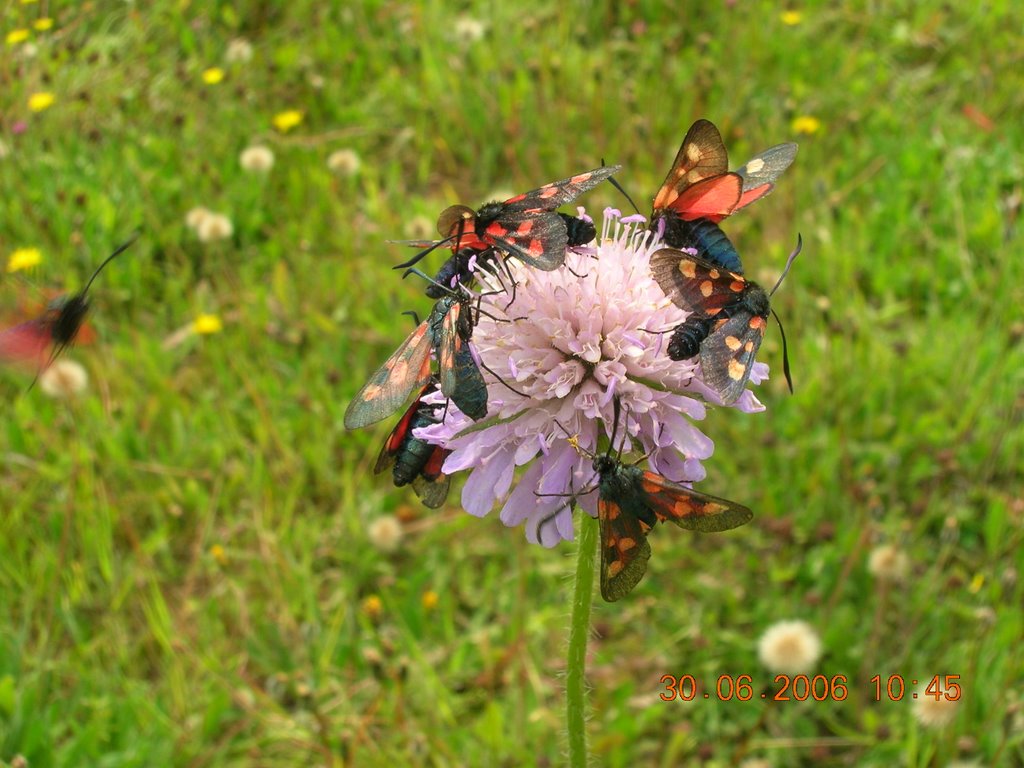
These last two photos were taken in June this year in the four acre meadow referred to in this post
Meadows are a big part of the work of many conservation organisations not least the Wildlife Trust. I've mentioned before my involvement in a local initiative to ensure the conservation of a four acre field which has been lying idle for several years. Luckily the owner did get the grass cut once a year. A flora survey has identified plant species under three headings; woody species ( in the old hedges) total of species 15; Dicotyledons, ( flowers ) total of species 61; Monocotyledons ( grasses, lilies and orchids) total of species 29. A grand total of 105. To get an understanding of how to look after such a site I have been reading information from many sources including the web site shown as a link at the start of the post. The name of this wildlife garden which is "Sticky Wicket" is well known in for its association with campaigns against such developments as GM plants. On a recent visit I was particularly interested in learning how the owners had developed the several areas of wildflower meadow. Even by taking off 8 inches of top soil to give wild flowers a chance against the stronger growing grasses. If you are interested visit the web site given here as a link. (http://www.stickywicketgarden.co.uk/) In future posts I expect to be able to summarise our progress in managing our 4 acres.

Tuesday, September 12, 2006

Do bats fly in the middle of the day?


I have posted several photos taken by Steve Dyer. He has also had a letter published in the current edition of Natural World issued to all members and which local members should have received by now. ( see p6). With it is a photo taken by Steve It was taken on the 8th of April this year at around 2.00pm in Burtle. As Steve says in his letter it is very odd sighting indeed!It is clearly a pipistrelle bat flying in daylight on a sunny and cold day. It is a rare event.It shows the value of having your camera with you when out of doors!

Sunday, September 10, 2006

Memo to members

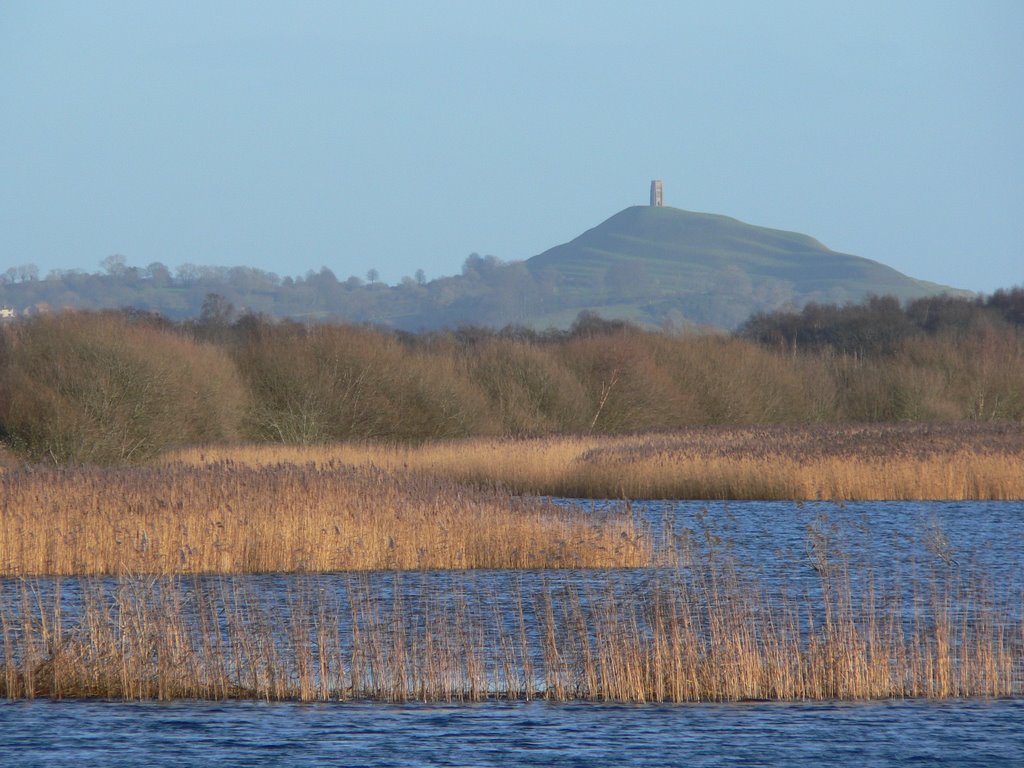
This is a local photo looking, from a hide on the Ham Wall RSPB reserve near Shapwick, across the moors towards Glastonbury Tor , copyright Steve Dyer.


***********************************************************************************
You will see on this blog a trial run using adverts hopefully selected by Google to relate to the content of the Blog. If any payments arise from this arrangements they will be transferred to the local group funds to support our programme of meetings and events. If it detracts from the blog too much it will be cancelled.

************************************************************************************
This memo was sent out to some 50 local members of our local Group this week. I'm posting it to show how we try to communicate with members by email.

Dear Members,
As usual I'm sending this message as a blind copy.
The committee met last Wednesday and gave most of its time to the detail arrangements for our autumn meetings. Alongside events we have organised there are some run by the Trust and other groups which may interest you. As a reminder they are, in date order, as follows:

a.. Sept 24th. Members open day at the Bishops Palace in Wells. I intend to be there most of the day to explain our group activities and meet people. The programme is shown in the latest Trust Magazine. Free entry to members with a card or the latest magazine!

b.. Sept 28th. Our meeting on Climate Change in the United Reform Church hall in Somerton at 7.30pm. Bill Butcher Director of the Somerset Environment Records Centre will explain this subject which has many implications for wildlife and ourselves. £1.50

c.. Oct 12th. We have invited Dr Pat Hill Cottingham to share her enthusiasm and knowledge of Ferns with us. A chance also to meet members over a cup of tea or coffee. In the All Saints Church Hall, Langport at 7.30 pm. Parking by the library. £1.50

d.. Oct 14th. The Trust is holding its annual general meeting which is always much more than just a business meeting and is a chance to find out what is going on in the world of wildlife in Somerset. In Oake Village Hall 3 miles west of Taunton. Car sharing recommended! There is a web site for the Hall at http://www.oakehall.org/ for more information which is also in your magazine.

e.. Oct 22nd. A Fungus Foray is organised in Beer and Aller Woods. Run by the Woods Management Committee, which we are very pleased to be associated with, and the North Somerset and Bristol Fungus Group. More info in the events diary.

f.. Nov 9th. Our meeting on The lives of Dragonflies. They seem very numerous this year so come and find out more about them. In the Curry Rivel CE Primary School Hall, Church St. At 7.30 pm. Dr Mike Parr will talk, show slides and answer questions about these fascinating creatures. £1.50 A chance for us to meet local members.

Not satisfied with all that we have started to think about 2007 and welcome your ideas.

As its Adult Education enrolment time again I notice that there are three courses that might interest you:

a.. Discovering Wildlife. A general review of wildlife around our special County of Somerset. Held in Langport and Chard.

b.. Landscape and Heritage of Somerset. This course covers the Levels, Cheddar and The Quantocks. Held in Langport, Wells and Frome.

c.. Organic Gardening. A timely subject. You have the option of sitting a City and Guilds Test if you wish. Held in Chard only.

All run by the Somerset County Council. Info in local libraries. I hope to do the Landscape course myself and I know the Wildlife one is very good.

I hope you will have noticed that I have been running a diary on the internet since last July. It aims to show some insights into the groups development and some of the wildlife topics which have arisen since we started. I see it as a very useful way to exchange views, ideas, questions and suggestions about our group and our experiences of wildlife. Its not academic or intended to be formal and if you can share with us all your interest in wildlife you will be most welcome. To comment on any of the entries on the diary just find and click on the word comment at the end of the item. Simply write in the box provide as if you were writing an email message and click on Publish. Your notes will be sent by the blog system to me by email and I will then be able to add them to the diary page. Please give it a try or simply send your comments to me direct in an e-mail and you can include your wildlife photos.

Thursday, September 07, 2006

Comments on July 29th post

As you may have gathered I'm learning as I go with this blog. Uploading photos and getting the layout OK has taken a bit of time to sort out but is not too bad now I think! Comments I havent got organised yet mainly because the settings for comments are a bit difficult to follow for me at any rate.
So I am now resorting to pasting comments from Atholl which appear under my blog of 29th July, now in the archive section, and to which the comments apply. They give usefull local knowledge which is hard to acquire unless you spend some time walking the countryside. As an objective of posting messages about the reserves was to make it easier for members to visit the reserves the comments are most welcome.
PS Who is Atholl? My dictionary says Atholl is a district of central Scotland and "Atholl brose" is a mixture of whiskey and honey left to ferment before consumption!! Very useful on long walks no doubt. Intriguing.


Atholl said...
Perry Mead is a small reserve best visited in late spring or early summer. At this time of year the there are a mass of wild-flowers as can be seen from the photograph later on in David’s Blog. These are either harvested during Hay Making or eaten by the cattle that graze the reserve. On the north side of the reserve is the River Carey which though in the last few years has looked pretty much like a large ditch, floods the access road to Foddington when there are heavy rains. One result of this is that Perry Meade is sometimes quite waterlogged and there is even a mini rhyne in the middle. The public access footpath that is sign-posted in David’s photograph not only goes more or less along the river side to Lovington. It also joins up with another, which passes over the river onto the golf course, up to Wheathill and across both the railway-line and numerous fields to East Lydford. It’s quite a good varied, circular walk if you come back across the B3153 and down the lane towards Foddington. The other feature of note is the large Dew Pond to the east of the reserve. This has had in wet years, magnificent Bull rushes.

Monday, September 04, 2006

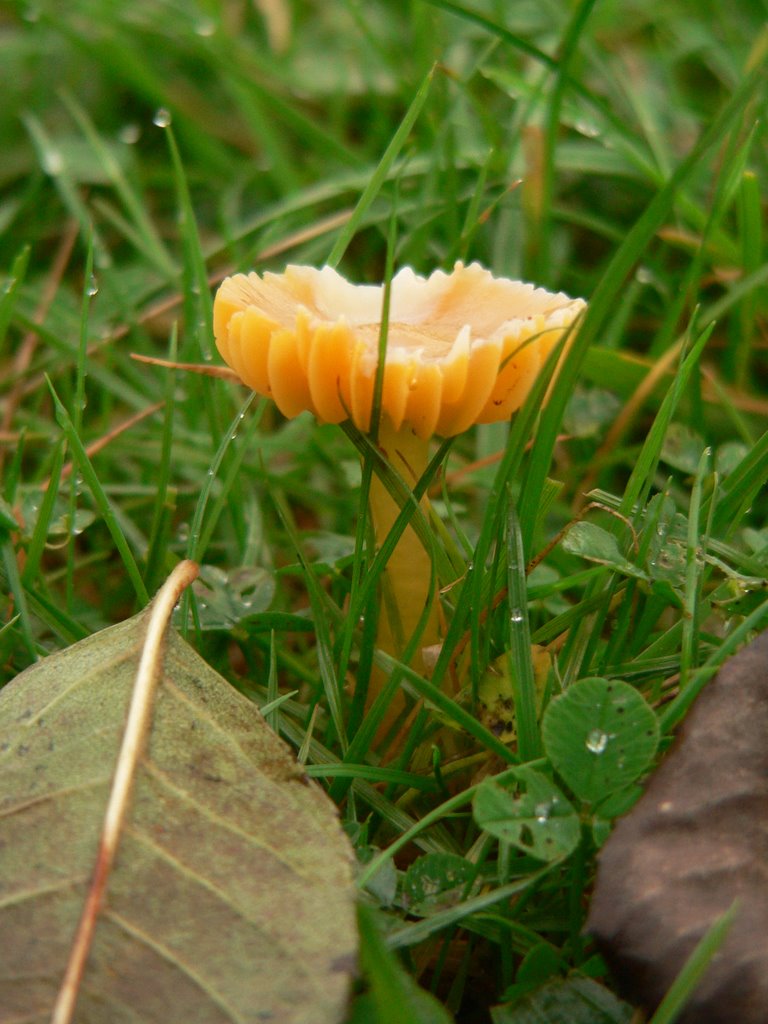
Fungi


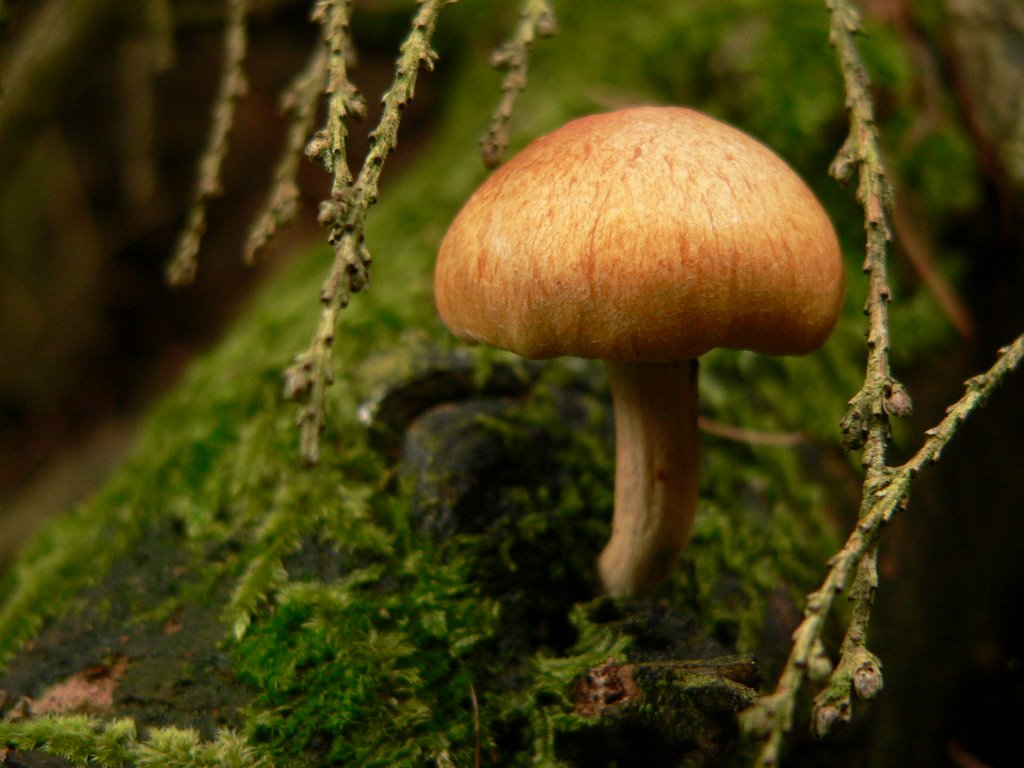
Here are some photos of fungi taken in Somerset.

All these photos are copyright to Steve Dyer and were taken locally.


Top left: Red Cup
Top right: Wax Agaric Scarlet Hood
Middle left: unknown
Middle right: Hygricybe Ceracea
Bottom: Coprinus Domesticus


All photographs copyright Steve Dyer.


Now that we are into September and the summer is drawing to a close it will soon be time to join one of the organised walks to go looking for fungi. The woods in our area are often chosen for such fungi forays with experts on hand to help with identification. If you think I've got these names wrong please let me know by email!
A Fungus Foray is shown in the Somerset Wildlife Trust events diary on Sunday October 22 between 11AM and 3PM in the Beer and Aller Woods.

Thursday, August 31, 2006

Media reports

Two items caught my attention today. One relating to loss of biodiversity and the other highlighting how mankind benefits from an understanding of the rest of the animal kingdom.

Having made several posts on biodiversity loss on this blog, I was pleased to see The Independent newspaper today ( page 10, Save our Species) also highlighting the threat posed by the loss of ponds. It appeared to be referring to information given in the English Nature booklet noted in my blog of Aug 25. It reports the significant loss of ponds in the UK and that "one new complex (of ponds) in Oxfordshire contained a quarter of the UK's freshwater plant and animal life after only 5 years". It gives the web address of Pond Conservation for more information. Which is at:

http://www.pondconservation.org.uk/

"About Pond Conservation"

"Pond Conservation is the UK's leading centre for information and practical advice on the conservation of ponds. We also have an extensive programme of research, policy and practical work on rivers, lakes, ponds, canals and drainage ditch systems.
The organisation was founded in 1988 as Pond Action, subsequently merging with the Ponds Conservation Trust in 2001, and is now known as Pond Conservation: the Water Habitats Trust."

The trust publishes a number of fact sheets including the following:

Good Wildlife PondsA short guide to creating your own wildlife pond.
Planting Up PondsDo's and don't's of planting for a wildlife pond.
Problem Pond PlantsHow to manage algae, duckweed and other floating plants.
The Importance of Ponds: A guide for Planners and DevelopersGuidance when a development includes or affects ponds.

It was also interesting to read a technical journal published by the Institution of Engineering and Technology. ( Engineering and Technology, September 2006, page 30.)

An article describes links between biology and research into ways to prevent computer virus attacks. Engineers are working with biologists to learn from the human immune system, which is likened to a " very interesting adaptive computational system", to develop intrusion detection software.

The well known dive of the Gannet, which allows the bird to rapidly plunge in a vertical dive into the sea in pursuit of fish has led to another line of research. The bird has to judge the latest moment to fold its wings before hitting the surface of the water using feedback from visual signals. The same idea of feedback is being applied to software to detect malicious programmes
The IET web site is at: www.theiet.org/engtechmag

Tuesday, August 29, 2006

Climate Change

After lunch today I logged onto the web site set up to promote and explain the film called, "AN INCONVENIENT TRUTH" in which Al Gore the US politician explains his campaign to wake the world to the consequences of global warming.
Its worth looking at for no other reason than that Al Gore is a major US politician and the US is a major player in global warming. It is useful background to our next public meeting in September.
From the web site you can see a 47 minute interview with Al Gore about his views on the subject and you can also see a trailer for the film itself which is being seen in cinemas across the US. Both are good at getting the message clear.

Here are a few quotes from the web site:


http://www.climatecrisis.net/

"AN INCONVENIENT TRUTH "


"Humanity is sitting on a ticking time bomb. If the vast majority of the world's scientists are right, we have just ten years to avert a major catastrophe that could send our entire planet into a tail-spin of epic destruction involving extreme weather, floods, droughts, epidemics and killer heat waves beyond anything we have ever experienced. "

"The vast majority of scientists agree that global warming is real, it is already happening and that it is the result of our activities and not a natural occurrence. The evidence is overwhelming and undeniable."

"There is no doubt we can solve this problem. In fact, we have a moral obligation to do so. Small changes to your daily routine can add up to big differences in helping to stop global warming. The time to come together to solve this problem is now. "
Go to : http://www.climatecrisis.net/takeaction/

Monday, August 28, 2006

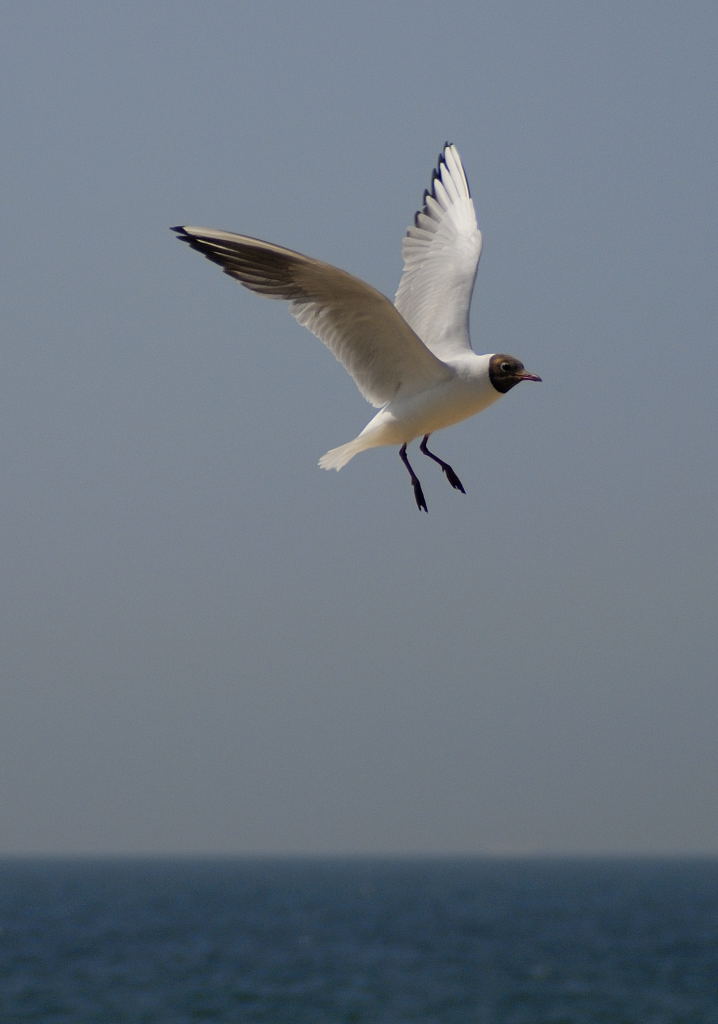
Sea birds!


Photographs by David LeClercq

Two beautiful photographs of sea birds on the south coast near Bournemouth. Not in our area but as they were sent to me by a friend and such good images I am including them. We do of course have a variety of similar birds to be found on the levels and moors and coastline of Somerset. If there is anyone reading this with good local shots please send them to me. Perhaps a heron from West Sedgemoor.

Friday, August 25, 2006

How to fight diversity loss

My last post on Aug 20th identified loss of habitat as an important cause of diversity loss.
One of a series of publications by English Nature called "Garden Ponds and boggy areas: havens for wildlife" shows how the numbers of ponds has decreased from about 1,250,000 in 1890 to about 400,000 in 2005.
The loss is said to be due to intensive agriculture and land drainage, neglect and lack of management. Clearly urban growth is also a factor.
The aim of the booklet is to inspire anyone without a garden pond to create one and to advise on how to do it.
It gives good reasons to take this advice. For example.
Garden ponds help compensate for the general loss of ponds.
They are a haven for freshwater plants and animals.
They provide a drinking place for birds and insects which are food for bats.
They provide an educational resource for children and adults through out the seasons.
In short, English Nature claim that "If you want to see plenty of wildlife close to home, put in a garden pond."
The booklet can be obtained either by post or by downloading a copy from their web site.

http://www.english-nature.org.uk/about/access/

I should add that there are two other booklets in the same series which show how important even small ponds are in any garden.They are:"Dragonflies and Damseflies in your garden."and"Minibeasts in your garden"